Small businesses importing from China often wonder whether they should buy directly from a factory or hire a China sourcing agent. Direct purchasing may eliminate a separate agency fee, but buyers still need to find suppliers, verify product specifications, manage quality, and coordinate shipments. A sourcing agent can handle some of that work in exchange for fees. The right choice depends on your experience, purchasing volume, and complexity.
1. What Direct Factory Purchasing Involves
Direct purchasing means managing the commercial relationship with a manufacturer yourself. You negotiate specifications, price, MOQ, samples, contractual terms, production milestones, inspection, payment, and shipping. This can work well with a stable supplier and a capable internal procurement team. It also places more coordination responsibilities on the buyer.
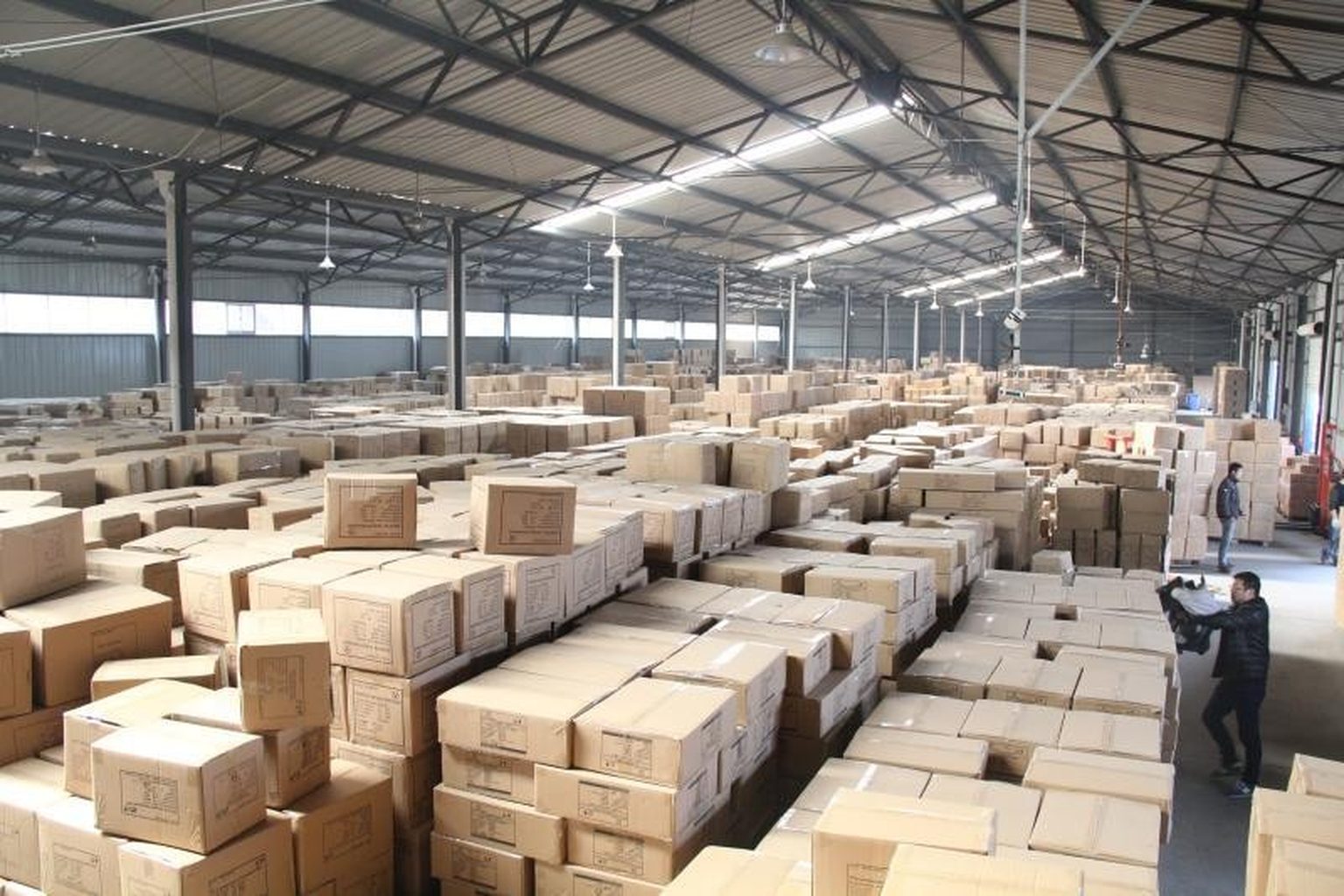
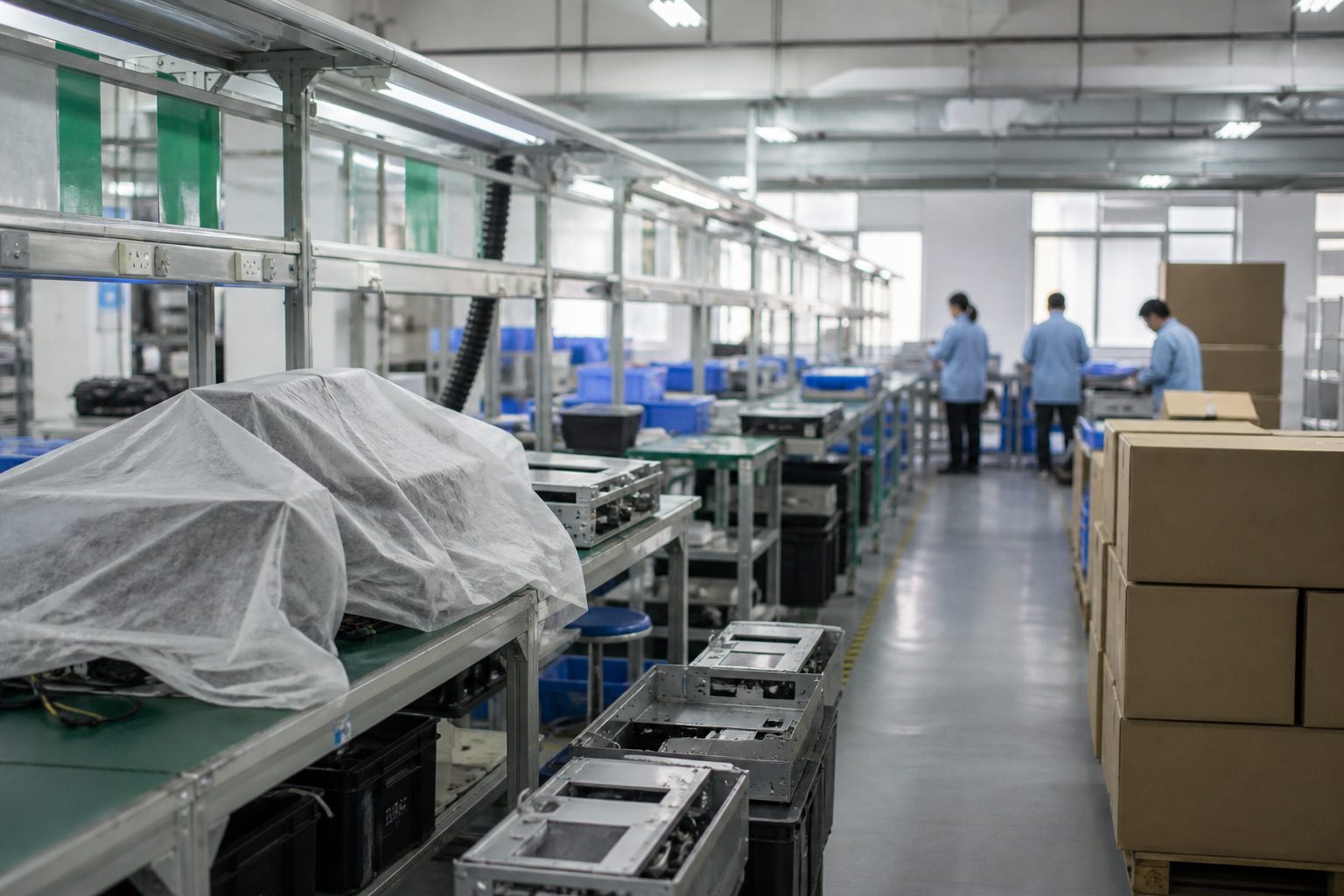
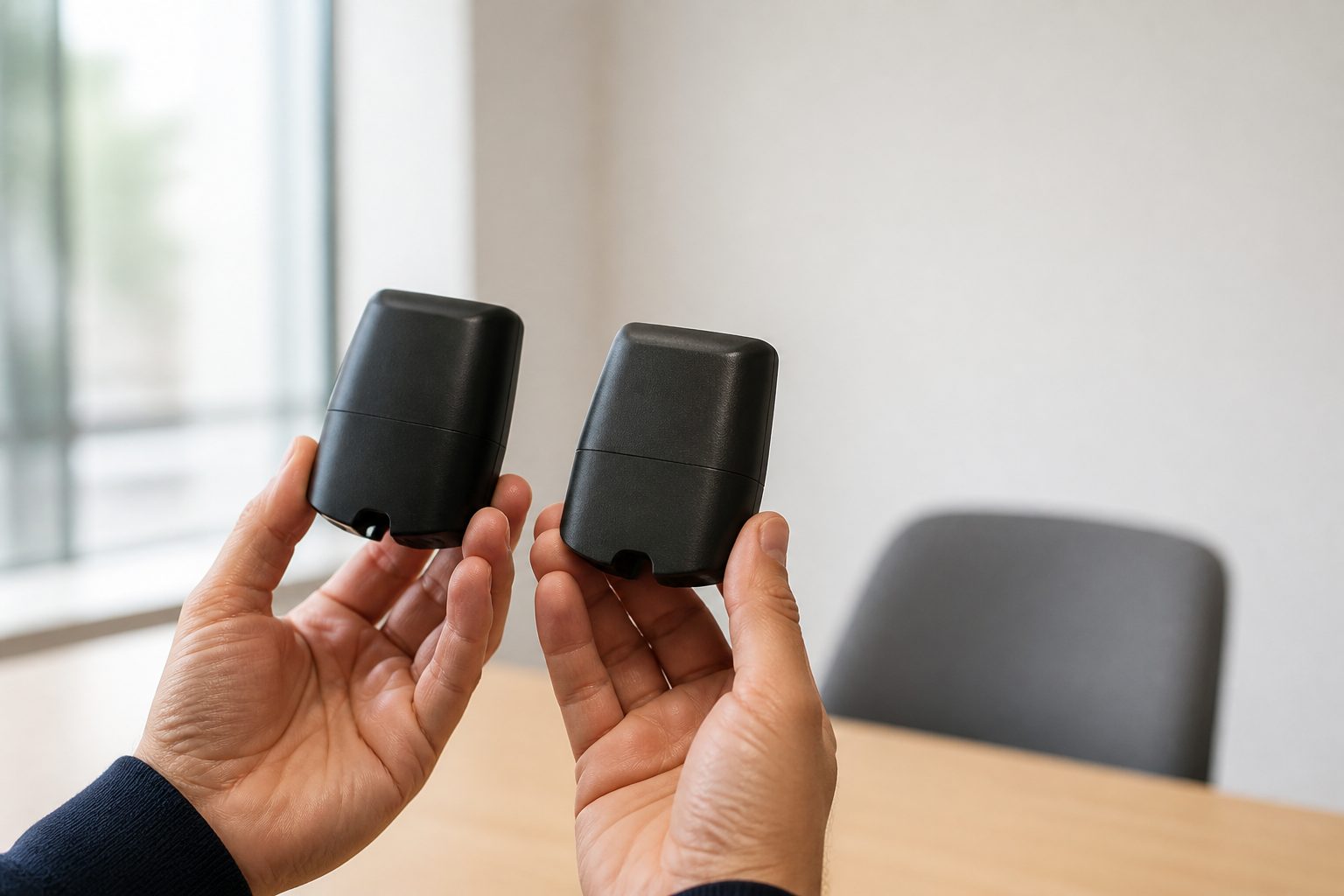
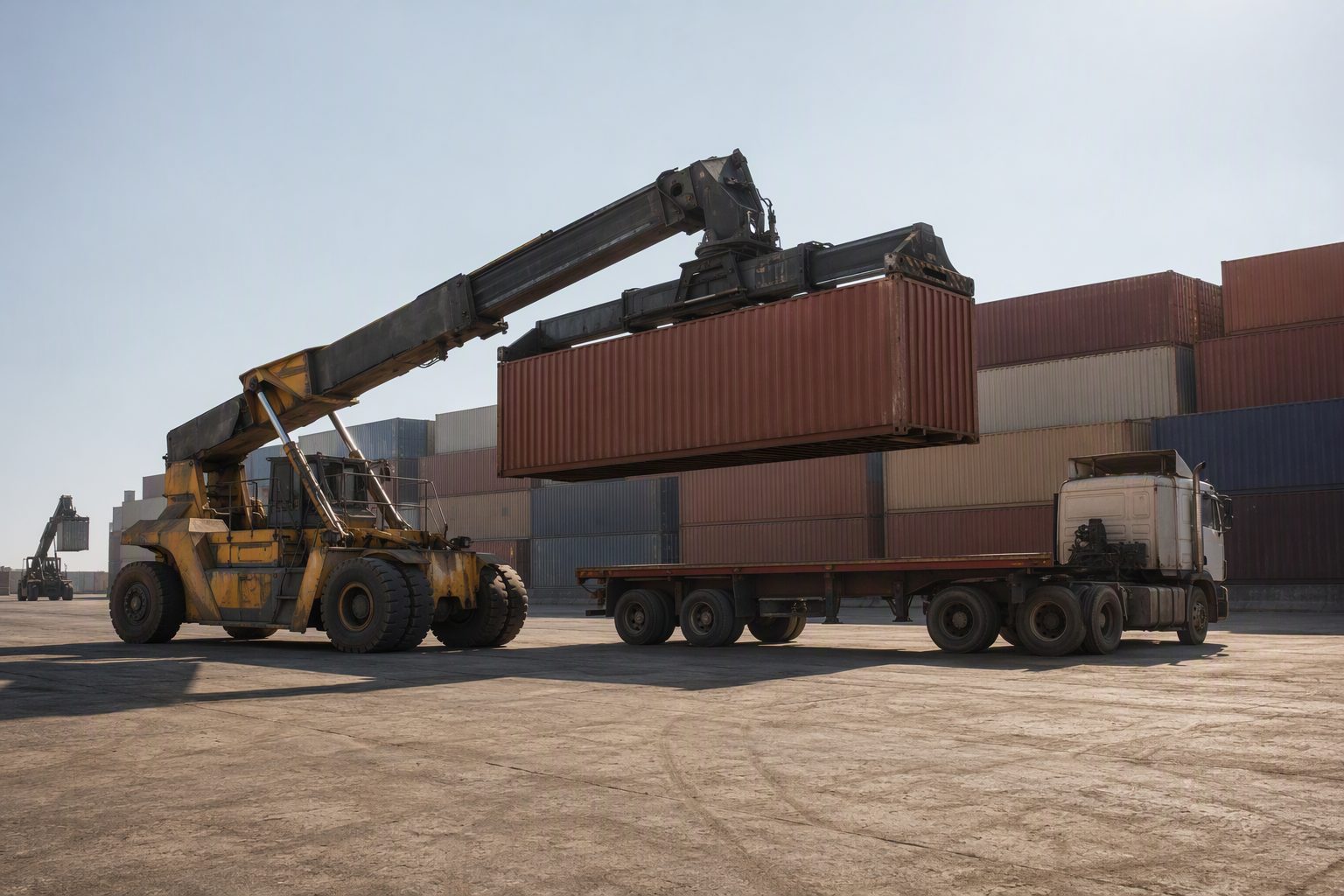
Direct factory purchasing means managing tooling, production and packing yourself.
2. What a Sourcing Agent Can Do
Depending on the agreed service scope, an agent may research suppliers, request quotations, verify company details, coordinate samples, follow production, arrange independent inspections, consolidate purchases, and assist with shipping documentation. Services differ widely between providers. Confirm what is included, what costs extra, and who is accountable for each stage.
3. Comparing Total Procurement Costs
Direct sourcing is not cost-free: staff time, travel, translation, inspections, sample shipments, and production troubleshooting have real costs. Agent-assisted sourcing adds service fees but may reduce coordination workload. A useful comparison includes unit prices, procurement labor, agent fees, quality costs, domestic freight, international shipping, duties, taxes, and expected returns. Compare like-for-like scenarios rather than simply adding a percentage to the factory price.
4. When Direct Purchasing Makes Sense
Direct purchasing may be a strong option when you buy repeatedly from one dependable manufacturer, know your specifications, maintain your own quality checks, and can handle export communication. It may give clearer access to engineering and production decisions. Make sure you have a verified legal counterpart and written remedies for nonconforming products.
5. When an Agent Adds Value
Agent support can be particularly useful for small mixed orders, multiple product categories, Chinese domestic-market suppliers, or purchases from several cities. It may also help teams that have limited Chinese-language capabilities or cannot visit suppliers personally. The service is valuable only when it solves a real problem at a reasonable and transparent cost.
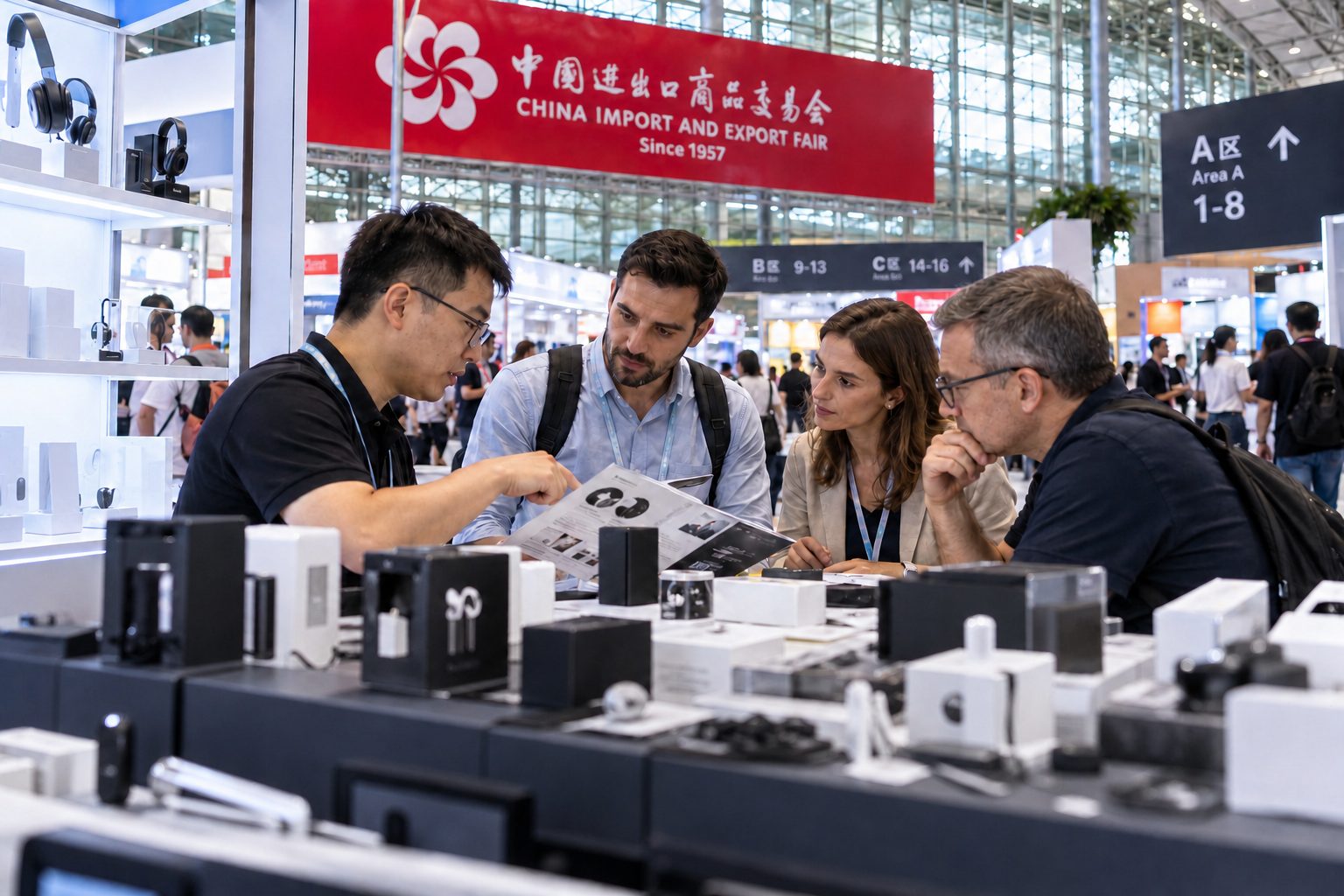
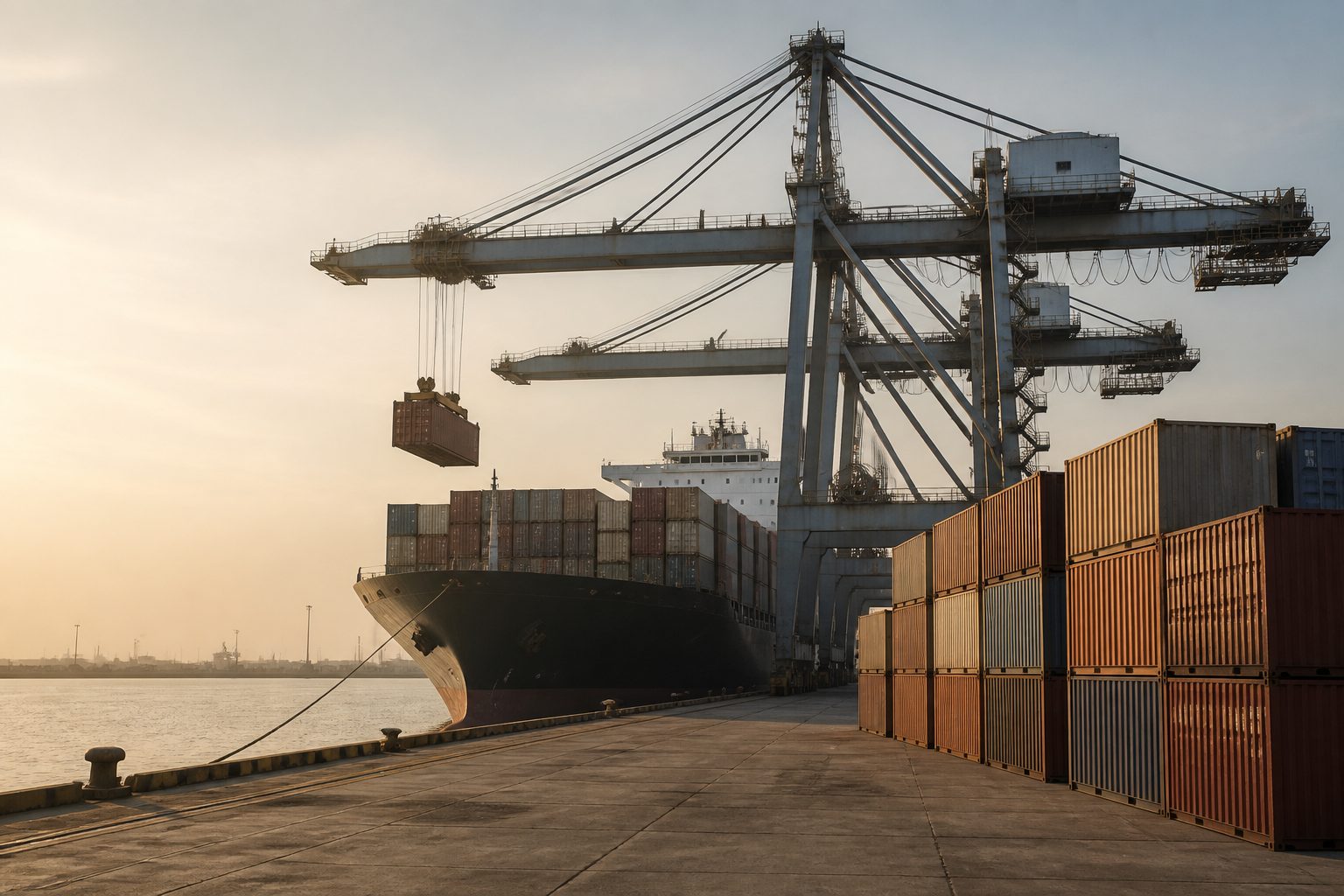
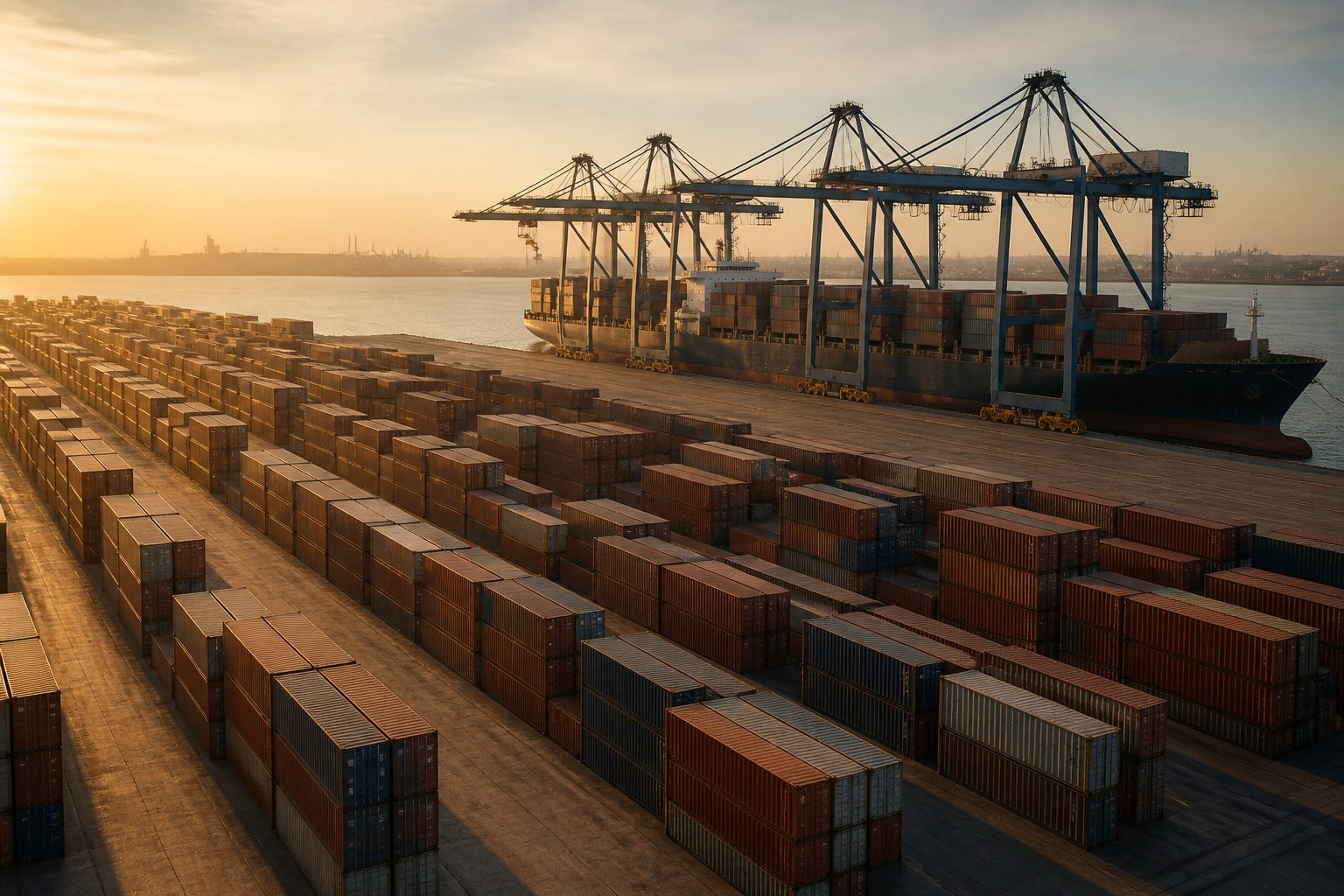
Agents often add value at consolidation, where goods from several factories ship as one order.
6. Supplier Transparency and Conflicts of Interest
Ask whether suppliers and factory identities will be disclosed, whether supplier rebates are received, and whether quotations are passed through transparently. Clarify who contracts with the manufacturer, who owns tooling or product designs, and how payments are handled. A well-documented process helps both buyer and agent avoid misunderstandings.
7. Quality Control Is Still the Buyer’s Responsibility
Neither direct buying nor an agent automatically guarantees quality. Define measurable specifications, approved samples, inspection procedures, defect thresholds, and corrective actions. For complex or high-value orders, consider independent inspection. Require clear records of who approved samples, accepted production, and authorized shipment.
8. A Hybrid Model May Be Best
Some businesses retain direct contracts and factory communication while paying a local partner to inspect goods, coordinate samples, or consolidate shipments. Others use an agent initially to identify suppliers and establish procedures before moving to direct procurement. Choose a model based on which activities your internal team can reliably perform.
9. Questions to Ask Before Hiring
Request a written fee schedule and service scope. Ask for supplier disclosure policies, who makes payments, whether inspection providers are independent, how defects and delays are handled, what happens if an order is canceled, and whether factory contacts remain accessible. Consider a small pilot order before committing to a long-term arrangement.
Conclusion
Direct factory sourcing offers control and can be efficient for experienced buyers. A China sourcing agent can provide coordination and local support when sourcing is fragmented or unfamiliar. Evaluate the total business cost, not just the quoted unit price, and make sure the chosen model has transparent responsibilities.
Easy Buy China focuses on helping overseas buyers explore sourcing options. Discuss Your Sourcing Setup, target quantities, destination market, and purchasing challenges to discuss a practical approach.
FAQ — Do I need an agent to buy from China?
No. Many experienced importers work directly with manufacturers.
FAQ — What fees do sourcing agents charge?
Fees vary by provider and service scope; always obtain a written breakdown.
FAQ — Can I keep direct communication with factories?
Often this is possible, depending on the commercial agreement; clarify it before engaging a partner.
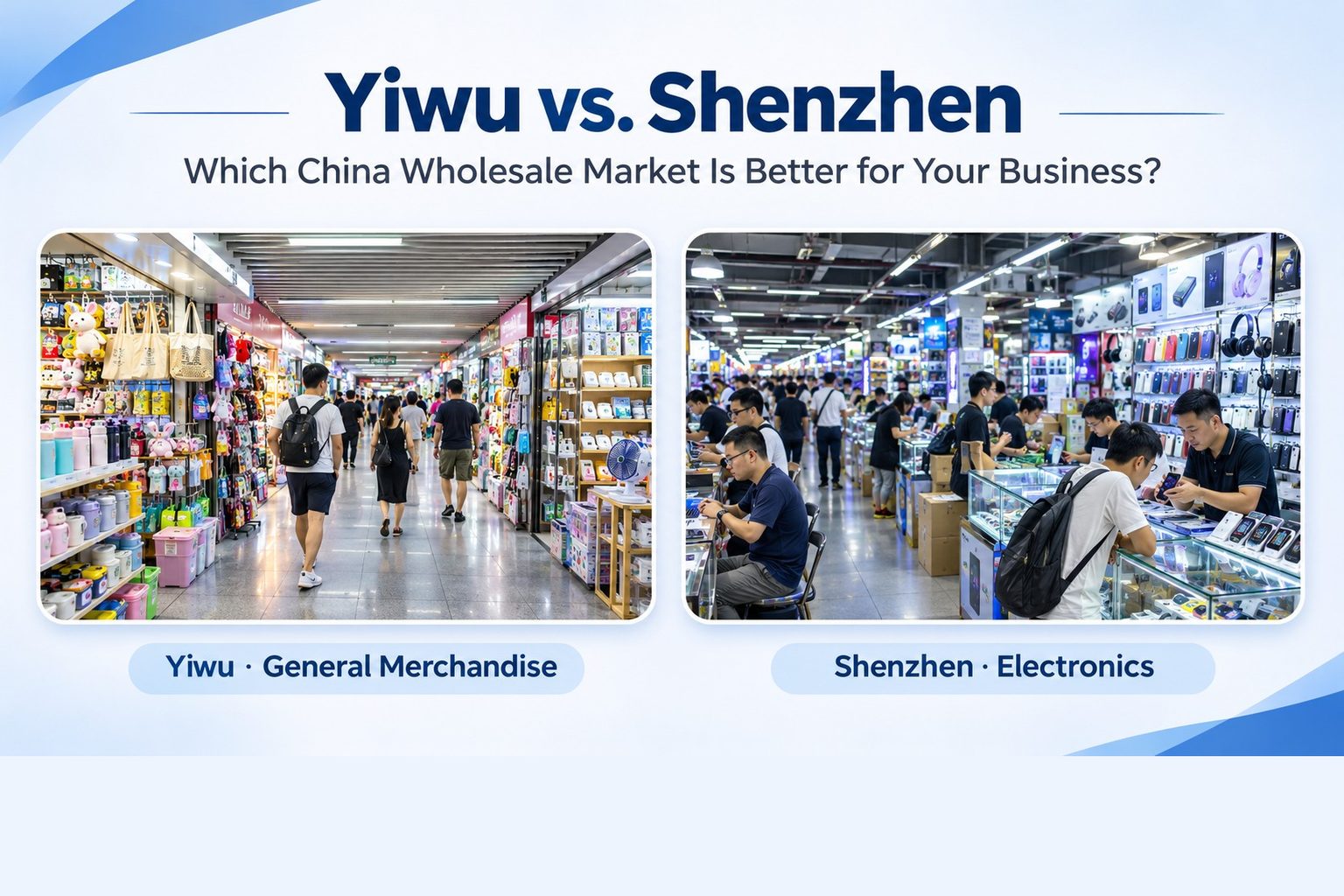
Yiwu and Shenzhen are two well-known sourcing destinations in China, but they offer quite different product ecosystems. Yiwu is especially associated with small commodities and broad general merchandise. Shenzhen, including the Huaqiangbei area, is closely linked with electronics and technology-oriented supply chains. The better choice depends on what your business sells—not on which city is more famous.
1. What Buyers Find in Yiwu
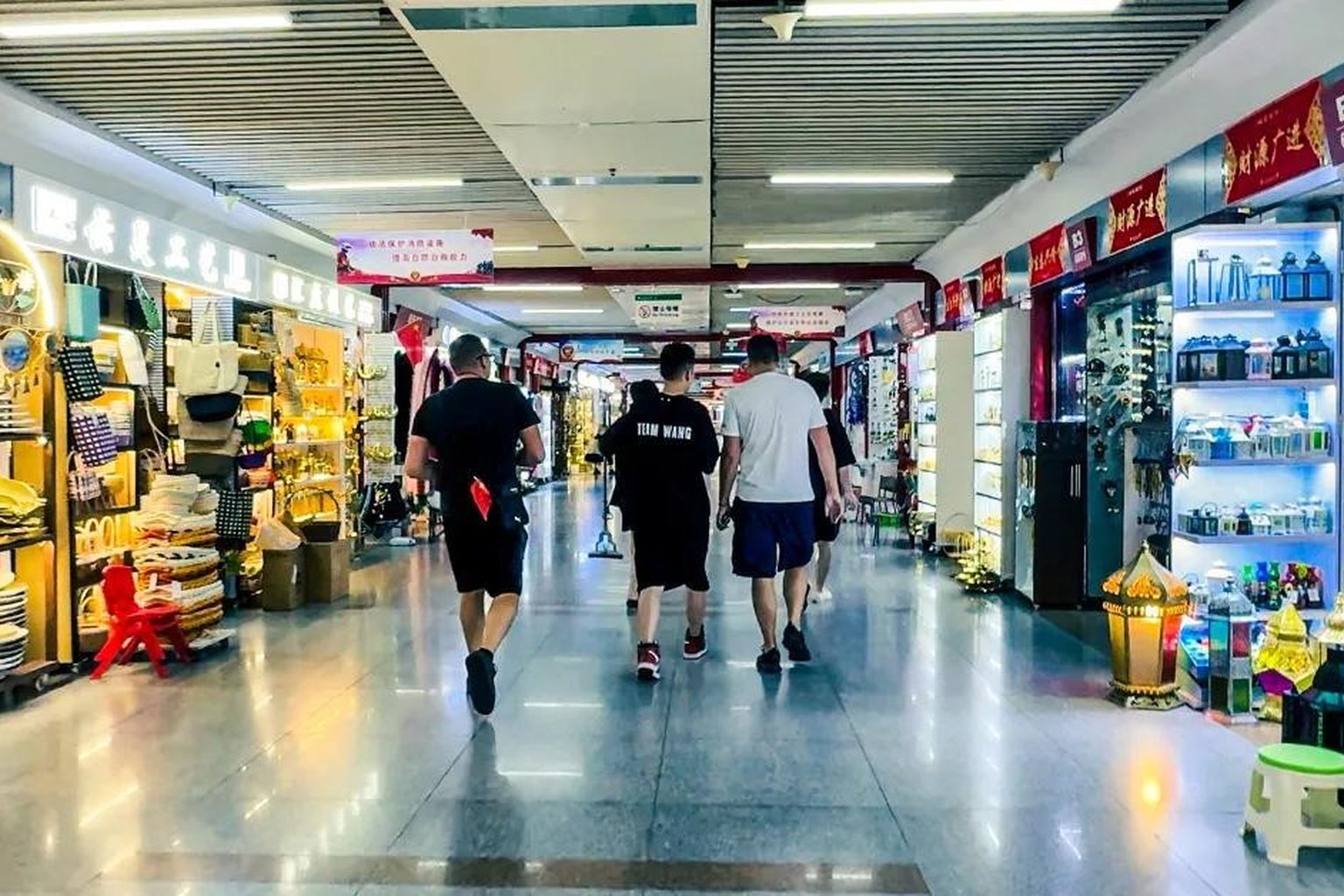
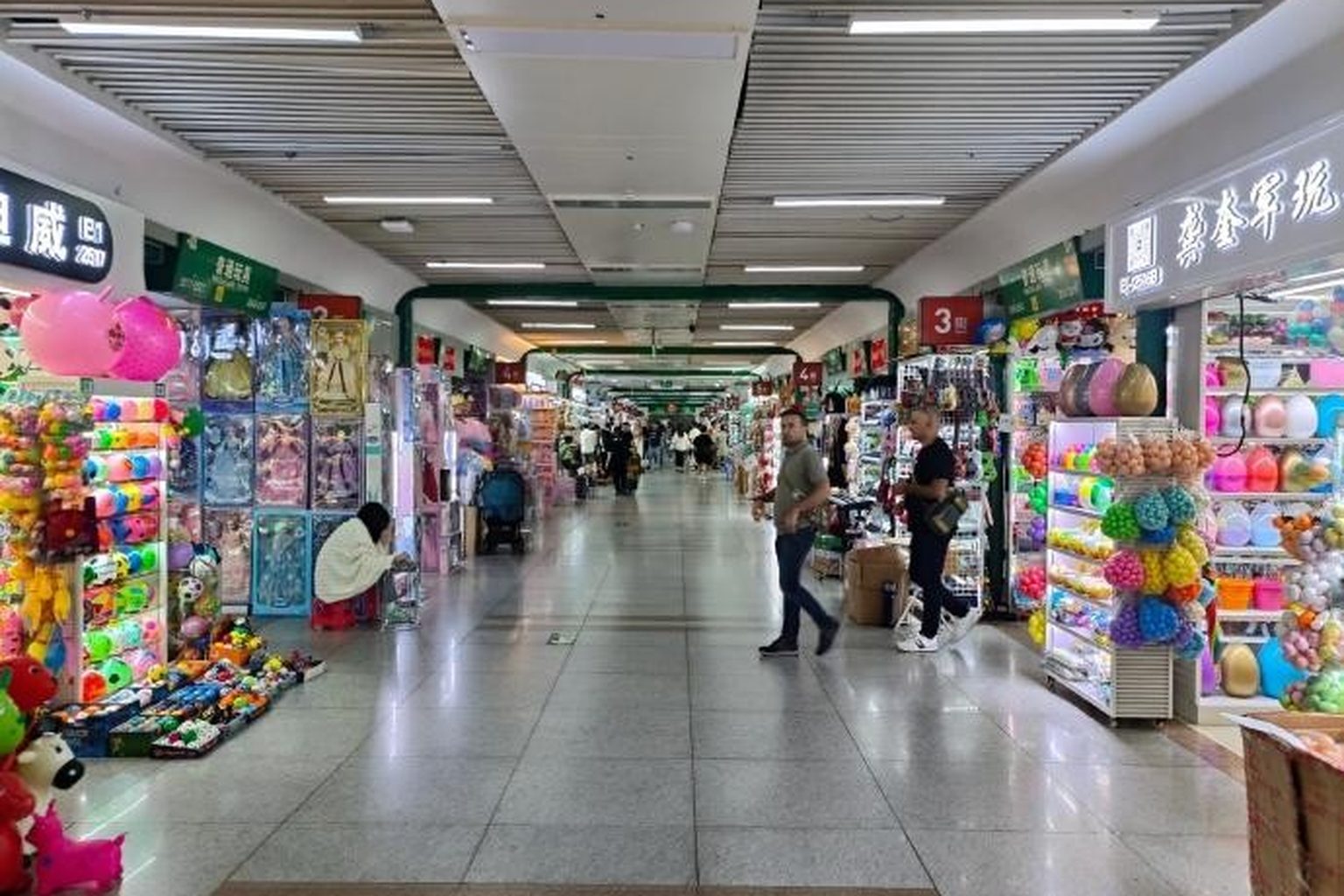
Yiwu International Trade Market is known for a wide range of consumer goods: household accessories, gifts, stationery, decorative items, toys, fashion accessories, and seasonal merchandise. This variety can be useful for general merchandise stores and wholesalers building multi-category assortments. However, individual stalls vary in sourcing model, product quality, and export experience.
Yiwu’s wholesale stalls group household goods, gifts and hardware by category.
2. What Buyers Find in Shenzhen
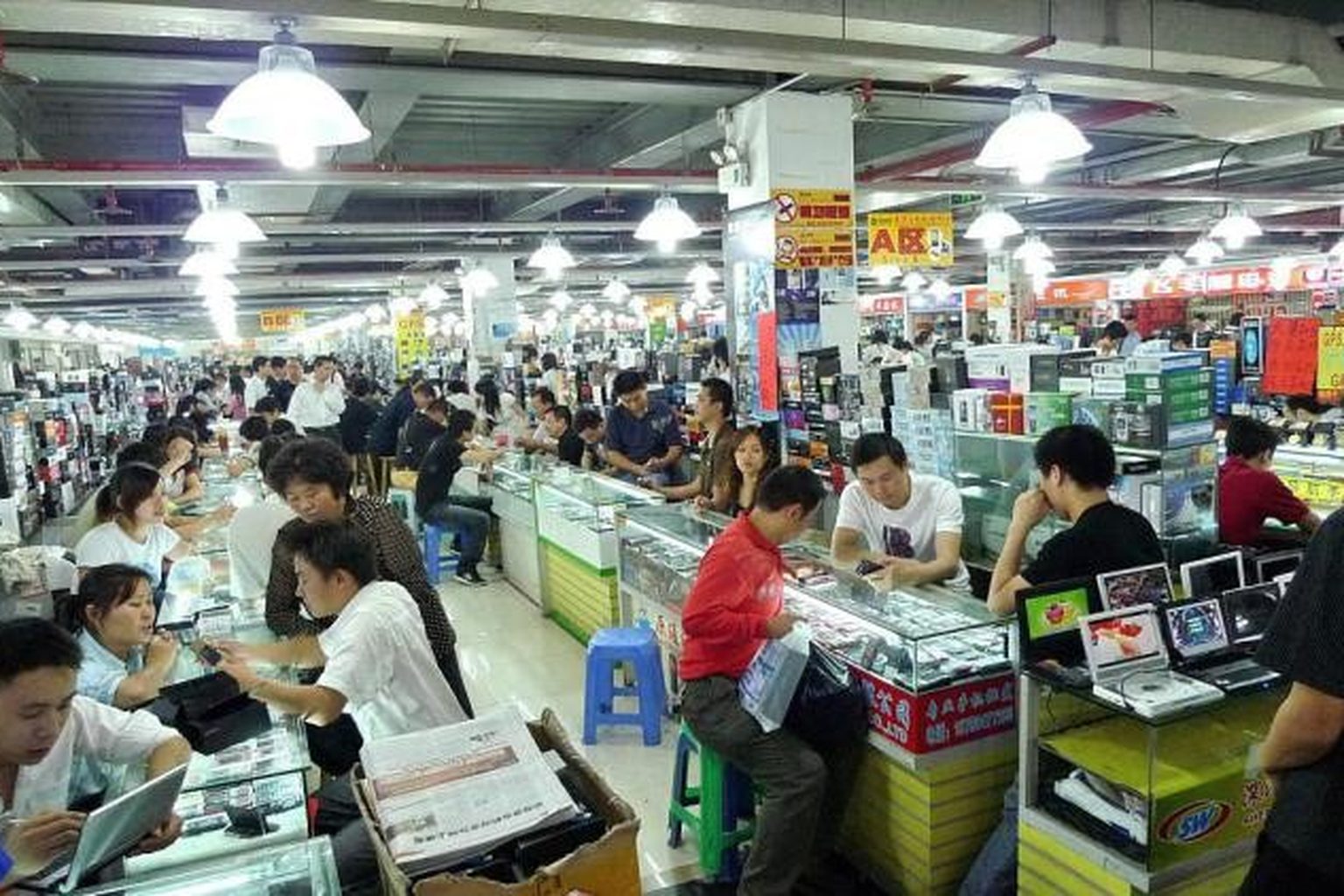
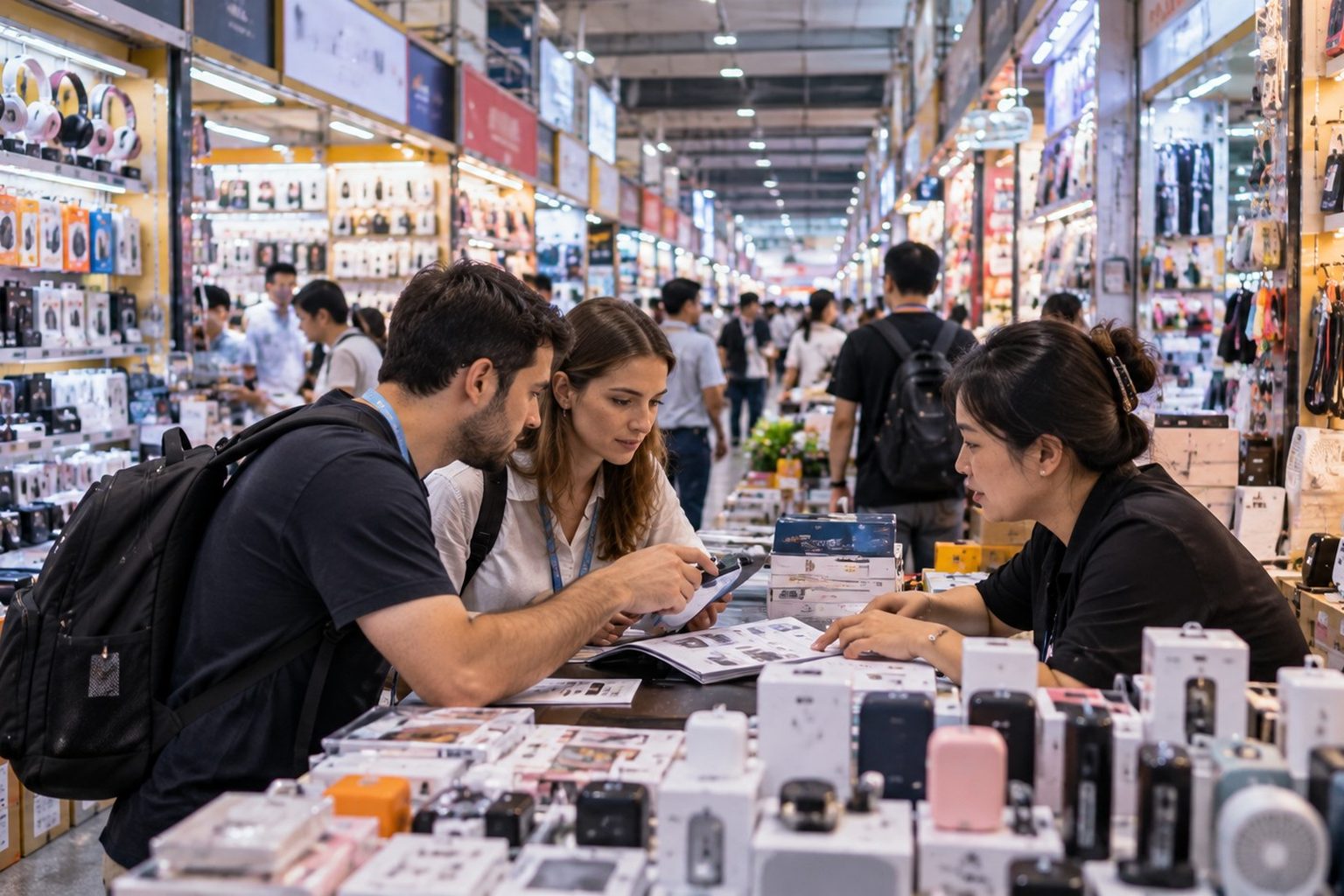
Shenzhen is a major center for electronics businesses. Buyers visiting Huaqiangbei may encounter phone accessories, audio devices, components, connected devices, repair parts, and other consumer technology products. The wider region also includes manufacturers and specialist suppliers. A wholesale shop, distributor, design house, and actual factory are different business types, so confirm who is responsible for production and product support.
Shenzhen’s electronics markets concentrate components and accessories in one district.
3. Choosing Based on Product Category
For general merchandise, gifts, home accessories, and varied seasonal products, Yiwu may be more efficient to explore. For electronics, components, or technology-related customization, Shenzhen may be the more relevant starting point. If you source both categories, working with suppliers in different regions can make sense, but it adds coordination and shipping considerations.
4. Is One Market Cheaper?
There is no meaningful city-wide answer. A comparable quotation requires the same product material, quality grade, packaging, purchasing quantity, inspection requirements, and shipping terms. The costs of local pickup, export preparation, defects, and replenishment can be more important than a minor difference in listed price.
5. How to Plan a Productive Market Visit
Prepare a product list, target specifications, desired quantities, reference images, and budget range. Record stall names, contacts, model numbers, and quoted conditions. Ask whether the vendor is a factory, authorized distributor, or trader; request samples and written quotations. For regulated products, obtain model-specific compliance documentation. Do not rely solely on market displays or verbal promises.
6. Small Orders and Mixed Purchasing
Market visits can help retailers discover existing stock and test categories. Nonetheless, MOQ depends on the seller and product, and mixing designs does not automatically reduce minimums. Ask whether assorted colors, packaging options, and different models can be combined and how that affects the price and availability. Create a simple comparison sheet to avoid losing track of multiple vendors.
7. Remote Buying Without a Market Visit
Overseas buyers can research vendors online and use photos, video calls, specifications, and samples to evaluate products. A third-party audit or pre-shipment inspection may be appropriate for larger commitments. Clarify whether a local purchasing partner can collect goods, confirm quantities, arrange inspection, and coordinate exports; the scope and fees should be written down.
8. Logistics and Consolidation
If you purchase from several stalls, collection and consolidation may reduce operational complexity, but it introduces handling and inspection needs. Record carton counts, packing lists, delivery addresses, and the party responsible for discrepancies. For electronics, include battery restrictions and applicable destination-market rules in logistics planning. Freight quotations should reflect actual dimensions, weights, and shipping terms.
Conclusion
Choose Yiwu for a broad general-merchandise search and Shenzhen for electronics-focused sourcing. In either market, supplier verification and total landed cost matter more than the reputation of the location. Build a repeatable supplier evaluation process before placing sizable orders.
Planning a China Wholesale Market Sourcing Project?
Easy Buy China can discuss your product list, preferred quantities, supplier research, and purchase coordination needs. Share Your Product Categories to explore sourcing options relevant to your categories.
FAQ — Is Yiwu only for small buyers?
No. The market serves different buyer types; order requirements vary by vendor and product.
FAQ — Does Huaqiangbei guarantee factory-direct prices?
No. Many businesses operating in wholesale markets are distributors or trading firms rather than manufacturers.
FAQ — Can I buy remotely?
Yes, but written requirements, supplier checks, samples, and appropriately scoped inspections remain important.
International buyers searching for wholesale products in China frequently compare 1688.com with Alibaba.com. Both belong to Alibaba Group, but their purchasing environments are different. Alibaba.com focuses on global B2B buyers; 1688.com primarily serves China’s domestic wholesale market. Understanding these differences helps importers choose a channel that fits their budget, language skills, and operational capacity.
1. What Alibaba.com Is Designed For
Alibaba.com is an international supplier-discovery and B2B transaction platform. Many sellers are accustomed to responding to overseas inquiries and discussing export packaging, shipping, documentation, and quotations in English. Available payment and transaction services depend on the specific seller and order. Convenience does not remove the need to verify the supplier, compare samples, and define contractual quality standards.
2. How 1688.com Differs
1688 is oriented toward Chinese domestic wholesale activity. It can expose buyers to a broad range of ready-stock products, domestic trading businesses, and manufacturers. Listings and supplier communication are often in Chinese, while payment and delivery arrangements may be aimed at domestic customers. International buyers should first confirm whether their account, chosen payment method, and supplier support the intended transaction.
China’s domestic wholesale markets offer a wide variety of products for international sourcing.
3. A Practical Side-by-Side Comparison
For Alibaba.com, buyers may find export-oriented sales communication and international shipping coordination more straightforward. For 1688, buyers may find useful domestic wholesale inventory but need separate help for language, local payment, quality checks, and export shipping. Neither platform guarantees factory-direct products, lower costs, or superior reliability. Compare each actual seller and order instead of relying on platform labels.
4. Is 1688 Really Cheaper?
Some 1688 listings display lower unit prices than superficially similar Alibaba listings. Yet differences can reflect quantities, grade, materials, tax treatment, packaging, service scope, and warranty. Compare the same model and specification. Add domestic freight, purchasing fees, inspection, export handling, international transportation, duties, and taxes. Only then can you calculate a meaningful landed cost.
5. Small Orders and MOQ
When testing a new product, ask whether the seller will accept a trial quantity or mixed models. A supplier may advertise a minimum quantity that applies only to a standard stock item, not customized packaging or specifications. For small transactions, the cost of collection and international freight per unit may be significant; reducing the product price alone may not improve profitability.
6. What About OEM and Private Label?
Both channels may list suppliers offering customization. Verify who performs manufacturing, what tooling is required, how intellectual property is managed, and whether samples represent the production specification. Ask for a written breakdown of mold fees, brand printing, packaging, sample revisions, MOQ, and manufacturing lead times. Never assume a seller owns the factory merely because it advertises OEM services.
7. A Safer Workflow for Buying from 1688
Define the exact product, shortlist sellers, request written specifications, verify business identity, confirm payment arrangements, and obtain samples where justified. Agree in writing on inspection criteria, defects, packaging, and delivery responsibility. If the supplier only ships domestically, clarify who receives, checks, and exports the products. Keep a documented trail of invoices, payments, and agreed terms.
Quality inspection helps wholesale buyers reduce sourcing risks before shipment.
8. When to Use a China Sourcing Agent
A sourcing agent can help international buyers communicate with domestic sellers, coordinate multiple purchases, collect samples, arrange third-party checks, and manage consolidated shipments. This may be useful for buyers without local Chinese-language support, but agent fees and potential conflicts of interest should be disclosed. Direct purchasing can still be preferable for experienced buyers working with an established export supplier.
Conclusion
Choose Alibaba.com when international purchasing workflows and export-ready communication are priorities. Consider 1688 when domestic inventory is relevant and you can manage the additional purchasing and export steps. Your best option is the verified supplier that can deliver the right specification at a predictable total cost.
Easy Buy China can discuss product requirements, target quantities, and supplier comparison needs. Send Your Product List to explore a sourcing arrangement appropriate for your purchasing workflow.
FAQ — Are 1688 and Alibaba run by the same group?
Yes, both operate within Alibaba Group, with different market orientations.
FAQ — Is 1688 always cheaper?
No. Listed prices do not necessarily include the same specifications, services, and logistics costs.
FAQ — Do overseas buyers always need an agent for 1688?
No, but local-language purchasing and logistics support can be useful depending on transaction conditions.
Planning a new electronics range for 2027 requires more than finding a popular product at a low factory price. International retailers need dependable specifications, practical order quantities, destination-market compliance, and reliable after-sales support. China offers diverse electronics sourcing options, but choosing the right category and supplier is what determines whether an import program is sustainable.
1. Mobile Accessories: Broad Range, Clear Specifications
Phone cases, screen protectors, stands, charging cables, power adapters, and wireless chargers can support a varied retail assortment. These products are often easy to demonstrate online, but competition is high and apparently similar items may differ in durability or performance. Compare materials, connector types, device compatibility, packaging, warranty terms, and electrical safety requirements. For powered accessories, do not rely on appearance or a generic test report as evidence of compliance.
Testing pairing stability and battery behaviour across several units.
2. Wireless Audio Products
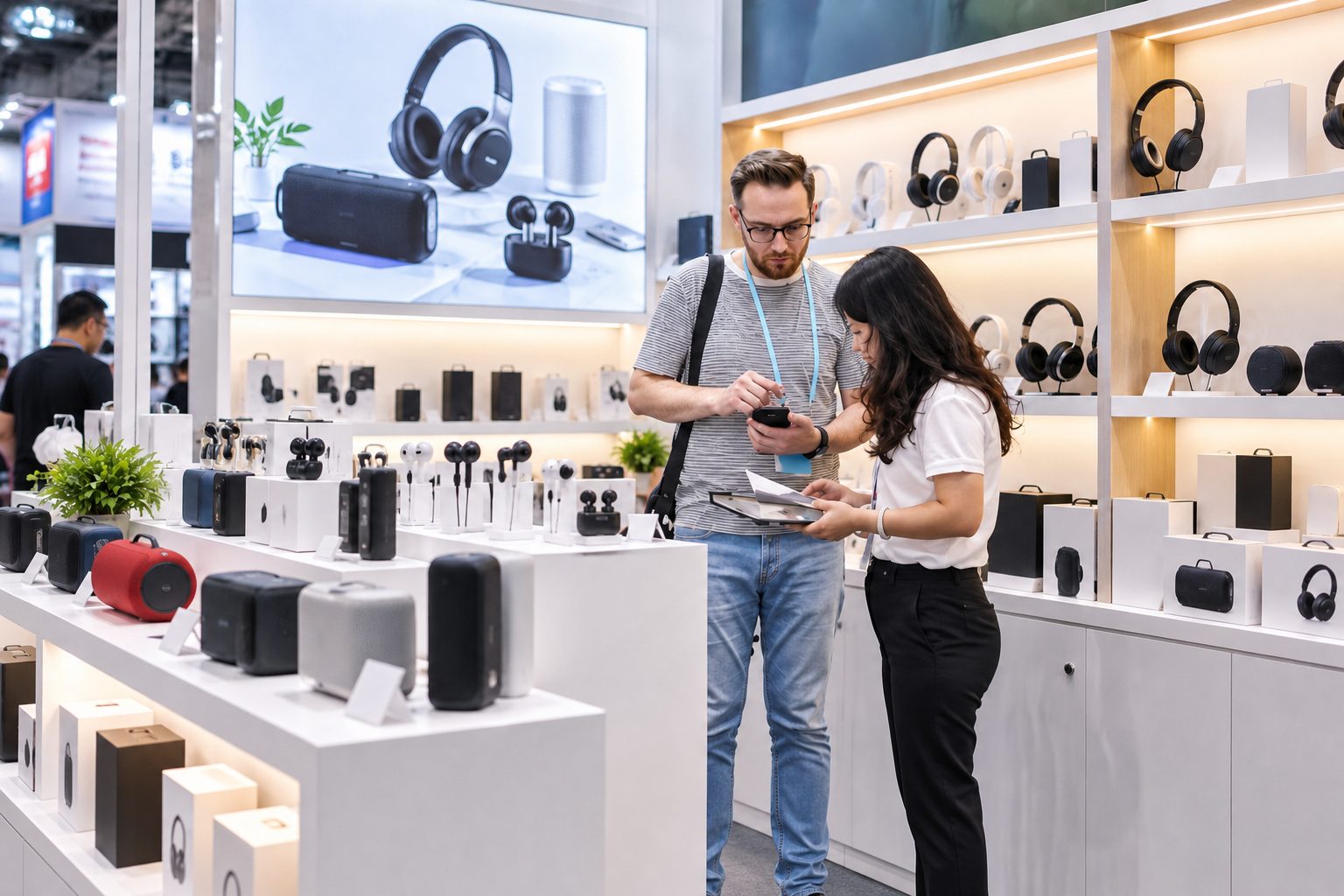
Earbuds, headphones, and portable speakers are worth evaluating when your audience values convenience and portable entertainment. Test pairing stability, battery life, microphone clarity, controls, charging behavior, and consistency across several samples. Check Bluetooth and radio-related conformity requirements, as well as battery transport documentation where applicable. Ask suppliers about defective-unit policies before negotiating large volumes.
Compatibility between devices matters more than the spec sheet of any one unit.
3. Smart Home and Connected Devices
Smart plugs, lighting, sensors, and other connected accessories may appeal to customers building smart-home systems. Compatibility is a decisive sourcing issue: verify supported wireless protocols, application availability by country, software update policies, electrical ratings, and regional plug types. Connected products may also raise data-protection and cybersecurity questions. Request model-specific documentation rather than assuming every device from a supplier meets the same requirements.
4. Compact Household Electronics
Small fans, electronic thermometers, portable lighting, and selected household devices can diversify a product catalog. Favor items that match your customers’ needs and are practical to ship and support. Consider carton dimensions, product fragility, spare parts, return rates, and relevant local safety rules. Avoid treating a low supplier quotation as a reliable retail margin before calculating these costs.
5. How to Evaluate a Product Category
Assess each idea using demand evidence, competitive positioning, expected landed cost, quality risk, MOQ, and after-sales workload. A narrower assortment that can be tested and replenished consistently may outperform a long list of unvalidated gadgets. Trial orders and sample evaluations help identify surprises before inventory commitments increase.
6. Supplier Due Diligence and Quotations
Find suppliers through trade exhibitions, B2B platforms, sourcing partners, and relevant markets such as Shenzhen’s Huaqiangbei area. Ask for legal company details, whether manufacturing is in-house, exact model specifications, sample availability, lead times, and inspection options. Issue one standardized request for quotation so you can compare identical specifications, packaging, order quantities, and shipping terms. Confirm which costs are included and who is responsible for export documents.
7. Compliance Before Importing
Import obligations differ by country and product. For example, certain products sold in the EU may be subject to conformity assessment and documentation, while wireless products intended for the US can have FCC requirements. Batteries may create additional shipping conditions. Confirm the applicable rules for your exact product and destination market with qualified specialists before shipment; a supplier’s marketing claim is not a substitute for appropriate evidence.
8. Where a Sourcing Partner Can Help
When an order involves different factories or categories, a China sourcing agent may help coordinate quotations, samples, domestic purchases, inspections, and shipment preparation. Agree on a written service scope and fee structure, and keep documentation of product specifications and approved samples. Buyers with one established factory and strong internal procurement processes may prefer dealing directly.
Conclusion
For 2027, the strongest electronics assortment is built on tested demand, consistent product quality, verified documentation, and total cost rather than trend chasing. Start small where possible, measure customer response, and expand categories only when supply and support remain manageable.
Need Help Sourcing Electronics from China?
Easy Buy China can discuss your product shortlist, target quantity, quality requirements, and destination market to explore suitable sourcing options. Share your requirements to start a practical supplier comparison.
FAQ — What electronics can small retailers consider?
Mobile accessories, audio devices, and selected smart-home products can be starting points, depending on customer demand and compliance requirements.
FAQ — Is the lowest quoted unit price the best deal?
Not necessarily. Freight, packaging, testing, duties, returns, and service costs can change the total landed cost.
FAQ — Can I import wireless electronics without certification?
Requirements vary by product and market; verify applicable regulatory obligations before importing.
Chinese New Year 2027 falls on Saturday 6 February. That is the date everything else in this article hangs from, and it is roughly fifteen weeks away from the day this is published.
Fifteen weeks sounds like room. It is not, because the constraint is not the holiday itself. It is the ramp-down before it and the ramp-up after it, and both of those eat weeks that do not appear on any factory quotation. A supplier who quotes 25 days of production is quoting 25 working days in a normal month. December and January are not normal months.
What follows is the operational version of the problem: what actually stops and when, how to count backwards from 6 February, the three dates you should get in writing from every supplier, and the four places pre-holiday orders usually fail.
If you are reading this in the last week of October, you are inside Phase 2 of the Canton Fair — the phase that covers housewares, gifts, furniture and building materials. The Canton Fair follow-up guide covers how to turn those booth contacts into a shortlist this week.
What actually stops, and when it stops
The holiday is a switch. Factory output is a curve, and it starts bending well before the switch.
Workers leave early. In many provinces a large share of the workforce comes from other provinces, and the return trip is booked weeks in advance. Attendance starts thinning in the second week of January and falls sharply in the last. A line that runs 200 people in November may be running 140 by mid-January, with the same output target.
Upstream suppliers stop first. Carton printers, plating shops, moulding houses and label printers are smaller operations with the same labour problem. A factory can be fully staffed and still be waiting on packaging, because its packaging supplier closed three days earlier.
Trucking and ports tighten. Inland haulage is the first thing to be booked out and the last to recover. Port operations continue through the holiday, but the trucks that feed them do not.
Sales and documentation slow down. Quotations, artwork approvals and payment confirmations move through people, and those people travel. This is the slowdown that costs buyers the most, because it happens in the weeks when decisions are most urgent.
The practical consequence: the day your factory stops shipping is usually earlier than the day it stops working, and the day it stops working is usually earlier than the public holiday.
A worked countdown from 6 February 2027
There is no single deadline that fits every product. There is, however, a defensible way to build one.
The example below assumes a supplier in Guangdong, a 30-day production run, a pre-shipment inspection, a sea sailing from Shenzhen and a destination that needs the goods on shelf in the second half of March. Every number is an assumption; replace them with your own and the structure still holds.
Milestone
Date
Why it sits here
Purchase order and deposit
Late November 2026
Production slots for December fill first; a deposit locks the slot, a promise does not
Artwork and packaging approval
Mid-December 2026
Print runs upstream are the slowest link and close first
Materials on site
Late December 2026
Anything not on site by the first week of January is a January risk
Production start
Late December 2026
A 30-day run has to start now to finish before the labour curve bends
Production end
22 January 2027
Set against the probable shutdown, not against the holiday date
Pre-shipment inspection
25–27 January 2027
Late enough to see finished goods, early enough to leave a rework window
Container loaded and sailed
29 January 2027
The last realistic sailing before bookings collapse
Arrival and clearance
Early March 2027
30–35 days at sea plus clearance and inland delivery
On shelf
Mid to late March 2027
The date that actually matters
Two things in that table are worth staring at. The first is that the purchase order sits in November, not January. The second is that the sailing sits in January, not February — because a February sailing is not a February sailing, it is a March one.
The 2027 holiday dates are not yet fixed
China’s State Council publishes the official holiday arrangement in the final weeks of the preceding year, so the statutory dates for 2027 were not settled at the time of writing. What is already known is the date of the new year itself: 6 February 2027, the Year of the Goat.
Buyers who wait for the official notice before planning are planning too late. The notice confirms the public holiday; it does not change the production reality, which is set by labour availability, upstream closures and freight capacity. Plan against the ramp, then adjust by a few days once the notice lands.
The wider Q4 picture — Golden Week behind us, freight rates into the first quarter, and the shelf-date arithmetic — is covered in our Q4 2026 holiday sourcing calendar. This article assumes you have already read it and are now dealing with the specific question of the spring window.
Why a 25-day lead time is not a 25-day order
The most expensive sentence in pre-holiday sourcing is “production takes 25 days”. It is usually true and always incomplete. The order is the sum of steps, and only one of them is production:
Step
Typical duration
What can stretch it
Specification and artwork sign-off
3–10 days
Rounds of revisions, packaging dielines, colour proofs
Add the middle rows and a “25-day” product is a 45-to-70-day order before anything goes wrong. In December, each row drifts later at the same time, which is why delays compound rather than add.
The last handover to the forwarder is the date that decides everything downstream.
The three dates to get in writing
Most buyers ask “can you finish before the holiday?” and receive a yes. The yes is not a plan. Ask instead for three specific dates, in writing, in the order confirmation:
1. The last production day. Not the holiday start — the day the last unit leaves the line. 2. The last inspection day. The date by which goods will be finished, packed and available for a pre-shipment check. 3. The last handover day to the forwarder. The date the loaded container leaves the factory gate.
A supplier who can give all three has a production schedule. A supplier who cannot is telling you something useful. Ask the same three questions of the packaging printer if it is a separate company, because it usually is.
Put the dates into the purchase order as milestones with consequences, not as aspirations. Even a soft clause — a defined rework window, a staged balance payment tied to inspection — changes how the order is scheduled inside the factory.
Where pre-holiday orders actually fail
Four failure modes account for most of the damage. None of them is “the factory closed”.
Materials arrive late. Production starts on time and stalls in week two because cartons or a component did not arrive. This is caught by asking for a materials-on-site date, not a production start date.
The approval loop runs long. Packaging artwork goes through four rounds in December because nobody signed off in November. Every round costs three to five days and the calendar does not care.
Inspection finds a problem with no time to fix it. A failed AQL check in the last week of January is not an inspection problem, it is a scheduling problem. Inspection has to be placed where a rework cycle still fits behind it. Our pre-shipment inspection guide sets out the stages and the sampling approach.
The booking is made too late. Space in the last two weeks of January is committed early, and the alternatives are air freight or waiting. Neither is a plan. Book four to six weeks before the intended sailing, and decide in advance which SKUs you would air-freight if the sea option fails.
After the holiday is a separate problem
The restart is not the shutdown in reverse. Output in the second half of February is typically well below January levels, for three reasons: workers return over a period of days or weeks rather than on one date, newly hired replacements need training, and the factories that accept February orders are often the ones with capacity for a reason.
That has a direct pricing and risk consequence: a factory promising a 20 February completion is promising something it may not control. Build the restart into the plan as a second ramp, not as a return to normal. If your product sells in Q2, the safer pattern is to produce before the shutdown and hold stock, rather than to produce immediately after it. Holding cost is usually cheaper than a missed season.
Most lines are still running, but the shift has already shortened.
Which orders to move first
If you cannot place everything in time — and in most companies you cannot — the decision is not “which order is biggest”. It is which order loses the most by slipping a month. Three tests sort a list quickly:
Order type
Can it slip to March?
What to do
Customised, printed or packaged to your brand
No. The approval loop and the print run are the bottleneck
Move first; artwork sign-off this month
Standard product with stock elsewhere
Yes, if you can bridge the gap
Move second; keep a small air-freight bridge for the best sellers
New SKU, unproven demand
Yes, easily
Move last, or defer to the post-holiday window and use the time to test the sample
The trap is treating a new SKU like an anchor product. A first order that arrives in April instead of March costs shelf time on a product nobody has bought yet; a replenishment that misses March costs a listing its ranking.
What to put in the first email to every supplier
Send the same message to every supplier in the same week, so the answers are comparable. Eight questions are enough:
What is your last production day before the holiday, and your first day back?
Which of your upstream suppliers close earlier, and what do they supply?
Can you confirm the three milestone dates — production end, inspection ready, container handover — in the order confirmation?
What is your current lead time for this product, quoted in calendar days rather than working days?
Which materials would need to be ordered before the deposit clears?
What is the latest date you can accept artwork for packaging, and how many proof rounds does that allow?
What shipping method would you recommend for a sailing before the end of January?
If we inspect in the last week of January, how many days of rework capacity do you have behind it?
The eighth question is the one most suppliers have never been asked, and the answer tells you whether the schedule has any slack in it. A supplier who says “none” is telling you that the inspection date is the real deadline.
A pre-CNY order plan you can copy
Confirm the shelf date first, then subtract every step back to the deposit date
Ask each supplier for the three dates in writing, and put them in the PO
Confirm where packaging and printed materials come from, and their closure date
Approve artwork before the first week of December
Book inspection at the same time you book production, not after it
Reserve freight four to six weeks before the sailing, not the loading
Decide which SKUs would switch to air if the sea booking fails
Keep a two-week buffer between planned arrival and the date stock must be sellable
Re-confirm the shutdown plan in the first week of January, when the real dates are known
Where a sourcing agent changes the arithmetic
The pre-holiday window is the period when an agent is least decorative. The work is unglamorous: chasing a packaging printer’s closure date, moving an inspection forward by three days, confirming a container is actually on the chassis, checking that the bank transfer landed so the factory does not deprioritise your line.
That work matters most when several suppliers feed one shipment, because the shipment sails on the slowest one. Consolidating three factories into one container removes two cut-off dates and two chances to be the buyer who missed the boat.
Whether the fee is justified depends on order size and how many suppliers are involved. Our guide to what a China sourcing agent does breaks down the cost structure; the payment terms guide covers how to sequence a deposit so a December payment does not become a January problem, and the Incoterms guide explains which party owns the risk at each handover point.
FAQ
When exactly is Chinese New Year 2027?
Saturday 6 February 2027. It begins the Year of the Goat. The public holiday around it is set by China’s State Council and is normally announced in the final weeks of the preceding year.
When do Chinese factories actually close?
It varies by factory, region and industry, and it is almost never a single date. Production typically slows from early January as workers travel home, stops in the second half of January or with the public holiday, and restarts gradually through February. Ask each supplier for their own last production day rather than for “the holiday dates”.
Is late November too late to place an order?
For a standard product with no customisation, late November can still work if materials are available and freight can be booked. For anything customised, printed or packaged, late November is the outside edge — the print run and the approval loop are what run out of time, not the assembly line.
Should I ship before the holiday or wait until after?
Ship before if the goods are ready and space exists. A January sailing usually arrives in March; a February sailing is effectively a March sailing with more uncertainty attached. If the goods will not be ready, plan for the post-holiday ramp rather than assuming a 1 March factory restart means a 1 March shipment.
Does the shutdown affect air freight as much as sea freight?
The aircraft keep flying, but the cargo has to reach the airport, be screened and be documented — all of which depend on people. Air freight stays faster than sea through the window, which is why it becomes the expensive fallback for the SKUs that matter.
What if my supplier says they work through the holiday?
Some factories do run a skeleton crew, and some trading companies stay reachable. Treat it as a claim to verify rather than a plan to rely on: ask which lines run, with how many staff, and who signs the inspection report. Capacity that exists on paper in the last week of January is often thinner on the floor.
Start from the date, not the quote
Chinese New Year is the one supply chain event every buyer knows about in advance, and it still catches people every year — not because the date is secret, but because the work backwards from it is tedious and easy to postpone.
Fifteen weeks from 6 February is enough time to do this properly and not enough time to do it twice. Confirm the shelf date, get the three dates in writing, book inspection and freight before the calendar forces your hand.
If you are planning orders into the first quarter of 2027, send us the product list and the date the stock has to be sellable. We will tell you honestly whether the schedule still allows it — and if it does not, what the realistic alternative is.
Status at publication, 21 October 2026: the 140th Canton Fair is mid-run. The fair occupies 15 October to 4 November in three phases, so at that moment Phase 1 had closed, Phase 2 was two days away and Phase 3 had not opened. That is the reason “after the fair” here means after *your* phase, not after the event — for anyone who walked the electronics and appliance halls in Phase 1, the follow-up work has already started.
That timing matters more than it sounds. The week between phases is the cheapest window you will get all quarter: exhibitors are still in Guangzhou, the person who quoted you is still at the same desk, and the specification you discussed is still in their memory rather than buried under two hundred other buyer enquiries.
Here is the workflow that turns a stack of business cards into a supplier you can actually pay.
The 140th Canton Fair phase calendar
Phase
Dates
What it covers
Phase 1
15–19 October
Consumer electronics, household appliances, lighting, hardware and tools, machinery, vehicles and parts
Rebuild gap
20–22 October
Complex closed for booth dismantling and rebuilding
Apparel, textiles, shoes, bags, cases, toys, baby products, office supplies, food, medical devices, pet products
At the moment of publication on 21 October, Phase 1 had closed and the complex was inside its rebuild gap, with Phase 2 and Phase 3 still ahead.
If your categories are in Phase 2 or Phase 3, you are not “after the fair” yet — you are in the middle of it, and the useful thing to do now is prepare the verification and quotation paperwork you will use the moment you get home. The full phase breakdown, venue zones and registration mechanics are in our Canton Fair Autumn 2026 guide.
Why the first 48 hours decide the outcome
Three things decay faster than buyers expect.
The quote loses its context. A number written on the back of a business card is not a quotation. It has no specification, no incoterm, no quantity basis and no validity date attached to it, which means it cannot be compared with anything.
The contact loses their memory of you. By the time a sales manager has spoken to a hundred other buyers, “the buyer who wanted the matte version in 500 pieces” is a line in a notebook. Follow up while you are still a face.
Your own notes lose their meaning. Booth numbers, model numbers and the difference between two nearly identical samples blur within days. Photograph the booth number next to the business card, and write one line about what made that supplier different before you leave the hall.
Step 1: Turn the card pile into a comparison sheet
Before you email anyone, put every shortlisted supplier into one sheet with identical columns. The point is not administration — it is that a comparison sheet forces you to notice when you are comparing different things.
Field
Why it belongs in the sheet
Company name and official website
The English trading name on the card is often not the legal entity
Product category and exact specification
Materials, thickness, finish and packaging must be stated, not implied
Manufacturer or trading company
Determines who is accountable for quality and delivery
MOQ, and whether it is negotiable per colour or model
The real constraint on a first order
Quoted unit price and the incoterm it assumes
A price without a delivery term is not a price
Production lead time, in working days
“About a month” is not a lead time
Certifications held, and for which model
A certificate for the previous version proves nothing
Contact, follow-up status, next action date
Prevents the list from becoming a graveyard
Shortlist three to five suppliers per product category, not one. A single source is not a supplier relationship, it is a dependency.
Step 2: Verify the company, not the booth
A large booth and a professional catalogue tell you what a supplier can afford to rent. They do not tell you whether the company exists, whether it manufactures, or whether the bank account you are about to pay belongs to it.
This is the step most buyers skip under time pressure, and it is the one that separates a recoverable mistake from an unrecoverable one. The full method — registry fields, status codes, licence scope, certification validation and the bank account rule — is in our guide to verifying a Chinese supplier. What follows is the short version for a post-fair shortlist.
Check
What it actually proves
What it does not prove
Business licence and unified social credit code
The legal entity exists and the number is unique
That it can make your product
Company status (in operation vs revoked or cancelled)
Whether you are dealing with a live company
Whether it is financially healthy
Registered business scope
What it is licensed to do
That this particular production line exists
Registered address vs factory address
Whether the two are the same place
That the factory is owned rather than rented
Contract party vs bank account name
That you are paying the entity you contracted
That delivery will happen on time
Certification number checked with the issuing body
That the certificate is real and in scope
That your specific model is covered
Two business models are legitimate: the manufacturer who owns the line, and the trading company that manages a network of them. What is not legitimate is not knowing which one you are dealing with. Ask directly:
Do you own or directly operate the production facility?
Can you arrange a live video walkthrough of the line, unscripted, on a working day?
Which processes are completed in-house and which are subcontracted?
Can an independent inspector visit before shipment?
For a first order above a few tens of thousands of dollars, or for anything custom, a factory audit is cheaper than a wrong shipment.
The paperwork to collect before any deposit
Ask for these while the relationship is still new and asking is normal. They are harder to obtain once money is on the table:
Business licence, as a scanned copy bearing the company chop, showing the unified social credit code, registered address and business scope
Bank account details on company letterhead or a bank-issued certificate, so the beneficiary name can be checked against the licence rather than against an email signature
Certification and test reports for the exact model being purchased, with the certificate number visible so it can be checked with the issuing body
A signed specification sheet listing material, dimensions, finish, packaging and labelling — the document every later dispute will refer back to
A named contact with a decision-making role, not only a sales address on a free mail domain
None of these documents is difficult for a real manufacturer to produce. The pattern to watch is not a missing document; it is a supplier who is willing to quote, negotiate and invoice but evasive about the entity behind the booth.
Two quotes, one specification: the comparison only works when every line is defined the same way.
Step 3: Quote everything on the same basis
The most common post-fair mistake is comparing unit prices that were never comparable. A quote of \$5.20 is not better than \$5.60 if one includes export packaging and the other does not.
Send every shortlisted supplier the same written request. It should state:
Product name, model and full technical specification
Target order quantity, and the quantity break above it
Requested incoterm (EXW, FOB, CIF or DDP) — and what it includes
Inspection requirement and who pays for it
Required certification for the destination market
Requested delivery window
Quotation validity period, and whether tooling or samples carry extra charges
That list is also the reason Incoterms deserve ten minutes of your attention: an EXW price and a DDP price can differ by more than the product margin, and neither is wrong — they simply transfer different costs and risks to you.
A worked comparison
A thousand units of a consumer electronics accessory, two suppliers, both quoting on the same specification:
Cost line
Supplier A
Supplier B
Unit price
\$5.20
\$5.60
Product cost
\$5,200
\$5,600
Export packaging
\$250
Included
Domestic freight to port
\$180
Included
Estimated total
\$5,630
\$5,600
Illustrative only, and it excludes international freight, duty, VAT and destination charges. The point is narrow but useful: the cheaper unit price produced the more expensive order. Run the same arithmetic with your own numbers before you negotiate, because the supplier with the higher unit price often has the lower landed cost — and the one with the lower unit price often has margin left to move once you show them why.
Reading the quotation that comes back
A quotation is a document, and the gaps in it are the negotiation. Five things worth checking before you file it:
Is the validity period stated? Material and exchange-rate movements make a six-month-old price unreliable. A quotation without a validity date is an opening position, not a price.
Does every line have a basis? Unit price should carry a quantity, an incoterm and a packaging assumption. Where a line says “included”, ask what happens if your requirement changes.
Are the one-off costs separated? Tooling, moulds, sample fees, artwork plates and certification testing are commonly quoted apart from the unit price. They are also the items most often described as “free” and then recovered in the unit price.
Does the specification match what you sent? Suppliers routinely quote a near-equivalent model when the exact one is inconvenient. Compare material, dimensions and finish line by line, not by photograph.
Is the payment schedule consistent with the quality terms? A 50% deposit with the balance before inspection moves all the risk to you. The milestone should sit where you still have leverage.
Step 4: Samples, and the reference sample that ends arguments
Order samples from the shortlist and evaluate them against one written checklist: appearance and workmanship, materials and construction, function, packaging durability, labelling accuracy, and compliance with the destination market’s requirements.
Then do the thing that prevents most quality disputes: once you accept a sample, agree in writing that it becomes the approved reference sample. Keep one sealed at the factory and one with you. Every later inspection is measured against that physical object, not against a photograph in a catalogue.
For customised products, confirm the reference sample reflects the final material, branding and packaging — not a generic version produced for the sample run.
Step 5: Negotiate the terms that carry the cost
Unit price is one line item. These five usually decide whether the order is profitable.
MOQ. Ask whether colours, models or variations can be combined to reach the threshold. A 3,000-piece MOQ that can be split across three colours is a different constraint from one that cannot.
Payment terms. Establish the deposit percentage, the milestone that triggers the balance, and the acceptable payment method — in writing. Never pay a personal account, and never pay an account name that differs from the contracting entity; our guide to paying Chinese suppliers safely sets out the sequencing.
Lead time. Get it in working days from deposit, and ask what happens to it during the pre-Chinese-New-Year peak. The Q4 sourcing calendar explains why a November order and a December order behave differently.
Quality standard. Define acceptable defects, the sampling plan, who inspects, and who pays for rework or replacement. “Good quality” is not a clause.
After-sales. Warranty period, handling of defective units, availability of spare parts, and how a dispute is resolved. Cheap to agree now, expensive to argue later.
Inspection moves the discovery of a problem to the point where correction is still possible.
Step 6: Book the inspection before the carton closes
Even a verified supplier using an approved sample can drift in bulk production. A pre-shipment inspection checks the batch against the agreed specification and a sampling plan: quantity and model verification, appearance and dimensions, functional testing, packaging and labelling, workmanship defects, and carton markings.
An inspection reduces uncertainty; it does not guarantee that every unit is perfect. What it does is move the discovery of a problem to a point where correction is still possible — before the balance is released and before the container is booked. Our quality inspection guide covers the scope, the sampling logic and the video reporting that makes the result verifiable from another continent.
Step 7: When a sourcing agent earns the fee
The fair lets you meet manufacturers directly, which is exactly why some buyers conclude they no longer need help. That conclusion holds if you have one product, one supplier and the time to manage both.
It stops holding when you are coordinating four suppliers across three categories, when specifications have to be translated into production language, when samples need to be consolidated and compared, or when nobody on your team can visit a factory in Dongguan on a Tuesday. Those are the conditions where an agent’s fee is cheaper than the mistakes it prevents — and, just as often, than the staff time it replaces. Our guide to what a China sourcing agent does is honest about where the fee goes and where an agent adds nothing.
Before appointing anyone, fix the scope in writing: which services, what fee basis, whether they take commission from suppliers, who holds the payment, and who is responsible when quality fails.
The ten-day follow-up calendar
Stage
Action
Why now
Days 1–2
Consolidate contacts, specifications and booth notes into one sheet; shortlist three to five per category
Memory is still reliable
Days 3–5
Verify legal entity, status, scope and bank account name; send the standardised RFQ
Verification is cheap before a deposit exists
Days 5–10
Compare total cost, not unit price; order samples
Suppliers still have your brief in front of them
On sample approval
Agree the reference sample and the quality standard in writing
Removes the argument before production
During production
Confirm the milestone dates and book the inspection slot
Inspection capacity fills in peak weeks
Before shipment
Confirm inspection result, documents and freight booking
Last point where a problem is still cheap
Illustrative timing. Sampling complexity, factory load and your own approval speed will move it.
Four ways buyers lose money after the fair
Paying a deposit to an account that is not the contracting entity. The single most reliable fraud signal in this trade. Verify the name character for character.
Comparing unit prices across different incoterms. You are not comparing suppliers; you are comparing two different scopes of work.
Treating a catalogue photo as a specification. Material and finish are the two things a photo cannot convey, and the two things that drive complaints.
Releasing the balance before inspection. Once the money is gone and the container is loaded, your leverage is gone with it.
FAQ: Canton Fair follow-up
Is the Canton Fair 2026 over?
The 140th session runs from 15 October to 4 November 2026, in three phases: 15–19 October, 23–27 October and 31 October – 4 November, with the complex closed for rebuilding on 20–22 and 28–30 October. At the time of publication, 21 October fell between Phase 1 and Phase 2, so the fair was still running.
How soon should I contact suppliers after the fair?
Within 48 hours of your last day at the venue. Quotes, specifications and the salesperson’s memory of your requirements all degrade quickly, and the suppliers who impressed you are being contacted by every other buyer in the same halls.
Can I negotiate price after the fair?
Yes, and you will usually get a better answer than at the booth, because the negotiation can be based on a written specification and a real quantity instead of a hallway conversation. Ask for a revised quotation against your RFQ rather than a discount on the booth price.
How do I verify a supplier I met at the fair?
Check the legal entity and its unified social credit code in the national enterprise credit system, confirm the company status and licensed business scope, establish whether it manufactures or trades, verify certification numbers with the issuing body, and confirm that the bank account name matches the contract party. The full method is in our supplier verification guide.
Is it safe to buy directly from a Canton Fair exhibitor?
Exhibiting at the fair is not a credit check. Many exhibitors are exactly what they appear to be; some are trading companies presenting as factories, and a few are not the entity they claim. The fair tells you the company can afford a booth. Due diligence tells you whether it can make your order.
Do I need a sourcing agent after the fair?
Only if the coordination load exceeds what you can manage. One product and one supplier can be handled directly. Multiple categories, multiple factories, samples to consolidate and inspections to arrange are where an agent usually pays for itself.
When should I book the inspection?
Before the cartons are sealed and before the balance is released — normally once production is substantially complete. Booking the slot during production, not after, matters in the weeks either side of the fair, when inspection capacity tightens.
Turning contacts into a supply chain
The fair rewards preparation and punishes optimism. The buyers who come home with something usable are not the ones who collected the most cards; they are the ones who verified the entity, standardised the quotation, approved a reference sample and booked the inspection before anyone asked for the balance.
If you are working through Canton Fair contacts now and want the verification, quotation comparison, sampling and inspection handled on the ground, our sourcing and purchasing service covers that sequence, including consolidation from multiple suppliers into one shipment. Send us your category list and target specification through the contact page and we will tell you what is realistic before you place the order — not after it lands.
Importing from China to the Philippines means paying customs duty on the CIF value of the goods, and then paying 12% VAT on a base that already includes that duty. So the tax compounds: at a 15% duty rate, a PHP 1,000,000 consignment leaves you PHP 288,000 lighter — 28.8% of the value, not 15%. Three other features catch importers out. Chinese-origin goods can enter at 0% duty, but only if a valid preferential certificate of origin travels with them and is claimed when the entry is filed — and the Philippines has *two* overlapping agreements, so picking the wrong form forfeits the preference. The first PHP 10,000 of a consignment is duty- and VAT-free under the de minimis rule, a threshold that was under policy pressure through 2026. And since 2023, importers must be accredited with the Bureau of Customs before a single commercial entry can be lodged.
Here is how the numbers actually work, which approvals have to exist before the container sails, and what a Philippine duty bill looks like when a safeguard duty lands on your product category.
Why the Philippines is a different import market in 2026
Four things distinguish it from the other markets we cover.
Duty is assessed on CIF, not FOB. Most of the difficulty in estimating a Philippine landed cost comes from this: your supplier’s FOB quote is not the base. Freight and insurance are inside the taxable value, so the number your forwarder quotes you changes the duty you owe. (South Africa, by contrast, assesses on the FOB value — different country, different arithmetic.)
VAT compounds on the duty. Philippine import VAT is 12% of the CIF value *plus* customs duty *plus* excise, where applicable. The tax is charged on the tax.
Two preferential agreements cover the same trade lane. Chinese-origin goods can claim preference under the ASEAN–China Free Trade Area (ACFTA, Form E) or under RCEP (Form RCEP). Both are live for the Philippines; neither is automatic, and the paperwork differs.
Accreditation is a precondition, not a formality. A commercial import entry cannot be filed by an importer that has not been accredited through the Bureau of Customs.
What you actually pay: duty on CIF, then 12% VAT on the duty-paid value
The taxes assessed at importation are customs duty, VAT, excise duty where the product is excisable, and a set of documentary and processing charges. Duty rates follow the tariff schedule and depend entirely on the HS code: consumer goods typically sit in the single digits to mid-teens, while sensitive categories run far higher.
The VAT base is not the invoice value
The formula is short and unforgiving:
VAT base = CIF value + customs duty + excise duty (if any)
VAT payable = 12% of that base
At 0% duty — which is what a properly documented ACFTA or RCEP shipment should achieve on an eligible product — you still pay 12% VAT on the CIF value. There is no scenario in which a commercial shipment enters the Philippines entirely free of tax.
A worked example
A PHP 1,000,000 CIF consignment, no excise, four duty rates:
Duty rate
Duty
VAT base
VAT (12%)
Duty + VAT
As % of CIF
0% (preference claimed)
0
1,000,000
120,000
120,000
12.0%
5%
50,000
1,050,000
126,000
176,000
17.6%
15%
150,000
1,150,000
138,000
288,000
28.8%
30%
300,000
1,300,000
156,000
456,000
45.6%
Two conclusions worth carrying into your quotation maths. The gap between 0% and 15% duty is not 15 percentage points of landed cost — it is 16.8 points, because VAT is charged on the duty you saved. And a “15% tariff” that reads as modest is really a 28.8% load once VAT is stacked on top.
These figures are illustrative, not a quotation: the duty rate is set by your HS code, and a misclassification is treated as a compliance offence rather than a rounding error.
The ₱10,000 de minimis — and why it is under review
Under the Customs Modernization and Tariff Act, goods with an FOB or FCA value of ₱10,000 or less per consignment enter free of duty and VAT. The rule has been in force since 2016 and is a genuine exemption, not a discount.
Three things to understand about it:
It is per consignment, not per item. Splitting one order into several small parcels to stay under the threshold is the kind of pattern that draws scrutiny.
It is a cliff, not a taper. A ₱9,999 parcel pays nothing; a ₱10,001 parcel is assessed on its full value.
It was under pressure through 2026, with the threshold’s survival questioned publicly in policy discussion — so treat ₱10,000 as current at the time of writing rather than permanent.
Above the de minimis line, the Bureau of Customs publishes an informal entry estimator for express shipments with an FOB/FCA value above ₱10,000 and below ₱50,000. For courier consignments it applies a ₱700 brokerage fee as part of the basis for the VAT computation — a reminder that the charge structure on small commercial shipments includes items that are not tariffs at all.
Two trade agreements can cut the duty to zero — you have to pick one
China-origin goods are eligible for preferential tariff treatment in the Philippines through two separate agreements, and this is where most importers leave money on the table.
Route
Instrument
Notes
ASEAN–China Free Trade Area
Form E certificate of origin
Long-established ACFTA preference
RCEP
Form RCEP certificate of origin
Philippines ratified in 2023, in force from 2 June 2023
Whichever route your supplier and the origin criteria support, the mechanics are the same: the certificate is issued at the export end, before or at the time of shipment, and the preference is claimed when the import entry is filed. There is no rebate afterwards. A preference not claimed on the day is a duty paid permanently.
Two practical warnings:
A preference is a document, and a document can be wrong. Philippine Customs has publicly flagged the use of spurious ACFTA certificates of origin, with importers identified for using them. Verify that the certificate names the correct exporter, consignee, HS code and origin criteria — and that the goods on the certificate are the goods in the container.
The wrong form costs the whole preference. Because ACFTA and RCEP have different origin rules (percentage-of-value thresholds versus change-in-tariff-heading, and different product coverage), a certificate that is valid under one route may not qualify under the other. Decide which agreement your product actually qualifies under before production, not after the goods are on the water.
The approvals that must exist before your container sails
A Philippine import can be fully paid, correctly classified and still stuck — because a separate agency approval was never obtained. The recurring ones:
Product
Approval
Agency
Regulated products under mandatory standards (electrical and electronic goods, mechanical, construction materials, chemicals)
Import Commodity Clearance (ICC) mark, obtained on inspection for imported goods; the Philippine Standard (PS) mark licence applies to locally manufactured goods
DTI – Bureau of Product Standards
Radio and telecommunications equipment
Type approval
NTC
Food, cosmetics, medical devices, and other health products
Certificate of Product Registration (CPR) plus a License to Operate (LTO)
FDA Philippines
Goods needing an import permit or clearance
Import permit / clearance, and the Authority to Release Imported Goods (ATRIG)
Issuing agency / BOC
The BPS runs two mandatory product certification schemes — PS licensing and ICC certification — with sampling, inspection and testing against Philippine National Standards before a product may be distributed or sold. For imports, the ICC mark is the one that matters.
Practical sequencing: confirm the approval requirement for your HS code before placing the purchase order. Certification testing is done on samples, and an approval that has to be obtained after arrival converts a manageable timeline into demurrage.
ICC testing is done on samples before the goods ship – an approval sought after arrival becomes demurrage.
Getting accredited with the Bureau of Customs
Commercial importers must be accredited with the BOC through its Account Management Office, which activates the importer’s profile in the Client Profile Registration System. Without it, there is no commercial entry.
What changed recently: accreditation validity was extended from one year to three years, and the corresponding fee was adjusted from ₱2,000 to ₱5,000. The 2026 Customs Administrative Order amending importer accreditation procedures continues to refine the process, and BOC has moved to one-day processing for renewals and profile activation.
One question that comes up constantly for small sellers: there is no general exemption from accreditation simply because your business operates online. If you are importing commercially, the accreditation applies to you.
Clearing: entry types, and where shipments stall
The declaration goes through the Bureau of Customs. Below roughly ₱50,000 in value, an informal entry route applies; higher-value commercial consignments are lodged as formal entries, normally by a customs broker, who is also subject to accreditation and CPRS activation.
Where shipments actually stall:
Classification disputes. The HS code drives the duty rate; a wrong one is treated as a compliance breach, not a mistake.
Valuation. Because the base is CIF, the freight and insurance figures matter. An understated freight cost on the invoice is a valuation query waiting to happen.
Missing agency approvals. ICC, NTC or FDA documents that were never obtained cannot be produced at the counter.
Unclaimed cargo. Once assessed, storage and warehousing charges run against the container. Manila’s port area is congested enough that the days between assessment and pickup are where small importers lose the margin.
Assessment and release, not ocean transit, is where Philippine lead times usually slip.
Safeguard and anti-dumping duties: the line nobody budgets for
Beyond the normal tariff, the Philippines applies safeguard and anti-dumping measures on specific products — and Chinese-origin goods are among the categories affected.
The live example is cement: following a Tariff Commission investigation, a safeguard duty of ₱349 per metric ton on cement imports was recommended, adopted in lower form by DTI, and put into implementation by the Bureau of Customs against imports from China and Indonesia. Separately, the Tariff Commission has published a notice of the impending expiry of a definitive anti-dumping duty issued on 5 March 2026 — a reminder that these measures are time-bound, country-specific and reviewed on their own calendar.
The practical consequence: for products in politically sensitive categories — cement, steel, ceramics, packaging, certain chemicals — the tariff schedule is not the final word. Check the current safeguard and anti-dumping position for your HS code before you quote your buyer a landed price, and re-check it before each production run. These duties are imposed on top of the ordinary tariff, and they are not offset by a preferential certificate of origin.
Paying the Chinese supplier: what your bank will ask for
Philippine importers buy foreign currency to pay an overseas supplier through an authorized agent bank, and the BSP’s rules expect the bank to keep the supporting documents for the transaction. The bank’s documentary checklist is the second compliance process your shipment has to clear, and it runs on the payment side rather than the cargo side.
Two habits that prevent most payment problems:
Confirm the beneficiary account name matches the supplier’s registered legal name, character for character. A request to pay a different company — or a personal account — is the single most reliable fraud signal in this trade. Our guide to paying Chinese suppliers safely walks through the sequencing, how to verify a Chinese supplier covers the registry and licence checks that catch a mismatch before the deposit leaves, and how we work sets out what we confirm before money moves.
Match the documents. The invoice, packing list, bill of lading and certificate of origin all describe the same shipment; when one disagrees, both the bank and Customs stop.
Routes into the Philippines
Mode
Typical transit
Notes
Sea freight (FCL/LCL)
7–14 days from main Chinese ports; some forwarders quote 15–20 days
Shanghai, Ningbo, Shenzhen and Xiamen to Manila, Cebu, Davao
Air freight
3–5 days
Best for samples and time-critical stock
Port choice matters more here than in most markets. Manila remains the dominant gateway, with Batangas and Subic handling overflow and regional volume — and congestion at all three has been a recurring theme, with schedule adjustments and port rest days used to clear backlogs. For planning purposes, assume that the sea transit time is the optimistic half of your lead time, and that assessment-and-release on the Philippine side is where the variance lives.
Landed-cost checklist before you place the order
Classify the product. Get the HS code right before you ask for a quotation.
Check the tariff rate for that code — and check it again for safeguard or anti-dumping measures.
Decide which preference you are claiming, and tell your supplier which certificate to issue.
Confirm the agency approval requirement (BPS/ICC, NTC, FDA) and start it early.
Make sure your importer accreditation with the Bureau of Customs is active.
Ask your forwarder for a CIF figure, not just a freight rate — the duty base depends on it.
Model the VAT on the duty-paid value, not on the invoice.
Budget the charges that are not tariffs: brokerage, warehousing, container detention.
Check whether your consignment sits above or below the ₱10,000 de minimis line, per consignment.
Verify the supplier’s bank account name before the deposit goes out.
FAQ: importing from China to the Philippines
How much is import duty from China to the Philippines? There is no single rate. Duty depends on the HS code and is charged on the CIF value; consumer goods commonly fall in the single digits to mid-teens. Chinese-origin goods can reach 0% duty where a valid ACFTA Form E or RCEP Form RCEP certificate covers the shipment and the preference is claimed at entry.
What is the VAT on imports? 12%, charged on the CIF value plus customs duty plus excise where applicable. So VAT increases when duty increases.
Is there a duty-free allowance? Yes — goods with an FOB or FCA value of ₱10,000 or less per consignment are exempt from duty and VAT under the de minimis rule. It is a per-consignment threshold and it was under policy review during 2026.
Do I need to be accredited to import commercially? Yes. Commercial importers must be accredited with the Bureau of Customs through the Account Management Office, which activates a CPRS profile. Validity now runs for three years.
Can I import from China into the Philippines duty-free? On eligible goods with a valid preferential certificate of origin, the duty can be zero. VAT at 12% still applies, and any safeguard or anti-dumping duty in force on your product category sits outside the preference.
Which certificate of origin should I use — Form E or Form RCEP? Whichever agreement your product qualifies under. ACFTA (Form E) and RCEP (Form RCEP) have different origin criteria and product coverage, so check the qualifying route before production rather than choosing on price alone.
What is an ATRIG? The Authority to Release Imported Goods — the clearance that lets regulated goods out of Customs custody. It is separate from the tariff payment.
What documents do I need to clear a commercial shipment? Typically the commercial invoice, packing list, bill of lading or airway bill, the certificate of origin, and any agency approval (ICC, NTC, FDA) or import permit. The entry itself is lodged electronically by an accredited broker.
How long does shipping from China to the Philippines take? Sea freight is commonly 7–14 days port to port, with some forwarders quoting 15–20 days on certain lanes. Air freight runs 3–5 days. Add the assessment and release time at the Philippine end, where port congestion has been a recurring factor.
Do safeguard duties apply to Chinese goods? They can. Cement imports from China and Indonesia have been subject to a safeguard duty after a Tariff Commission investigation. These measures are product-specific and reviewed on their own schedule, so verify the current position for your HS code.
Can I import samples without paying duty? Small consignments below the ₱10,000 de minimis threshold enter free of duty and VAT. Above it, samples are assessed like any other import unless a specific exemption applies.
Is it cheaper to buy through a sourcing agent than to import directly? That depends on the total landed cost, not the unit price. If your volume is small, consolidating multiple suppliers into one shipment and getting classification and certification right before dispatch usually saves more than the agent’s fee; our guide to what a China sourcing agent does breaks down where the money goes.
Importing from China to the Philippines: the short version
Duty is assessed on the CIF value; VAT is 12% of the CIF value plus duty plus excise. That compounding is the whole story of the landed cost — 28.8% on a 15% duty rate.
Chinese-origin goods can reach zero duty through ACFTA or RCEP, but only with a valid certificate of origin before shipment and a claim at the time of entry.
The requirements that stop shipments are not tariffs: accreditation with the Bureau of Customs, an ICC or PS clearance for regulated products, NTC or FDA approvals where they apply, and the current safeguard and anti-dumping position on your HS code.
If you are importing your first container, the cheapest help is upstream: get the HS code, the approval requirement and the certificate route right before the purchase order is signed. If you would rather hand that work over, our sourcing and purchasing service handles supplier verification, consolidation and documentation — including the warehouse and delivery leg from multiple suppliers into one export — and you can talk to us before the order goes out rather than after it lands.
*Comparing markets? Our guides to Vietnam, India, Pakistan and South Africa run the same numbers for their own customs regimes — and Incoterms explained covers the delivery terms that decide which costs sit inside your CIF value in the first place.*
Verifying a Chinese supplier means running three separate checks, not one: whether the legal entity exists and is in good standing, whether the company you are paying is the same company that will make your goods, and whether it can actually produce what it claims. A business licence PDF answers only the first question, and a supplier’s English trading name is not a legal identity at all — under PRC company law there is no official English corporate name. The authoritative record is the National Enterprise Credit Information Publicity System (GSXT, 国家企业信用信息公示系统), which is free to search and maintained by China’s market regulator. The single check that prevents the most money from leaving is the one almost nobody runs: matching the bank account name to the registered Chinese entity, character for character.
That is the short version. The rest of this guide covers what each check actually proves, what it does not, the public databases worth your time, how to tell a factory from a trading company that calls itself one, what a video verification should look like, and the compliance screening that regulated markets now expect before your goods ship.
Why a business licence check is not enough
Most guides stop at “ask for the business licence and check it online.” That step is necessary and it is nowhere near sufficient.
Licences are easy to fake and easy to borrow. A convincing PDF proves that someone can typeset a document. A real factory’s licence details get copied into fake documents regularly, which is why the check has to run against the live registry rather than against the paper.
The English name is marketing, not identity. Suppliers quote, invoice and negotiate under English trading names that exist nowhere in the registry. If your purchase order names a company that does not legally exist, you have no counterparty to enforce against.
A registered company can still be dead. Cancelled (注销) and revoked (吊销) entities keep their documents, their email addresses and their willingness to take a deposit.
Existing is not the same as capable. A licensed trading company with a consulting business scope can issue an invoice and still have no factory, no production line and no ability to hit your specification.
The purpose of verification is not to collect documents. It is to make three questions answerable before money moves.
What each check proves — and what it does not
Check
Proves
Does not prove
Business licence + registry lookup
The entity exists, its legal name and USCC, who the legal representative is, what it is registered to do
That it manufactures, that it is financially healthy, that it will perform
Court and enforcement records
Whether there is a public history of disputes, unpaid judgments or restrictions
That an unlisted company is safe — most disputes never reach a public record
Customs credit platform
Whether the company is registered to export and what its customs credit rating is
Product quality, capacity, or delivery reliability
Certification verification (ISO, product marks)
Whether the certificate is real and still valid
That the management system is actually followed
Bank account name match
That you are paying the entity you think you contracted
That the entity will deliver
Live video walkthrough / third-party audit
That a production facility exists and runs what it claims, at some scale
That your specific order will be made to specification
Sample order
Whether the product matches the specification in your hands
Whether mass production will match the sample — that is what inspection is for
Two of those checks — certification verification and the bank account name match — are where the cheapest savings are, because both are near-zero cost and both catch problems that are expensive to unwind.
Check 1: The registry (GSXT) — the only authoritative record
GSXT is operated by China’s State Administration for Market Regulation (SAMR) and covers all 31 provincial-level jurisdictions. Basic company information is free and needs no account. The interface is in Chinese, and the deeper files — paid-in capital breakdowns, for instance — generally require a real-name login that expects a Chinese mobile number, so plan for basic search plus the documents the supplier sends you.
Get the Chinese name and the USCC first. Ask for the business licence scan and for the company’s full legal name in Simplified Chinese plus its 18-character Unified Social Credit Code (USCC, 统一社会信用代码), sent as text in an email or message. The USCC is unambiguous where Chinese names are easy to mistype, and it is the same identifier across registration, tax and customs systems — so it anchors every other check you run.
Search by USCC, not by name. Common business names return multiple candidates, and picking the wrong one wastes the whole exercise.
Then compare field by field. The registry record and the licence must agree exactly, and the details must also match your contract and your invoice:
Registry field
What to confirm
The question that matters
Legal name (名称)
Characters identical to the licence, contract and invoice
Is my counterparty a legal person at all?
USCC
18 characters, identical everywhere
Am I looking at the right entity?
Status (登记状态)
存续 or 在营 = active. 注销 = cancelled, 吊销 = revoked
Is this company still alive?
Legal representative (法定代表人)
Matches the person signing and the licence
Who can legally bind this company?
Registered address (住所)
Consistent with the factory address you were given
Does the address story hold together?
Business scope (经营范围)
Includes manufacture if you are buying manufactured goods
Is this a factory or a reseller?
Registered capital (注册资本)
Understood as a shareholder commitment, not cash in the bank
Is the claimed scale plausible?
Abnormal operations list (经营异常名录)
Absent, or explained in writing
Is something already going wrong?
Two nuances worth understanding before you read a registry record.
Registered capital is not paid-in capital. Registered capital is what shareholders promised to contribute. Since 1 July 2024, newly established limited liability companies in China are generally required to pay in their subscribed capital within five years, and existing companies with over-long schedules had to adjust toward that five-year window by 30 June 2027. A large registered capital figure next to zero paid-in capital is not automatically a fraud signal — a young company may simply still be inside its payment period. It is a prompt to ask for operating evidence, not a conclusion.
“Abnormal operations” is a warning, not a verdict. Companies land on the list for a lost registered address or a missed annual report, and they can apply to be removed after fixing it. The history stays visible. Ask for the written explanation and check it against the rest of your evidence.
Treat commercial aggregators — Tianyancha, Qichacha, AiQicha and the rest — as search conveniences, not as records. Their data lags the registry by one to several working days and their entity matching can be wrong. When they disagree with GSXT, GSXT wins. The same applies to marketplace badges: Alibaba’s Gold Supplier and “Verified Supplier” programmes, and similar badges elsewhere, are paid commercial products, not government credentials. Take the Chinese name and USCC out of the profile and run it through the registry yourself.
Check 2: Beyond the registry — the public record of trouble
Registration tells you a company exists. Four more public channels tell you whether it has been leaving damage behind. All are free, all are in Chinese, and none require a login except the judgments database.
Channel
What it shows
Why it matters to a buyer
China Judgments Online (wenshu.court.gov.cn)
Published court judgments
A pattern of quality or payment disputes, or repeat litigation with buyers
China Enforcement Information Disclosure Network (zxgk.court.gov.cn)
Persons subject to enforcement, dishonest judgment debtors (失信被执行人), spending restrictions
The company or its owner has unpaid judgments it did not satisfy voluntarily
Credit China (creditchina.gov.cn)
Selected tax, wage, safety and environmental records
Regulatory problems that do not show up in the registration file
Whether the exporter is registered at all, and whether its rating is advanced-certified or downgraded
Read these for patterns, not single hits. One judgment three years ago about a delivery delay is a small data point. Repeated claims of the same kind, a dishonest-debtor listing against the legal representative, or a customs downgrade are the kind of signals that should stop an advance payment.
Check 3: Factory or trading company?
This is where most buyers lose money without ever being scammed: they are quoted by a trading company at factory prices, they pay factory money, and they inherit a middleman’s margin, a middleman’s quality control, and a middleman’s explanation when something goes wrong. Nothing about that arrangement is illegal. You simply need to know which one you are buying.
Use the registry and the documents together:
Business scope. If the scope covers trading, wholesale and consulting but says nothing about manufacture, and you are buying a manufactured product, you are almost certainly dealing with a reseller. Registered scope only says what a company is permitted to do — it is a filter, not a conclusion.
Capacity claims versus evidence. Ask directly: do you manufacture this, or do you source it? Then ask who the actual manufacturer is, and check that company’s registry and customs records too. A supplier who cannot or will not name the production entity is telling you something.
Headcount signals. Annual reports sometimes disclose employee counts and social insurance numbers, which is a rough sanity check against a claimed factory scale. Disclosure is optional, so its absence proves nothing.
Certification verification. Quality certificates are among the most counterfeited documents in trade, and the fix takes two minutes: verify the certificate against the certification body’s record rather than trusting the PDF. IAF CertSearch, the international accreditation database, is searchable by company name and certificate details — and its team has reported identifying around 20,000 fake or fraudulent certificates in a single year. Also check what the certificate actually covers: a valid ISO 9001 certificate does not mean the product on your purchase order is certified, and product marks such as CE, FCC or RoHS declarations have their own verification routes.
Check 4: The bank account name — the check that actually protects your money
If you only have time for one check, make it this one.
The account name must match the registered Chinese entity name character for character. Chinese exporters receive foreign currency through corporate accounts opened in the company’s registered name. When a supplier asks you to pay a personal account, a Hong Kong account, or an account in a different company’s name, the counterparty on your contract and the recipient of your money are two different parties — and the relationship between them is undocumented unless you document it.
Bank details also get intercepted. Business email compromise against trade correspondence is routine: a supplier’s mailbox is compromised, the genuine invoice is replaced with one showing new bank details, and the buyer pays it because the letterhead and the contact names look right.
Compare the account name against the licence and the registry record, literally.
Verify the SWIFT code against the SWIFT directory rather than against the invoice.
Ask for the account details through a second channel — a known phone number or a video call — and reconfirm the branch.
Treat any last-minute change of account as a stop signal, and never confirm it by replying to the email that requested it.
This is also where a sourcing agent earns a large part of its fee. When your agent contracts with the factory, the money never leaves the agent’s controlled payment path, and the payment-account question is answered before the order exists rather than after a deposit has vanished.
Operational verification: video, audit and samples
Public records cannot tell you whether a workshop runs, whether the machines work, or whether the people who answer your emails are inside the same building as the goods. Three escalating options close that gap.
A live, unscripted video walkthrough. Ask for a real-time call rather than a video file: a recorded “factory tour” is a marketing asset, and some are reused across suppliers. On the call, walk the production flow in one continuous take — raw material store, production line, finishing, packing, finished goods store — and ask the camera to show the street-facing entrance, the work in progress on the line today, and the equipment plates on the machines doing your work. Live video is imperfect evidence and it is still far better than a PDF.
A live call, not a video file: the component being filmed as the factory presents it.
A third-party factory audit or inspection. For larger orders, accredited inspection firms — SGS, Bureau Veritas, Intertek, TÜV Rheinland, QIMA and others — will audit the facility or inspect the goods, with fees typically starting in the low hundreds of dollars per visit. Their value is not the logo on the report; it is that the finding does not depend on the supplier’s own narrative.
A sample order, paid through the corporate account. Before a production order, buy samples, test them against your written specification, and treat the commercial behaviour around that small order as a preview of the large one: how fast do they answer, do they hit the promised ship date, does the packaging match the spec sheet, and does the invoice bear the same name as the contract?
Samples compared against each other, and against the written specification.
Red flags worth stopping for
Signal
What it usually means
What to do
Trader-style business scope, sold to you as a factory
You are paying a margin you did not agree to
Ask for the manufacturer and verify it
Bank account name differs from the entity
Undocumented third party in the payment path
Do not pay until the relationship is documented
Account details changed shortly before payment
Compromised mailbox
Reconfirm through a known phone or video channel
The registry name differs from the contract name
Your counterparty may not be a legal person
Rewrite the contract against the registered entity
Registered capital high, paid-in capital zero, company very new, order very large
Scale is claimed, not evidenced
Small pilot order first
Certification PDF that will not validate
Counterfeit or expired certificate
Verify with the issuing body, then decide
Refusal of any live video walkthrough
No facility, or not their facility
Treat as a hard stop
Price more than 10% below every other quote with no explained reason
Specification, material or process is being reduced somewhere
Re-check materials and test the sample
Screening for regulated markets: the compliance layer
Verification protects your money. Screening protects your market access, and in the United States the bar has moved recently.
Under the Uyghur Forced Labor Prevention Act (UFLPA), goods tied to listed entities face a rebuttable presumption of exclusion at the US border. On 31 July 2026, DHS added 43 companies to the UFLPA Entity List, bringing the total to 187 entities — a 30% increase and the largest single expansion of the list to date, effective for CBP enforcement from 3 August 2026. The enforcement record is not theoretical: CBP reports denying entry to more than 24,300 shipments under this authority, valued at close to US$1 billion. The new additions concentrate in aluminium, apparel, copper, cotton and tomatoes and their downstream products.
In June 2026, CBP also issued a consolidated Forced Labor Enforcement Operational Guidance for Importers, replacing its earlier UFLPA guidance. The practical effect for an importer is unchanged in direction and heavier in expectation: know your supply chain beyond the first-tier supplier, keep a documented due diligence programme, and be able to answer a detention with evidence rather than explanation. If your market is the United States, screen the supplier and — where the product category warrants it — the upstream sources it uses, and keep the screening dated in your file. US importers with other regulated categories (Entity List, OFAC sanctions) should run those screens on the same pass.
The short version
Verification is a sequence, and each step costs less than the one it protects you from needing:
Get the Chinese legal name and USCC as text.
Check the registry record against the licence, field by field, and confirm the entity is active.
Search the court, enforcement, credit and customs channels for patterns.
Decide whether you are buying from a factory or a trader — and if it is a trader, verify the manufacturer behind it.
Verify every certificate with the issuing body, not with the PDF.
Make the bank account name match the registered entity name, confirmed over a second channel.
Watch the factory live, or have someone accredited walk it.
Start with samples, then a pilot order, and hold the balance to inspection.
None of that requires a background-check subscription or a lawyer on retainer. It requires the registry, half an hour, and the discipline to run the checks before the deposit rather than after the goods.
Easy Buy China runs supplier verification as the first step of every sourcing engagement — registry and public-record checks, factory identity confirmation, samples, and pre-shipment quality inspection with video reporting before anything leaves China. If you want a supplier checked before you pay them, send us the company details and the product: talk to our team and we will tell you what the public record shows and what it does not.
FAQ: verifying a Chinese supplier
How do I verify a Chinese supplier’s business licence?
Ask for the licence scan plus the company’s full legal name in Simplified Chinese and its 18-character Unified Social Credit Code as text. Search the USCC — not the English name — on the National Enterprise Credit Information Publicity System (gsxt.gov.cn) and compare the returned legal name, status, legal representative, registered address and business scope with the licence. Anything that does not match exactly is a stop signal.
What is a Unified Social Credit Code?
An 18-character alphanumeric code that serves as the company’s single identifier across Chinese government systems, including registration, tax and customs. Because it is unambiguous where Chinese names can be mistyped, it is the correct input for every check you run.
Can I verify a Chinese company without speaking Chinese?
Not comfortably. GSXT has no official English interface. Browser translation handles navigation, but you should keep the Chinese originals and compare names in Chinese, since English renderings of a company name are unofficial translations. If you cannot read the registry record, that is exactly the point at which a local agent or a paid English-language KYB report is worth its cost — the report still has to state the Chinese legal name and USCC, or it is not verifiable.
Is Alibaba’s Verified Supplier badge enough?
No. Gold Supplier and similar badges are commercial programmes sold by the marketplace, not government credentials. They raise the odds that a company exists; they do not confirm that the entity on the platform is the entity that will produce your goods, and they say nothing about your order. Use the badge as a starting point, then run the registry check against the Chinese legal name.
How do I know if a Chinese “factory” is actually a trading company?
Start with the registered business scope: if manufacture is absent and the scope covers trading, wholesale or consulting, assume you are talking to a reseller until proven otherwise. Then ask who manufactures the product and verify that company’s registry and customs records. A supplier who will not name the production entity is answering the question in the negative.
Is a valid ISO 9001 certificate a guarantee of quality?
No. It is evidence that a management system was audited, and it may not even cover the product you are buying. Worse, ISO and product certificates are frequently counterfeited — IAF CertSearch has reported identifying around 20,000 fake or fraudulent certificates in a year. Verify the certificate with the issuing body, check the scope, and confirm the expiry date.
What is the biggest warning sign when paying a Chinese supplier?
A bank account name that does not match the registered company name — including requests to pay a personal account, a Hong Kong account or a third party. Treat it as a stop signal until the relationship between the parties is documented in writing, and reconfirm any account change through a channel other than the email that requested it.
Should I pay a deposit before visiting or verifying the factory?
No. Verification is what the deposit is contingent on, not what follows it. Minimum sequence: verify the legal entity and the payment account, confirm production capability by live video or an accredited audit, then buy samples. A deposit on a production order comes after the sample matches your specification — and for a first order, the final balance should release against an inspection, not against a ship date.
Does verification replace inspection?
No, they cover different risks. Verification asks whether the company is real, is who it says it is, and can do the work. Inspection asks whether the goods you paid for match your specification. A perfectly verified supplier can still ship a defective batch, which is why the two controls sit at opposite ends of the same order.
Importing from China to Pakistan means paying a stack of charges calculated on the CIF value of your goods — customs duty under the First Schedule, a flat 2% additional customs duty, regulatory duty wherever an SRO imposes it, sales tax on the duty-paid value, and withholding income tax under Section 148 — and then clearing the consignment through the Pakistan Single Window with an NTN, a linked authorised-dealer bank profile and a correct eight-digit HS code. The headline customs duty rate is only the first of those layers, and it is the layer the China-Pakistan Free Trade Agreement Phase II can reduce most — but the concession is claimed with the goods declaration, so a valid FTA certificate of origin has to travel with the shipment. Claim it late and the difference is gone.
The rest of this guide covers how the duty stack compounds, how the FTA concession actually works, what you must register before your first container sails, the exchange-control side of paying a Chinese supplier, and the routes and transit times from Chinese ports into Karachi.
Why Pakistan is a different import market in 2026
China is Pakistan’s largest source of imports by a wide margin, supplying machinery, electronics, chemicals, raw materials and consumer goods. That makes the duty rules on Chinese-origin goods the single most commercially important piece of tariff knowledge a Pakistani importer can hold — and several structural features make it more than a rate lookup.
The duty is a stack, not a rate. Customs duty, additional customs duty, regulatory duty, sales tax and withholding tax each sit on top of the last, so a mid-range duty rate produces a much larger landed-cost increase than the rate alone suggests.
Part of the stack moves without a budget. Customs duty is set in the First Schedule, but regulatory duty is imposed by Statutory Regulatory Order and can change mid-year. A rate that applied last quarter is not a guarantee for this quarter.
Valuation is now active, not passive. Under Faceless Customs Assessment, the system compares your declared CIF against historical data for the same HS code, and a value it cannot reconcile arrives as a formal electronic query that stops the assessment clock until it is answered.
The window is digital. The Pakistan Single Window has consolidated the declarations, permits and bank interactions that used to be filed separately, which rewards importers who set up their registrations properly and punishes those who try to clear on paperwork they have not completed.
Compliance expectations are rising. Pakistan’s 2026 tax reforms sharpened the compliance focus across income tax, sales tax, federal excise and customs, and the filer-versus-non-filer distinction at the import stage is one place where that shows up fastest.
None of that changes what importing fundamentally requires. It changes the order in which you should do things.
What you actually pay: the five-layer duty stack
Everything starts from the CIF value — the cost of the goods plus international freight and insurance to the Pakistani port of entry. If you buy on FOB terms, your clearing agent adds the actual freight and insurance to the invoice value to arrive at the CIF figure used in the declaration. If you buy on CIF terms, Customs may still verify the invoice value against its own valuation database.
Layer
Rate
Calculated on
Notes
Customs duty (CD)
Set per HS code in the First Schedule to the Customs Act 1969; commonly in the 0–20% range and higher for some categories
CIF value
The layer the CPFTA concession reduces
Additional customs duty (ACD)
Flat 2%
CIF value
Applied on top of customs duty
Regulatory duty (RD)
Set by SRO under Section 18, product by product; frequently 0%
CIF value
Can change mid-year without a full budget
Sales tax
Standard rate (18% at the time of writing), reduced rates or exemptions by commodity
Duty-paid value: CIF + CD + ACD + RD
Every duty layer above increases this base
Withholding income tax, Section 148
Dependent on the commodity category and on whether the importer is on the Active Taxpayers List; non-active filers pay materially more
Import value as increased by customs duty, sales tax and federal excise duty
Adjustable against your annual income tax liability
Two further line items appear often enough to plan for: a 3% value-addition tax on commercial imports, charged in addition to sales tax at the import stage, and a further tax where goods are supplied onward to inactive taxpayers. Both are small percentages with a real effect on a container.
A worked example
Assumptions: CIF value PKR 1,000,000, customs duty at 20%, ACD at 2%, no regulatory duty, standard sales tax, and a Section 148 rate of 5.5% for an active filer. Every figure is illustrative — your HS code, filer status and the SROs in force are what decide your actual bill.
Component
Rate
Base (PKR)
Amount (PKR)
CIF value
—
—
1,000,000
Customs duty
20%
CIF
200,000
Additional customs duty
2%
CIF
20,000
Regulatory duty
0% in this example
CIF
0
Sales tax
18%
CIF + CD + ACD + RD = 1,220,000
219,600
Value-addition tax on commercial imports
3%
Duty-paid value
36,600
Withholding income tax, s.148
5.5%
CIF + CD + ACD + RD + sales tax = 1,439,600
79,178
Total duties and taxes
555,378
That is roughly 55% on top of the CIF value — on a duty rate that reads as “20%”. Swap the filer to non-active and the withholding layer roughly doubles; cut the customs duty rate to zero under an FTA concession or an exemption and the sales tax base falls with it, which is why the classification and the certificate matter more than the negotiation on unit price.
The China-Pakistan FTA: what Phase II gives you, and how to claim it
The China-Pakistan Free Trade Agreement Phase II took effect in January 2020 and widened duty-free or reduced-duty access across thousands of tariff lines, including a tranche of additional zero-duty lines covering categories such as agricultural machinery, chemicals and selected food products. The agreement liberalises 75% of tariff lines for each side, on a ten-year schedule for China and a fifteen-year schedule for Pakistan, with safeguard measures built in.
For an importer, the operational rules matter more than the headline:
Origin, not exporter nationality. The concession applies to goods that originate in China. Transshipped goods from a third country do not qualify, even when the supplier is Chinese.
A specific certificate, not a generic one. You need the China-Pakistan FTA certificate of origin — commonly called Form P — not a general certificate of origin. It is issued by the China Council for the Promotion of International Trade (CCPIT) or the General Administration of Customs of China, and it lists the exporter, consignee, means of transport, HS codes, goods description, quantity and origin criterion.
Timing is the trap. The certificate must be issued before or at the time of shipment. A certificate produced after the goods have arrived in Karachi cannot be used to claim the concession.
Claim it in the declaration. The concession is declared when the goods declaration is filed, with the certificate attached. If the certificate is missing or invalid, the standard MFN rate applies and the duty already paid is not recoverable afterwards.
It reduces duty, not taxes. The concession works on customs duty and potentially additional customs duty. Sales tax and withholding tax still apply in full — so “duty free” never means “cost free”.
Ask your supplier for the certificate at the quotation stage, not at the port. The document has to be issued in China before the cargo sails, which makes it a supply-chain requirement rather than a clearance formality.
What you must set up before your first consignment
Sequence beats speed here. A container accruing demurrage at Karachi while registrations are completed costs more than the clearance job itself.
NTN registration with the Federal Board of Revenue. The national tax number is the prerequisite for everything else — customs, permits, bank profiles.
Sales tax registration where your activity requires it, which also determines how sales tax and input adjustment work on your imports.
Pakistan Single Window subscription, with the supporting registration documents and your business details in order.
An authorised-dealer bank profile linked in PSW. Import payments move through an Authorized Dealer, and the linkage is part of how the declaration and the payment record reconcile.
Correct eight-digit HS classification, before you contract the supplier. Classification decides the customs duty rate, whether regulatory duty applies, and whether the product needs a permit. Getting it wrong is the most expensive avoidable error in the whole process.
A check of the Import Policy Order for your product. The Import Policy Order specifies what may be imported, what is banned, and what is restricted — the current order is Import Policy Order 2022 as amended, and category-level restrictions are amended by SRO. Confirm the position for your specific HS code rather than a similar product.
Product-specific approvals where they apply. Pesticides and agrochemicals need Department of Plant Protection registration before import, and the permit window is short — permits are commonly valid for three months, so the shipment has to move inside it. Food products run into PSQCA standards, halal certification and labelling requirements. Seed varieties need PARC and provincial certification approval. None of these can be arranged after arrival.
A licensed clearing agent. Your agent files the goods declaration, handles classification and valuation queries, and is the person standing at the counter when something needs answering.
The goods declaration is where classification, valuation and the FTA claim are made.
Paying the supplier: the exchange-control side
Paying a Chinese supplier from Pakistan runs through the foreign exchange framework rather than around it, and two things follow from that.
Payments go through an Authorized Dealer bank. The import contract and the financial instrument details are registered under the Pakistan Single Window framework, and the State Bank’s Foreign Exchange Manual governs how instruments such as letters of credit and standby letters of credit are issued for imports. The State Bank has been actively revising these instructions — in April 2026 it delegated the issuance of financial instruments for crude oil, petroleum products and LNG imports to Authorized Dealers, and it has separately updated import instructions under the Pakistan Single Window.
Advance payment is a permission, not a default. Importing against advance payment is permitted within the framework’s conditions and timelines, which is precisely why the sequence in this guide matters: registrations and the bank profile first, then the payment.
The commercial implication is simple. Because the money route is documented on the Pakistani side, the payment account on the Chinese side has to be equally clean — a corporate account in the name of the entity that signed your contract. If a supplier asks for a personal account or a third party’s account, you have a problem that no amount of tariff planning will fix, and it is cheaper to solve it before the deposit than after.
Routes into Pakistan, and how long they take
Mode
Route
Typical transit
Best for
Sea freight
Shanghai, Ningbo or Shenzhen to Karachi Port or Port Qasim
Around 18–25 days port to port
Bulk, heavy goods, anything where freight cost dominates
Sea freight via consolidation
Multiple Chinese suppliers consolidated into one container before export
Add consolidation time before sailing
Buyers purchasing from several factories
Air freight
Major Chinese airports to Karachi, Lahore or Islamabad
Days, not weeks
Urgent replenishment, high-value and light cargo
Express courier
Door to door
Fastest, highest cost per kilogram
Samples, small parcels, documents
Two planning notes. First, the sea transit figure is port to port: add clearance, inland transport and the assessment itself before you promise a delivery date to a customer. Second, the cost of buying from five suppliers is not five freights if the goods are consolidated in China — consolidated shipments move under one set of export documents and one declaration, which shortens both the freight bill and the clearance file.
Cleared cargo moving inland: the last leg before the landed cost is final.
How to keep the landed cost down
Classify properly, and classify early. The HS code sets the duty rate, the regulatory duty exposure and the permit requirements. A one-line difference in the tariff can move the rate by ten percentage points.
Get the FTA certificate at the quotation stage. A Form P issued with the shipment is worth the customs duty layer; one requested after arrival is worth nothing.
Check regulatory duty before every order. RD changes by SRO. Ask your clearing agent for the current position on your heading rather than relying on what the last consignment cost.
Keep the filer status active. The withholding layer is materially higher for non-active taxpayers, and it is the cheapest percentage point in the whole stack to avoid.
Document your valuation. Under Faceless Customs Assessment, a declared CIF that falls below the system’s expectation produces a query. A clean invoice, a clear freight breakdown and a coherent product description are what resolve it quickly.
Structure payment against inspection. The last tranche of the balance is the only leverage you have once the goods are on the water. Tie it to an inspection result before shipment, not to a ship date.
Consolidate. One declaration for goods from several suppliers is cheaper and faster to clear than several — and it is the main reason buyers use an agent instead of buying factory-direct.
What to do before you place the order
Confirm the eight-digit HS code and the duty position, including any regulatory duty.
Check the Import Policy Order and any product-specific permit for your category.
Complete NTN, sales tax registration and PSW subscription; link the bank profile.
Appoint a licensed clearing agent.
Ask the supplier for the China-Pakistan FTA certificate of origin — in writing, with the shipment.
Verify the Chinese supplier’s legal entity and confirm the bank account name matches it.
Order samples and test them against your specification before the production order.
Agree the inspection arrangement and put it in the order terms.
Get a written landed-cost estimate — duties, taxes, port charges, agent fees, inland transport — before the container sails.
FAQ: importing from China to Pakistan
How much is import duty from China to Pakistan?
There is no single rate. Duty is determined by the HS code in the First Schedule to the Customs Act 1969, then loaded with additional customs duty at 2%, regulatory duty where an SRO imposes it, sales tax at the standard rate on the duty-paid value, and withholding income tax under Section 148. On a 20% customs duty rate, the full stack commonly lands above 50% of the CIF value. Ask your clearing agent for the calculation in writing against your HS code and your filer status.
Do I need an NTN to import into Pakistan?
Yes. The national tax number from the Federal Board of Revenue is the prerequisite for the registrations that follow — PSW subscription, bank profile linkage and customs clearance. Commercial importing is not a cash operation at the port.
What is the Pakistan Single Window, and how does it relate to WeBOC?
PSW is the integrated digital platform through which trade documentation, permits and declarations are lodged. WeBOC is the customs system that PSW incorporates. In practice most traders operate through PSW, and whether a given declaration is filed on PSW or WeBOC depends on the regulatory requirements that apply to the consignment.
Does the China-Pakistan FTA reduce my duty?
It can reduce the customs duty layer — and potentially the additional customs duty — provided the goods originate in China and a valid China-Pakistan FTA certificate of origin is issued before or at the time of shipment and claimed when the goods declaration is filed. It does not reduce sales tax or withholding tax, and a certificate obtained after the goods arrive cannot be used to recover duty already paid.
Who issues the FTA certificate of origin?
It is issued in China by the China Council for the Promotion of International Trade or the General Administration of Customs of China. It is a specific China-Pakistan FTA form, not a generic certificate of origin, and it must be issued before or at the time of shipment.
What is Faceless Customs Assessment?
It is Pakistan Customs’ assessment model in which the system compares the declared value against historical import data for the same HS code and raises formal electronic queries instead of relying on counter interaction. If your declared CIF is below its expected range, expect a query — and resolve it with documents rather than correspondence.
Do I need a letter of credit to import from China?
Not necessarily, but import payments move through an Authorized Dealer bank under the State Bank’s foreign exchange framework, and the import contract and financial instrument details are registered within the Pakistan Single Window. Letters of credit, documentary collections and advance payment each have their own conditions, and the right choice depends on your order size, your supplier relationship and your bank’s requirements. Confirm the position with your bank before you agree payment terms with the supplier.
How long does shipping from China to Pakistan take?
Sea freight from Shanghai, Ningbo or Shenzhen to Karachi Port or Port Qasim typically runs around 18–25 days port to port. Air freight takes days rather than weeks, and express couriers are faster still at a much higher cost per kilogram. Add customs assessment, clearance and inland transport before quoting a delivery date.
Can I import small quantities from China to Pakistan?
Yes, and low minimum order quantities are one of the reasons buyers work with a sourcing agent. The constraint is compliance rather than volume: a pilot order still needs an NTN, a correct HS code, the right permits where the category requires them, and a dutiable declaration. The proportionate saving from buying small is not in the duty but in the risk.
What documents are needed to clear an import in Pakistan?
The goods declaration filed through PSW or WeBOC, the commercial invoice, the packing list, the bill of lading or air waybill, a copy of the letter of credit or contract, the certificate of origin — the China-Pakistan FTA form where you are claiming preferential treatment — and any import permit or certification the product category requires. Completeness at filing is the biggest single variable in how long clearance takes.
Why do imports get stuck at Karachi?
The most common causes are incomplete registrations at the time of arrival, an incorrect or disputed HS classification, a missing permit for a regulated category, and a valuation the assessment system cannot reconcile with its database. All four are avoidable before the goods sail, and all four become daily demurrage once they arrive.
Importing from China to Pakistan: the short version
Classify before you contract. Register before you ship. Claim the FTA certificate when the goods declaration is filed, because there is no second chance afterwards. Budget the full stack rather than the headline duty rate, and hold the balance to an inspection rather than a ship date.
Easy Buy China works with importers across South Asia and the Middle East from China’s main export hubs — supplier verification, consolidated purchasing from several factories, pre-shipment inspection with video reporting, export documentation and door-to-door delivery. Send your product, target price and quantity and we will come back with a landed-cost breakdown and a shipping route: contact our team and the how it works page shows the process end to end.
If your destination is different, the same structure applies with different numbers — our guides to importing from China to Vietnam and from China to India walk through two other duty regimes, and Incoterms explained covers the trade terms that decide where your cost and risk begin.
Importing from China to South Africa means paying customs duty on the FOB customs value, and then paying 15% VAT on an *added tax value* that includes the customs value, a flat 10% uplift and the duty itself. That structure produces the first surprise on a South African duty bill: a product with a 0% duty rate still arrives carrying about 16.5% of its value in VAT, because the uplift is taxed too. There is no free trade agreement between the two countries that reduces any of it, clearance runs through a SAD500 goods declaration filed by a registered agent on the Customs Modernisation System, and product categories covered by compulsory specifications need an NRCS Letter of Authority *before* the goods ship. And the compliance change most importers have been bracing for — mandatory pre-export verification of conformity for Chinese consumer goods, gazetted for 20 September 2026 — was suspended in June and has not returned.
That is the shape of it. The rest of this guide covers how the duty and VAT stack actually computes, where anti-dumping duties appear without warning, which approvals to line up first, what “suspended but not withdrawn” means for you, how the money legally leaves the country, and where the container lands.
Why South Africa is a different import market in 2026
If you have imported into Pakistan, India or Vietnam, four structural differences will catch you out on a South African consignment.
No preferential duty to claim. South Africa and China have no free trade agreement. There is no South African equivalent of the China-Pakistan FTA certificate of origin, because there is no concession for it to unlock. Chinese-origin goods enter at Most-Favoured-Nation rates under the SACU common external tariff.
Duty and VAT use different bases. The customs value is built on an FOB basis, but VAT is not charged on that value. It is charged on an uplifted base that adds 10%, then adds the duty on top. Two different numbers, one declaration.
Anti-dumping duties are a live variable, not a footnote. South Africa has been active in imposing definitive and provisional anti-dumping duties on Chinese goods, most visibly in steel. Whether your product is caught is a function of a specific tariff subheading and a specific ITAC finding — not of the general duty rate you quoted from.
The ports are the largest single source of variance in your landed cost. Congestion at Durban translates directly into delay, demurrage and inventory cost, and it moves week to week.
None of that changes what importing requires. It changes the order in which you should do things.
What you actually pay: duty, then VAT on the added tax value
Two charges sit at the core of every South African import, and they are computed differently.
Duty: charged on the FOB customs value
The customs duty rate is determined by the tariff subheading for your product in Schedule No. 1 to the Customs and Excise Act, as amended from time to time by SARS tariff amendments. The rate itself may be *ad valorem* (a percentage), specific (a fixed amount per unit), or compound (a combination of the two).
What matters for planning is the base. The South African customs value is built up on an FOB basis — the value of the goods, without international freight and insurance added. That is the opposite of the CIF-based approach used in several other import markets, where freight inflates the duty base. Here it does not, which is why a product’s FOB price and its duty are more tightly linked than importers arriving from CIF markets expect.
VAT: charged on an uplifted base, with duty stacked in
Import VAT is where the arithmetic stops being intuitive. SARS computes an Added Tax Value (ATV), and the formula is:
ATV = (customs value + 10% of the customs value) + any non-rebated duties
VAT payable = ATV × 15%
Two consequences follow directly from that formula:
The 10% uplift is taxed. It is a proxy for the cost of getting the goods to the South African border, and it is added whether or not you actually paid that much. Even a duty-free import carries VAT on the uplift.
Duty increases the VAT base. Every rand of duty is also taxed at 15%, so a duty rate is effectively 15% more expensive than its headline number.
A worked example
Assume an FOB customs value of ZAR 100,000, the standard 15% VAT rate, and no other charges. Every figure here is illustrative — your tariff subheading decides your actual rate:
Component
Formula
Duty at 0%
Duty at 20%
FOB customs value
—
100,000
100,000
10% uplift
customs value × 10%
10,000
10,000
Customs duty
customs value × rate
0
20,000
Added tax value
(value + uplift) + duty
110,000
130,000
VAT at 15%
ATV × 15%
16,500
19,500
Total duties and taxes
16,500
39,500
As a share of FOB value
16.5%
39.5%
At a 20% duty rate the true increase over the FOB price is 39.5%, not 20%. At a 30% rate it reaches 51%. And at 0% it is still 16.5%, because the uplift alone is taxable. Confirm the rate for your own subheading with a licensed clearing agent and in writing before you commit to a selling price.
One exemption worth knowing
Goods originating in the BLNS countries — Botswana, Lesotho, Namibia and Eswatini — are treated as SACU-origin and the 10% uplift is not applied. Identical goods sourced from a BLNS producer can therefore land cheaper than the same goods from China even at the same duty rate. It is a real landed-cost lever inside SACU, and it is worth pricing when your product allows it.
Anti-dumping duties: the line item nobody budgets for
Anti-dumping duties are not a general tariff. They are imposed after a case-by-case investigation by the International Trade Administration Commission (ITAC), following an application from domestic industry, and they are then implemented by SARS through tariff amendments. They can be large, they are product- and origin-specific, and they can change while your quotation is sitting on a desk.
Recent steel activity shows how fast this moves:
Case
Status
Structural steel from China and Thailand
Definitive anti-dumping duties implemented by SARS in March 2026 (ITAC Report 759)
Colour-coated steel from China
Provisional duties of up to 28.11% introduced in August 2026, followed by definitive duties in September 2026
Qualifying I- and H-section steel imports
SARS amended the anti-dumping provisions to exclude qualifying imports — an exemption channel alongside the duties
Two practical rules follow. First, check the subheading, not the category: whether your goods are caught depends on the exact tariff subheading and the specific finding, so “steel” tells you nothing and “a 5 mm hot-rolled flat product under heading X” tells you everything. Second, check before you quote, and check again before you order — a provisional duty introduced between the two dates changes your landed cost by tens of percentage points. The current position on any subheading is on ITAC’s published reports and SARS’s tariff amendments, and your clearing agent can give you the operative rate in writing.
Approvals to arrange before the goods ship
Most of what goes wrong at a South African port was avoidable weeks earlier. This is the sequence worth following.
Step
What it is
Who issues it
Timing
SARS importer code
Registration as an importer; ITAC will not process anything without it
SARS
Before anything else — this is the prerequisite, not a formality
ITAC import permit
Required for controlled categories, including used goods, second-hand clothing, scrap, some chemicals and gambling equipment
ITAC
Before shipment; some categories have short validity windows
NRCS Letter of Authority
Pre-market approval for goods within a compulsory specification (VC)
National Regulator for Compulsory Specifications
Before importation — scope depends on your product category, model count and existing test reports
ICASA type approval
Required for telecoms and radio equipment
ICASA
Before importation
Agricultural and food permits
Product-specific approvals for food, plants and animal products
Relevant competent authority
Before shipment
Correct tariff classification
Decides duty rate, permit scope and whether anti-dumping duties apply
Your clearing agent, against the current tariff
Before you contract the supplier
The two approvals that most often derail first-time importers are the NRCS Letter of Authority and ICASA type approval, because both are pre-market and neither can be retrofitted after the container arrives. If your product carries a plug, a radio, a battery or a compulsory specification, the question of whether it needs an LOA or type approval is answered before you place the order, not after.
The PVoC programme: gazetted, suspended, not repealed
This is the compliance story everyone is still getting wrong, so the dates matter.
Date
What happened
20 March 2026
The dtic and SABS published Government Notice 7284 in Gazette No. 54374, launching a Pre-Export Verification of Conformity (PVoC) Programme
20 March – 20 September 2026
A six-month voluntary transitional period: exporters could build the certification pathway, but no Certificate of Conformity was yet required to clear customs
25 June 2026
SABS and the dtic suspended the programme’s implementation with immediate effect, citing stakeholder feedback and an intervention through the World Trade Organization’s Technical Barriers to Trade process
20 September 2026
The date mandatory certification was due to begin. It did not take effect: the programme remains suspended and no replacement date has been announced
What it would have required. A Certificate of Conformity, issued in China *before* the goods left the country, confirming the consignment met the applicable South African National Standard or a recognised reference standard — through a conformity-assessment arrangement built around SABS and the China Certification and Inspection Group. It applied to Chinese-origin goods in categories that sit outside any existing NRCS compulsory specification: skin-lightening creams, sanitary towels, hair relaxers and conditioners, plastic utensils and toys, non-stick pans, aluminium cookware, bicycles, generators, gas stoves, protective sports gear, furniture, and plumbing and construction materials.
Why it stopped. The notice named a country as well as products. The same unregulated product arriving from any other origin faced no equivalent pre-shipment check, and that asymmetry is what the WTO’s TBT process exists to catch. The suspension traces to exactly that structural point. Note carefully what was suspended: the *mechanism*, not the finding. The underlying gap — consumer goods reaching South African shelves with no mandatory pre-market safety check — has not been withdrawn from the gazette.
What to do now. Three things, in this order:
Verify the status against a current source, not an advisory page. A large number of freight and compliance vendors still describe 20 September 2026 as a live deadline, because they published before 25 June and never corrected it. Check the SABS and dtic notices directly.
Do not buy a Certificate of Conformity you do not currently need. No CoC is required under the suspended programme today.
Build the underlying compliance data anyway. A successor programme applying the same certification requirement by product rather than by country of origin is the more plausible next version, on broadly the same product list. Knowing which SANS or reference standard each SKU meets, and holding the test evidence, is the asset that carries forward whether the mechanism returns in three months or eighteen.
Clearing at SARS: registrations, SAD500 and where it goes wrong
Clearance is a self-assessment system. You or your agent declare the classification, the value and the duty treatment; SARS processes the declaration and, once satisfied, releases the goods.
In practice the declaration is a SAD500 goods declaration, submitted electronically through the Customs Modernisation System by a registered clearing agent, supported by the commercial invoice, the packing list, the transport document, the certificate of origin where one is relevant, and any import permit or approval your product requires.
Four things account for most of the delay:
Classification disputes. The subheading drives the duty rate, the permit requirement and the anti-dumping exposure. An arguable classification is an expensive one.
Valuation queries. If the declared value does not stand up, SARS can move to another valuation method. A clean invoice and a coherent product description are what resolve a query quickly.
Incomplete permits or approvals. An LOA, ICASA approval or ITAC permit that was never obtained cannot be produced under pressure at the port.
Port congestion. Even a perfect declaration waits for the terminal. Durban has been running with reported delays of around 7–10 days and vessel delays of up to three weeks in recent port updates, which is why demurrage belongs in your landed-cost estimate from the start.
The commercial lesson: a clearing agent is not a cost to negotiate down, it is the person answering the query. Appoint a licensed one before your first shipment and give them the documents early enough to challenge your classification while it is still cheap to change.
A declaration is a self-assessment: the classification, the value and the duty treatment are yours to get right.
Small parcels and e-commerce consignments
South Africa does not have a duty-free threshold. Consignments valued at ZAR 500 or less are handled under a concession that applies a flat 20% customs duty in place of the ordinary tariff rate, and import VAT is charged on top of that — on the value plus the duty plus the 10% uplift. The result is that there is no meaningful de minimis for commercial goods: duty and VAT apply from the first rand.
For anyone building a small-parcel or drop-ship model into South Africa, that changes the unit economics more than the duty rate suggests, because the 15% VAT lands on an inflated base and the flat 20% is not a discount on a lower rate — it is a simplified rate that can be higher than the tariff you would have paid on a proper commercial entry.
Paying the Chinese supplier from South Africa
Payment runs through the exchange-control framework, not around it.
Payments go through an Authorised Dealer. Import payments are made through an authorised bank, under the Currency and Exchanges Manual for Authorised Dealers.
Larger payments carry a documentary condition. For payments exceeding ZAR 50,000, the importer must present the customs clearance documentation to the Authorised Dealer once the goods have cleared. The clearance file and the payment file are connected, which is one more reason to get the declaration right the first time.
Advance payment is a permission, not a default. Paying before shipment is permitted within the framework’s conditions — which is precisely why the sequence matters: registration and documentation first, then the payment.
There is a second half to this that no tariff planning fixes: the account you pay into. The recipient account should be a corporate account in the name of the entity that signed your contract, and the name should match character for character. If the details change shortly before payment, treat it as a stop signal and reconfirm through a channel other than the email that asked for the change. Our guide to paying Chinese suppliers safely covers the payment methods and the interception risk in detail.
Routes and ports: where the goods land, and how long it takes
Mode
Route
Typical transit
Best for
Sea freight
Shanghai, Ningbo or Shenzhen to Durban, Cape Town or Coega (Ngqura)
Around 22–30 days port to port to Durban
Bulk, heavy and high-volume goods
Sea freight, consolidated
Multiple Chinese suppliers consolidated before export
Add consolidation time before sailing
Buyers purchasing from several factories
Air freight
Major Chinese airports to Johannesburg, Cape Town or Durban
Around 9–14 days, commonly quoted at roughly US$4.5–8 per kg
Urgent replenishment, high-value and light cargo
Express courier
Door to door
Fastest, highest cost per kilogram
Samples, spares and documents
Durban handles the largest share of containerised imports and is the default entry point for most Chinese cargo; Cape Town suits Western Cape and Southern Cape destinations; Coega (Ngqura) near Gqeberha serves the Eastern Cape and is often used for project and automotive cargo. Which port is cheapest depends less on the terminal than on the inland leg, the congestion position that week, and how quickly you can clear.
Two planning notes. First, the sea transit figure is port to port — add clearance, congestion and inland transport before you promise a customer a date, and treat the reported Durban delays as a live input rather than a one-off. Second, buying from five factories does not have to mean five freight bills: consolidating in China means one set of export documents and one declaration on arrival, which shortens both the freight cost and the clearance file.
Cleared cargo being lifted onto the chassis for the inland leg – the last cost before the goods are yours.
Landed-cost checklist before you place the order
Confirm the tariff subheading and the operative duty rate in writing.
Check whether an anti-dumping duty applies to that subheading, and re-check before you order.
Confirm whether your product needs an NRCS Letter of Authority, ICASA type approval, an ITAC permit, or an agricultural or food approval — and start it now, not at the port.
Register for a SARS importer code.
Appoint a licensed clearing agent and give them the specification early.
Verify the Chinese supplier’s legal entity and the account name that will receive your payment.
Budget VAT on the uplifted base, not on the FOB value.
Add the 15% VAT that applies on top of duty to your price model, not after it.
Price in demurrage and delay risk for the port you are using.
Ask your bank about the documentation it will require for a payment over ZAR 50,000 before you agree payment terms.
FAQ: importing from China to South Africa
How much is import duty from China to South Africa?
There is no single rate. Duty is set per tariff subheading in Schedule No. 1 to the Customs and Excise Act, and it may be ad valorem, specific or compound. The rate is applied to the FOB customs value. On top of the duty you pay 15% VAT on an added tax value that includes the customs value, a 10% uplift and the duty itself. Ask your clearing agent for the calculation in writing against your subheading.
Is there a free trade agreement between China and South Africa?
No. There is no preferential trade agreement that reduces duty on Chinese-origin goods entering South Africa; they enter at Most-Favoured-Nation rates under the SACU common external tariff. The framework agreement signed between South Africa and China in February 2026 concerns South African exports into the Chinese market, and does not create a duty benefit for imports from China.
What is the added tax value, and why is there a 10% uplift?
The added tax value is the base on which import VAT is calculated: the customs value, plus 10% of it, plus any non-rebated duty. The uplift is a proxy for the cost of bringing the goods to the South African border. It is applied whether or not your actual freight and insurance costs equal it, which is why even a 0% duty import carries VAT on the uplift.
Can I import from China to South Africa duty free?
Only if your tariff subheading carries a zero rate — and even then you will pay VAT on the uplifted value, which works out at about 16.5% of the FOB value in the example above. There is no general duty-free allowance, and no de minimis for commercial consignments: the ZAR 500 concession applies a flat 20% duty rather than exempting the goods.
Do I need an NRCS Letter of Authority to import?
If your product falls within a compulsory specification enforced by the National Regulator for Compulsory Specifications, yes — and it must be obtained before importation. The scope depends on the product category, the number of models and any existing test reports. Products with radio or telecoms functions separately require ICASA type approval.
Is the PVoC Certificate of Conformity requirement in force?
No. The PVoC programme was gazetted on 20 March 2026 with mandatory enforcement due from 20 September 2026, but SABS and the dtic suspended its implementation on 25 June 2026 following a WTO Technical Barriers to Trade intervention. The gazette notice has not been withdrawn and no replacement date has been announced. Check the SABS and dtic notices directly rather than relying on vendor advisories published before the suspension.
Do anti-dumping duties apply to what I am importing?
Possibly. South Africa has definitive and provisional anti-dumping duties in force on selected Chinese goods, with recent activity concentrated in steel products. Whether your consignment is caught depends on the exact tariff subheading and the specific ITAC finding. Ask your clearing agent to confirm the position for your subheading, and re-check it before each order, because provisional duties can be introduced mid-year.
What documents do I need to clear an import in South Africa?
A SAD500 goods declaration submitted electronically by a registered clearing agent, the commercial invoice, the packing list, the transport document, and any import permit or approval your product requires. The declaration is a self-assessment, so the accuracy of the classification, the value and the duty treatment is your responsibility.
How long does shipping from China to South Africa take?
Sea freight typically runs around 22–30 days port to port to Durban, longer for consolidated cargo. Air freight commonly runs around 9–14 days. Add customs clearance, congestion and inland transport before committing to a delivery date — Durban has recently been reporting delays measured in days to weeks.
Do I need a letter of credit to import from China?
Not necessarily, but import payments are made through an Authorised Dealer under the exchange-control framework, and payments over ZAR 50,000 require the customs clearance documentation to be presented to the bank once the goods have cleared. Discuss the documentary requirements with your bank before agreeing payment terms.
Why do imports get stuck at a South African port?
The most common causes are a classification that cannot be reconciled, a value SARS will not accept, an approval or permit that was never obtained, and terminal congestion. The first three are avoidable before the goods sail; the fourth is a risk you price in.
Can I import small quantities from China to South Africa?
Yes, and low minimum order quantities are one reason buyers work through a sourcing agent. The compliance load does not scale down with the order: you still need an importer code, a correct subheading, any required approvals, and a dutiable entry. The proportional saving from buying small is in the risk, not in the duty.
Importing from China to South Africa: the short version
Classify first, then quote — because the subheading decides the duty, the permits and whether an anti-dumping duty applies. Budget VAT on the uplifted base rather than on the FOB value, and remember that the duty itself is taxed. Get the NRCS and ICASA questions answered before the goods ship, not after. Do not act on the 20 September PVoC deadline, which is suspended rather than live. And treat the port you choose and the week you ship as landed-cost variables, because in South Africa they are.
Easy Buy China works with importers across Africa and the Middle East from China’s main export hubs — supplier verification, consolidated purchasing from several factories, pre-shipment inspection with video reporting, export documentation and door-to-door delivery. Send your product, target price and quantity and we will come back with a landed-cost breakdown and a shipping route: contact our team, and the how it works page shows the process end to end.