作者: Chloe Feng

  • How to Pay Chinese Suppliers Safely: Wire Transfer, Trade Assurance and the Methods We Don’t Accept

    How to Pay Chinese Suppliers Safely: Wire Transfer, Trade Assurance and the Methods We Don’t Accept

    Ask ten importers what keeps them up at night about sourcing from China, and nine will describe the same moment — not the factory audit or the freight quote, but the instant real money leaves for a company eleven time zones away.

    The anxiety is rational: payment is the one step where goods and money travel in opposite directions, and a bank transfer has no undo button. So this guide covers both halves of the question — the two channels you actually use to pay Easy Buy China, exactly as our payment information page lists them, and the wider payment landscape you meet in the market, including methods we do not collect through.

    How Easy Buy China collects payment

    Our official channel list is deliberately short — every payment runs through one of these two.

    1. Wire transfer, from all countries. Wire transfer is the most commonly used payment method for international trade. We accept USD payments only. Bank transfer fees typically range from USD 20 to USD 40 depending on your bank or provider. You may also use approved online transfer providers such as Wise or Veem, subject to local availability. Bank account details are provided by your sourcing agent after order confirmation — never before that point, and never from a sender you cannot verify.

    2. Alibaba Trade Assurance. For buyers who prefer Alibaba’s protected payment process, your sourcing agent can create a Trade Assurance order and guide you through the payment process. Plan for two platform parameters: a 2% additional platform fee, and a single payment limit below USD 5,000. To start, provide your Alibaba account email to your agent — your agent creates the order on your behalf.

    Payment safety notice. Please use only payment information confirmed by Easy Buy China. If you receive payment details that are different from those provided by your sourcing agent, contact us for confirmation before paying anything: hengfang0001@gmail.com.

    What we accept, and the methods we don’t

    A handful of other methods dominate B2B conversations about China sourcing. Two channels are ours; the rest are market-standard tools that Easy Buy China does not accept — worth understanding, since suppliers and platforms may propose them to you, just not as a way to pay us.

    Method Collected by Easy Buy China Best for Buyer protection Typical cost
    Wire transfer (T/T) ✅ Yes — USD only Any size; the default None from the bank; you build it with staged payments USD 20–40 in bank fees, depending on your bank or provider
    Alibaba Trade Assurance ✅ Yes — order created by your sourcing agent Payments you want protected by Alibaba Escrow plus platform mediation 2% additional platform fee; single payments below USD 5,000
    Letter of credit (L/C) ❌ Not an Easy Buy China channel Large first orders placed directly with a factory Bank pays against compliant documents, not quality Percentage of order value
    Third-party escrow / inspection-linked release ❌ Not an Easy Buy China channel Mid-size, off-platform orders Defined by your agreement Percentage of order value
    Card, PayPal, platform wallets ❌ Not an Easy Buy China channel Samples and small orders Chargeback rights Highest — card fees and FX spread

    1. Wire transfer: our default channel

    A telegraphic transfer suits both sides: the supplier gets cleared funds without card fees, and you avoid a third party taking a cut. The trade-off is that you carry all the risk — the bank is a courier, not an arbitrator.

    • Send in USD. Our accounts accept USD payments only; a transfer in another currency adds conversion layers and can bounce back entirely.
    • Verify the beneficiary every time, not once at the start. Call your sourcing agent on a number you already had, never the one in an email announcing “new bank details”.
    • Check the SWIFT charge field. The OUR / SHA / BEN instruction decides who absorbs intermediary bank fees; leave it unset and shortfalls come quietly out of the recipient’s receipt.
    • Use Wise or Veem only where locally available, and only once your agent confirms them as approved providers.

    2. Alibaba Trade Assurance: escrow, arranged by your agent

    Trade Assurance is Alibaba.com’s payment protection service, which by its own count has covered more than 160 million orders. Mechanically it is escrow: your payment is held by the platform and released to the supplier after the product is received and confirmed. Route it through us and your sourcing agent creates the order and walks you through payment: you provide your Alibaba account email, the order carries a 2% additional platform fee, and each payment needs to stay below USD 5,000.

    Its published terms protect what is objective and documentable — an order never shipped, goods gone missing, defects, incorrect items, damage. They do not protect a feeling that the product “is not premium”. Quality claims generally need a third-party inspection report, and disputes must be opened inside a short inspection window after delivery, so plan the inspection before that clock runs out.

    Two details buyers learn the hard way. Evidence lives inside the platform, so terms agreed on WhatsApp or WeChat carry little weight — copy specifications into the platform chat. And it is mediation, not insurance: complex DDP terms produce mixed outcomes.

    3. Other methods you may meet: not ours to accept

    Plenty of importers assume every sourcing partner handles letters of credit, escrow, cards or PayPal. We do not — none of these are channels Easy Buy China accepts. They belong to other arrangements, and they are still worth understanding.

    A letter of credit replaces trust between buyer and supplier with obligations between two banks: your bank pays only when the supplier presents a compliant document set — bill of lading, invoice, packing list, and whatever inspection documents you wrote into the credit. That precision is also the limit: an L/C verifies documents, not goods. Bank charges are commonly quoted at roughly 0.5%–1.5% of the letter’s value plus issuance and amendment fees, which is why L/Cs make sense on large orders you place directly with a factory.

    Third-party escrow works differently: funds sit with a named party and are released when an inspector issues a passed report against your specification sheet, never against a feeling. Cards and PayPal serve samples and small orders, where chargeback rights are worth the higher fees.

    None of these are how Easy Buy China collects: for us, the route is a USD wire transfer or a Trade Assurance order arranged by your agent.
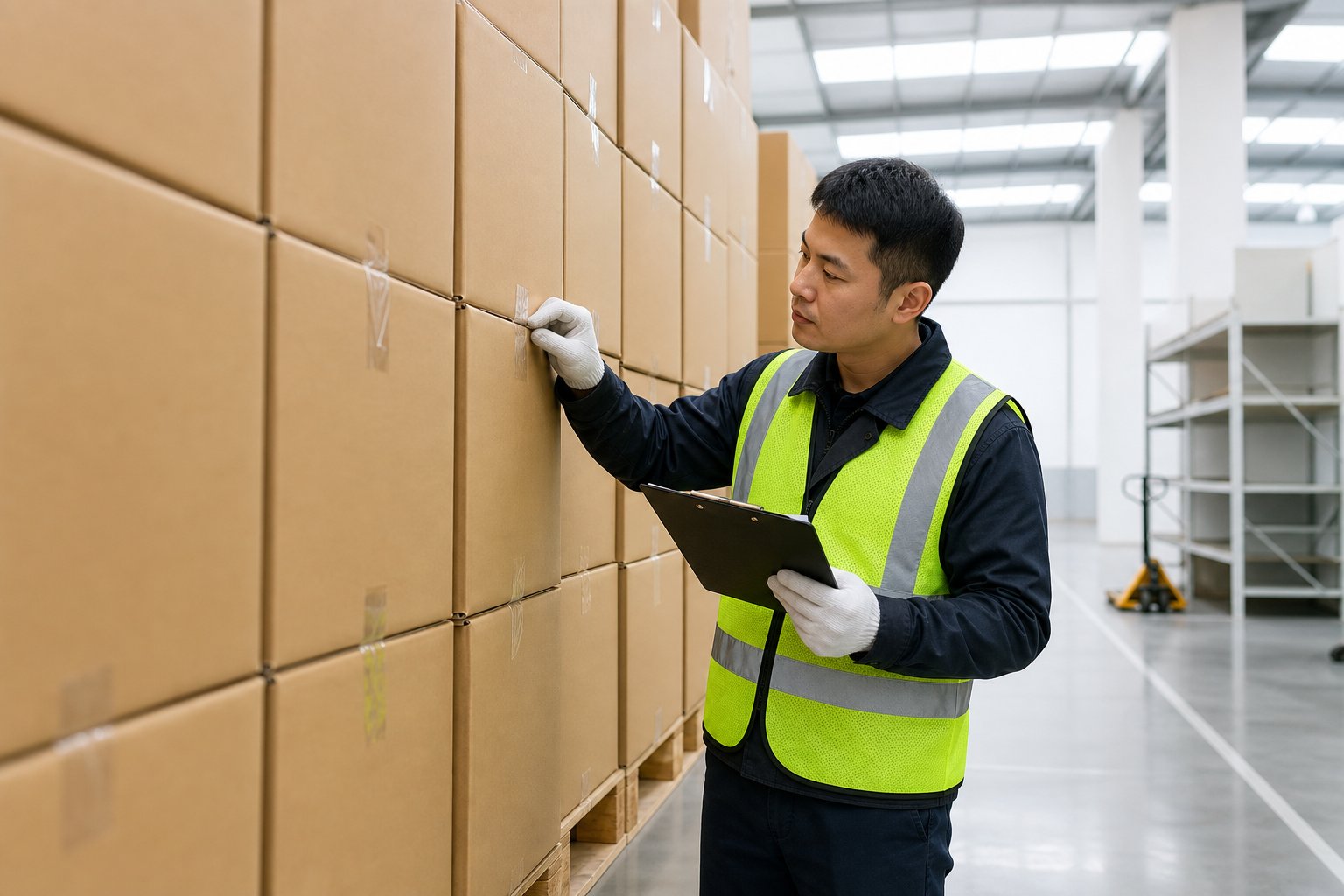
    Quality inspector checking a sealed carton before shipment release

    Deposit and balance: how the 30/70 split actually works

    The standard structure is 30% to start production and 70% before shipment, with variants such as 50/50 on smaller runs. A deposit is not a red flag — factories buy raw material with it, and a supplier who funds your entire order from their own cash flow is either enormous or not being straight with you. What matters is the ratio between commitment and visibility:

    • Keep the deposit at the smallest level the supplier genuinely needs for materials.
    • Tie the balance to a moment you control: after inspection passes, before the goods leave, never after.
    • On repeat orders, negotiate structure as well as price — moving from 30/70 to 20/80 is a concession factories can grant when a price cut is off the table.

    Whichever instalment you are paying, both run through one of our two official channels, in USD, against documentation your agent has confirmed.

    What to release the balance against

    Four things should be in your hands first:

    1. A passed inspection report from a third party, run against your specification sheet — see pre-shipment quality inspection for how AQL sampling works.
    2. Packing evidence: packing list plus photos or a short video of loaded cartons, shipping marks and total volume.
    3. Re-verified payment details, confirmed by voice with your sourcing agent — the discipline our payment safety notice asks for.
    4. A commercial invoice matching the contract on quantity, unit price, description and Incoterm.

    If one of the four is missing, you do not have a payment schedule. You have a hope.

    Protect yourself from payment fraud

    Payment-redirection fraud is the most expensive mistake in cross-border sourcing, and it almost always starts with an email rather than a bank. Before any transfer, check these:

    1. Payment details differ from those your sourcing agent provided — the exact case our safety notice covers: stop and contact us for confirmation first.
    2. The bank account name does not match the company on the contract, or payment is requested to a personal account, a crypto wallet, or an unrelated third country.
    3. An email — however polished — announces new bank details.
    4. A discount is offered for moving payment off the confirmed channel.
    5. The supplier resists putting specifications, MOQ, lead time and tolerances in writing.
    6. A pre-shipment inspection is refused, postponed, or waved away as unnecessary.

    One email to hengfang0001@gmail.com costs nothing; a redirected wire rarely comes back.

    Payment structures by order size

    • Under USD 3,000: the channel matters less than the discipline — confirm the beneficiary, keep records, and expect bank fees in the USD 20–40 range.
    • USD 3,000–20,000: T/T 30/70 with independent inspection before the balance, the standard path for small retailers importing their first mixed container.
    • Above USD 20,000: staggered releases with a retention until the forwarder confirms the load, or route payment through your agent so one party holds the inspection lever.

    Currency, fees and the paperwork layer

    Three quiet costs appear on nearly every settlement. Currency: we settle in USD, so if your account runs on another currency, your bank’s conversion spread applies before the money moves — and a transfer sent in another currency will not match our accounts. Incoterms: they decide who pays freight and duty, not who pays the supplier — DDP especially creates customs liability that payment platforms handle poorly, as we cover in shipping from China: methods, costs and customs. Documentation: a proforma invoice is a quotation; the commercial invoice is the settlement document that must match your customs declaration.

    Where a sourcing agent changes the payment equation

    A sourcing agent does not remove risk by magic; it changes who holds the pieces. Instead of wiring a factory you have never met, you pay one party that buys domestically in RMB, consolidates several suppliers, inspects before releasing the balance, and ships against a single document set. The agent is also who confirms your payment details and, if you choose that route, creates your Trade Assurance order. See what a China sourcing agent actually does.

    FAQ

    Which payment methods does Easy Buy China accept?

    Two. Wire transfer in USD from any country — bank fees typically USD 20–40 depending on your bank or provider, Wise or Veem available subject to local availability, and bank account details provided by your sourcing agent after order confirmation. And Alibaba Trade Assurance — a 2% additional platform fee, a single payment limit below USD 5,000, and an order your sourcing agent creates once you provide your Alibaba account email.

    Can I pay Easy Buy China by credit card, PayPal or letter of credit?

    No. Those are market-standard tools used in direct factory contracts, not channels we collect through. Always use the payment details confirmed by your sourcing agent.

    What should I do if the payment details I receive differ from what my agent sent?

    Stop and confirm before paying — the scenario our payment safety notice addresses. Contact hengfang0001@gmail.com through a channel you already trust.

    Can I get my money back if the goods are wrong?

    Through a bank transfer, only with the supplier’s cooperation or through legal action that is frequently uneconomic. Through Alibaba Trade Assurance the platform can mediate and refund against documented evidence, if you open the dispute inside the post-delivery inspection window.

    Buyer verifying an international supplier payment on a laptop

    The bottom line

    Safe payment in China sourcing is a sequence, not a single clever choice: confirm the channel, verify the counterparty, keep the deposit small, tie each release to a verifiable event, and inspect before the balance moves. Buyers who do those things keep their leverage through the whole order.

    Ready to place an order? Pay in USD by wire transfer, or ask your sourcing agent to set up an Alibaba Trade Assurance order — both channels, with their current fees and limits, are listed on our payment information page. Questions before you pay? Email hengfang0001@gmail.com. We source from verified suppliers and authorized brand distributors, inspect before release, consolidate orders, and ship to 50+ countries.
  • Incoterms Explained: EXW, FOB, CIF and DDP Compared (2026 Guide)

    Incoterms Explained: EXW, FOB, CIF and DDP Compared (2026 Guide)

    Incoterms are the three-letter rules that decide where your responsibility for a shipment starts and ends — who arranges carriage, who pays which cost, and at exactly which point the risk of loss passes from seller to buyer. The current edition is Incoterms 2020, published by the International Chamber of Commerce, and it contains eleven rules split into two groups: seven that work with any transport mode, and four reserved for sea and inland waterway shipments. Get the term wrong and you can be holding the loss for goods you thought the supplier was still responsible for.

    This guide explains what Incoterms do and do not cover, walks through all eleven rules, and shows which of them you will actually be quoted when sourcing from China.

    What Incoterms decide — and what they don’t

    Three things are settled by the Incoterm alone:

    • Cost — which party pays freight, insurance, terminal handling, export and import clearance, and duties.
    • Risk — the precise point at which loss or damage becomes your problem rather than the seller’s.
    • Obligations — who contracts the carrier, who handles export and import formalities, and who provides which documents.

    Four things that people wrongly assume are covered:

    Not covered by IncotermsSet by
    The price of the goodsYour contract or purchase order
    When and how you payPayment terms (T/T, letter of credit, escrow)
    Who owns the goods at any moment (title)Your contract’s terms of sale, and the applicable law
    Whether the goods match the specificationProduct spec, samples and inspection

    That last row is the one that costs importers real money. A DDP term does not mean the seller is responsible for quality. It means they are responsible for delivering to your door with duty paid. If the goods are wrong, the Incoterm will not help you — your inspection and payment terms will.

    The two groups

    Incoterms 2020 divides its eleven rules by transport mode, and the split is not cosmetic. Using a sea-only rule for air freight is a genuine error, not a technicality.

    GroupRulesUse for
    Any mode of transportEXW, FCA, CPT, CIP, DAP, DPU, DDPSea, air, road, rail, courier, or multimodal shipments
    Sea and inland waterway onlyFAS, FOB, CFR, CIFBulk and non-containerised cargo loaded directly onto a vessel

    The reason the four sea rules are restricted: they transfer risk at the ship’s side or on board the vessel, a moment that only exists when cargo is lifted over the rail. Containerised cargo handed to a terminal days before loading never experiences that moment, which is precisely why FCA, not FOB, is the correct rule for container shipments.

    All eleven rules compared

    RuleWho arranges main carriageWho pays main freightRisk passes to buyerInsurance obligationNotes
    EXW — Ex WorksBuyerBuyerOn collection at the seller’s premisesNoneBuyer is exporter of record. Practically unusable for imports from China
    FCA — Free CarrierBuyerBuyerOn delivery to the carrier the buyer nominatedNoneThe correct rule for containerised goods
    FAS — Free Alongside ShipBuyerBuyerWhen goods are placed alongside the vesselNoneSea only; bulk cargo
    FOB — Free On BoardBuyerBuyerWhen goods are on board the vesselNoneSea only; the classic misused term
    CFR — Cost and FreightSellerSellerWhen goods are on board the vesselNoneRisk passes before the seller’s costs stop
    CIF — Cost, Insurance and FreightSellerSellerWhen goods are on board the vesselSeller, minimum coverSea only; insurance is Institute Cargo Clauses (C)
    CPT — Carriage Paid ToSellerSellerOn delivery to the first carrierNoneAny-mode equivalent of CFR
    CIP — Carriage and Insurance Paid ToSellerSellerOn delivery to the first carrierSeller, broad coverAny-mode equivalent of CIF, with Institute Cargo Clauses (A)
    DAP — Delivered At PlaceSellerSellerOn arrival at the named destination, ready for unloadingNoneBuyer clears import and pays duty
    DPU — Delivered at Place UnloadedSellerSellerAfter unloading at destinationNoneThe only rule where the seller must unload
    DDP — Delivered Duty PaidSellerSellerOn arrival, ready for unloading, duty paidNoneMaximum seller obligation; seller needs an importer position at destination

    The pattern to notice sits in the middle four rules. Under CFR, CIF, CPT and CIP the seller pays freight all the way to the destination, but risk passes much earlier — at the vessel or the first carrier. That gap is where disputes live: if the container is lost mid-voyage under CIF, the seller has paid for a shipment that no longer exists, and the buyer carries the loss. This is why insurance matters most under exactly the rules where people assume they are most protected.

    The five rules you will actually be quoted from China

    Most Chinese suppliers quote one of five terms. Here is what each one really transfers.

    EXW — Ex Works

    The seller makes the goods available at their factory. You arrange everything: inland haulage in China, export declaration, freight, import clearance, duties, final delivery. This is the worst possible term for an overseas buyer. You become the exporter of record in China, which requires a Chinese export licence you almost certainly do not hold. Chinese suppliers quote EXW because it is the simplest term for them, not because it is good for you. Push back.

    FCA — Free Carrier

    The seller clears the goods for export and delivers them to a carrier you nominated at a named place — typically a Chinese inland depot or container yard. Risk transfers there. For containerised shipments, this is the rule you want. It keeps export clearance with the party who can actually perform it, while leaving freight and insurance to you so you can use your own forwarder and your own rates.

    Incoterms 2020 added a useful mechanism here: the buyer can instruct the carrier to issue a bill of lading with an on-board notation to the seller, which solves a long-standing problem for buyers paying by letter of credit who needed an on-board bill of lading before the container was actually loaded.

    FOB — Free On Board

    The seller delivers the goods on board the vessel at the named port of shipment. Risk passes when the goods are on board. Freight and insurance are yours.

    FOB is the most widely quoted term in Chinese sourcing and the most widely misused. It was designed for cargo lifted directly over the ship’s rail. For a container that sits at a terminal for a week before loading, there is no clean “on board” moment at handover, and neither party controls the goods during the gap. In practice FOB is usually acceptable if you are shipping FCL and your forwarder is competent — but FCA is the technically correct rule, and it removes an argument you do not need to have.

    CIF — Cost, Insurance and Freight

    The seller pays freight and insurance to the named destination port. Risk still passes on board the vessel in China. Insurance is minimum cover — Institute Cargo Clauses (C), which excludes a long list of perils including theft in many circumstances.

    Two things to check before accepting CIF: the insurance cover level, and whether the seller is overstating freight. CIF lets the seller bundle freight into the product price, which makes it very hard to compare suppliers. Ask for the FOB or FCA price alongside it so you can see what the freight actually costs.

    DDP — Delivered Duty Paid

    The seller delivers to your named destination with import duty and taxes paid. Maximum convenience, maximum opacity. You cannot see what you paid for freight or duty, and in most markets a foreign seller cannot legally act as importer of record without a local entity. If DDP is offered and the seller cannot explain who clears the goods and in whose name, treat it as a warning sign rather than a convenience.

    The two mistakes that cost the most

    1. Using FOB for containerised cargo. It is not wrong in everyday practice, but FCA is the correct rule, and the difference matters when something goes missing between the terminal gate and the vessel. Align the term with the physical reality of how your cargo moves.

    2. Assuming DDP transfers responsibility for quality. It does not. DDP is a delivery term. It says nothing about whether the goods match the specification, and it will not support a claim for defective stock. If you want protection on quality, buy it through inspection and payment terms.

    A third, quieter error is worth mentioning: quoting a term without a named place. “FOB China” is not a term, it is an argument waiting to happen. Every Incoterm must be followed by a specific place — “FOB Shenzhen, Yantian,” “FCA Ningbo,” “DDP Mumbai.” The whole point of the rule is the precision of the handover point.

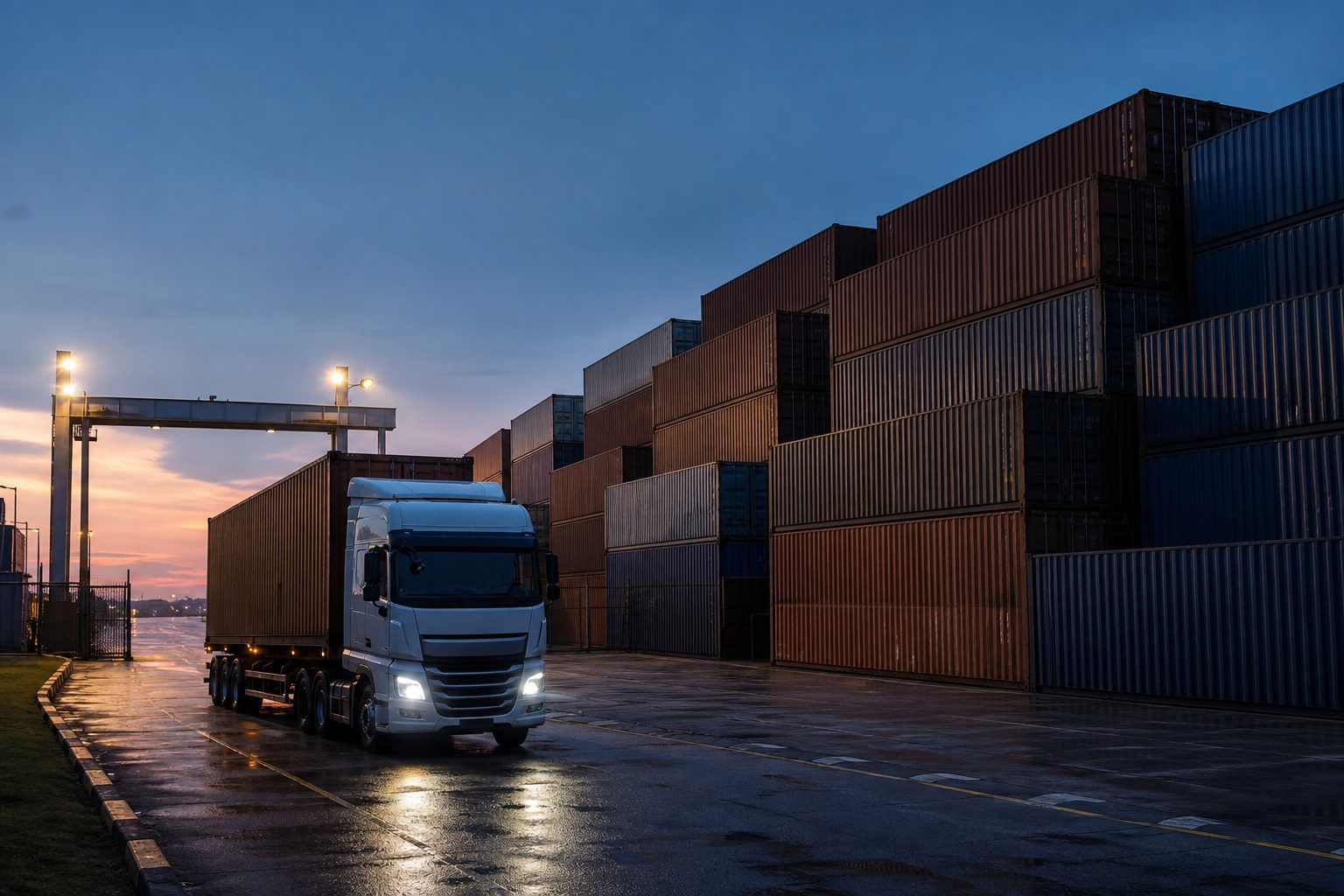
    Container yard at dusk with stacked shipping containers and a loaded truck entering through the yard gate
    Under FOB and CIF the risk moves while the seller is still paying the freight – the gap is where disputes live.

    Which term should you choose?

    SituationRecommendedWhy
    Containerised goods, you control freight and insuranceFCACorrect risk transfer, export clearance stays with the seller
    Containerised goods, you want the familiar termFOBAcceptable in practice for FCL; specify the port
    Bulk or non-containerised cargoFOB or FASDesigned for cargo lifted directly onto the vessel
    You want the seller to arrange freight but not dutyCPT or CIPRisk passes at the first carrier; check the insurance cover
    You want delivery to your door, duty paid by the sellerDDPOnly if the seller can lawfully act as importer of record
    You want delivery to your door, you clear importDAPClean split: seller delivers, you handle import formalities
    The supplier quotes EXWRe-quote as FCAEXW makes you the exporter of record in China

    If you are buying from several Chinese suppliers and consolidating, the term interacts with the consolidation rather than replacing it. Goods bought FCA and consolidated into one shipment mean one set of export documents and one freight booking instead of five — see how our warehouse and consolidation service handles that, and how the sourcing and purchasing team negotiates the term as part of the order rather than as an afterthought.

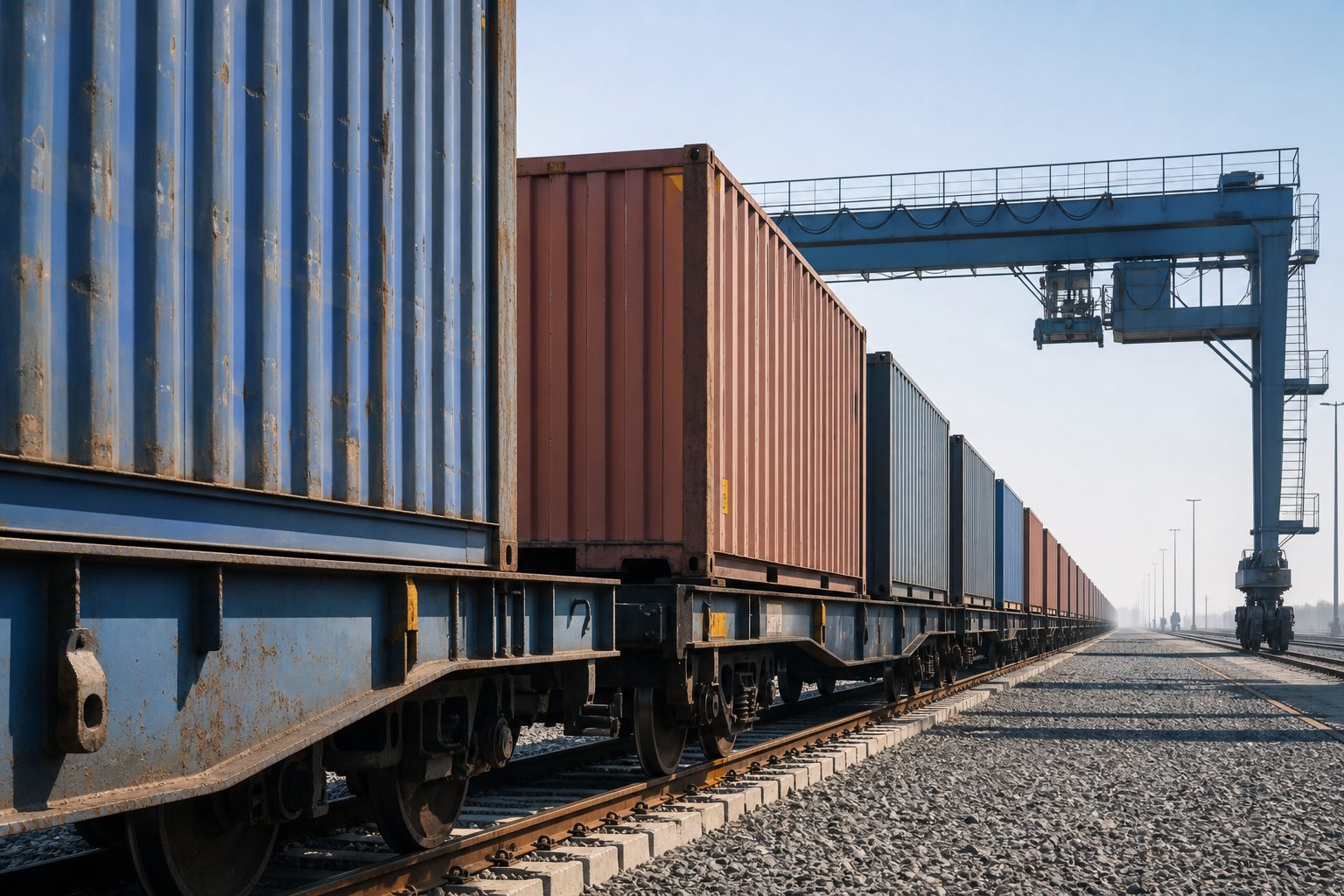
    Container train at an inland intermodal terminal with flatcars loaded with shipping containers under a rail-mounted gantry crane
    CPT, CIP and FCA work across every mode – containerised cargo no longer waits for a ship's rail.

    FAQ: Incoterms for importers

    Which version of Incoterms is current? Incoterms 2020, published by the International Chamber of Commerce, is the current edition. Always state the version in your contract — “FOB Yantian, Incoterms 2020” — because the rules changed between editions.

    What is the difference between FOB and FCA? FCA transfers risk when the goods are handed to the carrier you nominated; FOB transfers risk when the goods are on board the vessel. FOB is a sea-only rule designed for cargo loaded directly over the ship’s rail. For containerised cargo, FCA is the correct rule.

    Who pays import duty under CIF? You do. CIF covers cost, insurance and freight to the destination port. Import clearance, duty, taxes and inland delivery remain the buyer’s responsibility. If you want duty included, the term is DDP.

    Does DDP mean the seller is responsible for quality? No. Incoterms govern cost, risk and delivery obligations only. Quality is settled by your product specification, samples, inspection terms and payment conditions — not by the trade term.

    Is FOB or CIF better for buying from China? It depends on who can get better freight rates and how much visibility you want. FOB leaves freight and insurance with you, which usually gives you lower rates and a clear cost breakdown. CIF bundles freight into the supplier’s price, which is simpler but harder to audit. Ask for both prices and compare the freight line specifically.

    What insurance cover does CIF require? Minimum cover: Institute Cargo Clauses (C). It is deliberately narrow and excludes many perils. Under CIP, Incoterms 2020 requires broader cover — Institute Cargo Clauses (A). If you are shipping under CIF, buy your own cover or agree a higher level in the contract.

    Can I use FOB for air freight? No. FOB is restricted to sea and inland waterway transport. For air freight use FCA, CPT or CIP.

    Why do Chinese suppliers keep quoting EXW? Because it is the lowest-effort term for them: the goods leave the factory and their responsibility ends. It shifts export clearance to you, which is a problem because it normally requires a Chinese export position. Ask for an FCA price instead.

    Do Incoterms cover payment terms? No. Payment is governed by your contract, not by the trade term — typically T/T, a letter of credit or an escrow arrangement. The Incoterm and the payment method are separate negotiations, and a buyer financing a first order usually wants the payment schedule tied to inspection milestones rather than to the delivery term.

    What happens if the Incoterm is not specified in the contract? You will be arguing about it after a loss, which is the expensive way to learn the rule. Put the three-letter term, the named place and the version year in writing on every purchase order.

    The short version

    Incoterms decide cost, risk and delivery obligations — nothing else. Use FCA or FOB when you are controlling freight, CPT or CIP when the seller arranges carriage, DAP when you clear import and DDP only when the seller can lawfully act as importer of record. Never quote a term without a named place, never use a sea rule for air freight, and never assume a delivery term is a quality guarantee.

    The term is part of the negotiation, not a box to tick after the price is agreed. When we source a product for you, the trade term, the inspection scope and the consolidation plan are agreed together — because a good unit price under the wrong Incoterm is not a good deal. Easy Buy China works with importers in more than 50 countries with no consultation fee and low MOQ flexibility; see how the process works end to end.

  • Import from China to India: Duties, Customs and Shipping (2026 Guide)

    Import from China to India: Duties, Customs and Shipping (2026 Guide)

    Importing from China to India means paying Basic Customs Duty on the assessable value of your goods, a Social Welfare Surcharge of 10% on that duty, and then IGST on all of it added together — and getting your Bill of Entry cleared through ICEGATE with an IEC code, the right ITC(HS) classification, and BIS certification wherever a Quality Control Order applies. There is no de minimis floor to hide behind: India’s duty-free allowance for commercial imports is effectively zero, so a 30-unit pilot order is assessed exactly like a container.

    This guide is for businesses buying Chinese goods for the Indian market. It covers what you actually pay, the registrations and documents that get a shipment released, the compliance wall that stops more first-time importers than duty ever does, and how the three shipping modes compare on cost and transit time.

    Why India is a different import market in 2026

    China is India’s largest trading partner, and the dependency runs deepest in exactly the categories most importers deal in. A September 2026 study by the Koan Advisory Group and the Institute of Chinese Studies found that India relies on China for core electronics components across 71 product lines under HS Chapter 85 — up from 44 in 2018–19, an increase of more than 60%.

    Two 2026 developments cut in opposite directions, and both matter to your landed cost:

    DevelopmentEffectiveWhat it means for you
    Import duty removed on select electronics inputsJuly 2026India scrapped the existing 7.5% and 5% levies on key parts for mobile phone wireless charging modules, displays for medical devices and automobiles, and lithium-ion cells. The exemption runs to 31 March 2029
    BIS certification extended across more product categoriesRolling, through 2026Quality Control Orders now cover hundreds of imported product lines. Non-compliant consignments are stopped at customs, not at the retail shelf

    The pattern is worth internalising: India is making it cheaper to import components and harder to import unverified finished goods. If your product falls under a QCO, compliance is not a formality you can defer to your Indian buyer.

    What you actually pay: BCD, SWS and IGST

    India stacks its import charges rather than levying a single duty. Four charges apply to essentially every commercial consignment:

    ChargeCalculated onTypical rateNotes
    Basic Customs Duty (BCD)Assessable value of the goods0%–70% depending on ITC(HS) codeConsumer electronics commonly sit in the 15–20% band; some categories are far higher
    Social Welfare Surcharge (SWS)The BCD payable10%Introduced in Budget 2018 to replace the education cess — it is a surcharge on the duty, not on the goods
    IGSTValue of goods + BCD + SWS5%–28%, standard 18%Charged on the duty as well as the goods, which is why the effective rate exceeds the headline
    Customs handling feeCIF value1%Levied on goods value plus freight and insurance

    Three further levies apply selectively and are worth checking before you commit to a price:

    • Anti-dumping duty — imposed where goods are found to be sold below cost or market value in the exporting country. India investigates and applies these case by case, and Chinese-origin goods feature regularly.
    • Countervailing duty (CVD) — offsets subsidies the exporting country grants its manufacturers.
    • Safeguard duty — a temporary measure against a sudden import surge, applied by product rather than by country.
    • GST Compensation Cess — sits on top of IGST for a defined list of goods, mostly luxury and specific consumer categories.

    A worked example

    Take a consignment of consumer electronics with an assessable value of ₹10,00,000 (ten lakh rupees), an assumed BCD rate of 20%, and IGST at 18%:

    StepCalculationAmount
    Basic Customs Duty₹10,00,000 × 20%₹2,00,000
    Social Welfare Surcharge₹2,00,000 × 10%₹20,000
    Subtotal for IGST₹10,00,000 + ₹2,00,000 + ₹20,000₹12,20,000
    IGST₹12,20,000 × 18%₹2,19,600
    Total duty and tax₹4,39,600

    A 20% duty rate has become a 44% add-on. This is the single most common arithmetic error in Indian import planning: importers budget on the BCD rate and are surprised by the IGST, which is charged on the duty itself. Recall that IGST is creditable for a GST-registered business — but only if you are registered, and only against output tax, which is cold comfort on a pilot order you have not yet sold.

    And there is no threshold to slip under. India’s de minimis value is INR 0. Express couriers, samples and small parcels are all dutiable, so a low-value shipment carries the same compliance obligations as a container, minus the economies of scale.

    The registrations and documents that get your shipment released

    Indian clearance is a document and registration game before it is a logistics one. Missing paperwork is the most common reason consignments sit at port accruing storage charges.

    ItemIssued or obtained byWhy it matters
    Importer-Exporter Code (IEC)DGFTThe prerequisite for importing commercially. Without it there is no Bill of Entry in your name
    Bill of Entry (BoE)Importer or customs broker, filed on ICEGATEThe legal declaration that starts clearance. Filed electronically and supported by document upload
    eSANCHIT document setImporter or brokerThe electronic upload route for invoices, packing lists, bills of lading, certificates and licences attached to the BoE
    Commercial invoice and packing listChinese supplierEstablishes declared value and matches quantities to the physical consignment
    Bill of lading, air waybill or road waybillCarrierProves the transport contract and the gateway of arrival
    Certificate of OriginIssuing authority in ChinaEstablishes origin. India and China have no free trade agreement, so there is no preferential rate to claim — but origin still drives anti-dumping and safeguard exposure, and the certificate is now verified digitally
    BIS registration / QCO certificateBureau of Indian StandardsRequired where a Quality Control Order covers your product. Customs enforces it at the border
    Test reports and conformity fileManufacturer or accredited labSupports the BIS position and is what an audit asks for first
    ITC(HS) classificationYou, or your brokerDetermines duty rate, licensing and whether your product is Free, Restricted or Prohibited under Schedule I

    One structural point about the ITC(HS) code: India’s Foreign Trade Policy now operates as a living document, updated by notification rather than on a fixed cycle, and DGFT moved to a granular 8-digit classification. The practical consequence is that the correct code for your product can change while your order is in production. Lock the code before you place the order, and re-check it before the goods ship.

    BIS and QCO: the wall most first-time importers hit

    Duty is predictable. Compliance is where shipments actually die.

    A Quality Control Order (QCO) is not a customs rule — it is a product regulation issued by a ministry, enforced by customs at the port. If your product line is covered, the consignment needs BIS certification or a valid exemption. Arriving without either means the goods do not clear, regardless of how correctly you paid duty.

    Two 2026 mechanisms are worth knowing, because they are what turn a blocked shipment into a recoverable one:

    • The Transition Facilitation (Quality Control) Order, 2026. DPIIT introduced a 180-day transition window for goods dispatched or purchased before the relevant QCO came into force. Eligibility turns on the Bill of Lading and Bill of Entry dates falling within 180 days of the order taking effect. Guidance on how to operate the exemption was published in June 2026.
    • Facilitated BIS registration (Scheme II). Introduced in July 2026 for selected QCO products, it allows eligible Indian companies to register rather than undergo full factory inspection under Scheme I — a materially shorter route to market.

    The workstream is unglamorous but decisive: identify every QCO that touches your product before the order is placed, start the certification clock while the factory is still producing, and keep the Bills of Lading. Importers who treat BIS as a post-arrival problem pay for it in demurrage.

    Routes into India: sea, air and express

    ModeMain gatewaysTypical transitBest for
    Sea freight — FCLNhava Sheva (JNPT), Mundra, Chennai, Kolkata, Cochin14–22 days port to port from South China, Shanghai to Nhava Sheva often 12–20 daysVolume, heavy goods, full-container electronics
    Sea freight — LCLSame ports, plus inland container depots at Tughlakabad (Delhi) and BengaluruAdd roughly a week for consolidation and deconsolidationMixed cartons below container volume
    Air freightDelhi, Mumbai, Chennai, Bengaluru, Hyderabad2–8 daysHigh-value, launch stock, urgent replenishment
    Express courierDoor to door2–5 daysSamples and small parcels — remember duty applies from rupee one

    Indicative 2026 rates run around USD 800–1,500 for a 20-foot FCL container and USD 18–35 per CBM for LCL. Those are freight-line numbers, not landed cost; add duty, IGST, port charges, inland transport and brokerage before you compare a Chinese vendor against a domestic distributor.

    The gateway that makes sense depends on where your buyers are. Western India (Mumbai, Pune, Gujarat) usually clears through Nhava Sheva or Mundra. Southern buyers are cheaper through Chennai or Cochin. Northern importers often do better routing through Mundra and moving inland by rail to an ICD than paying for direct port handling.

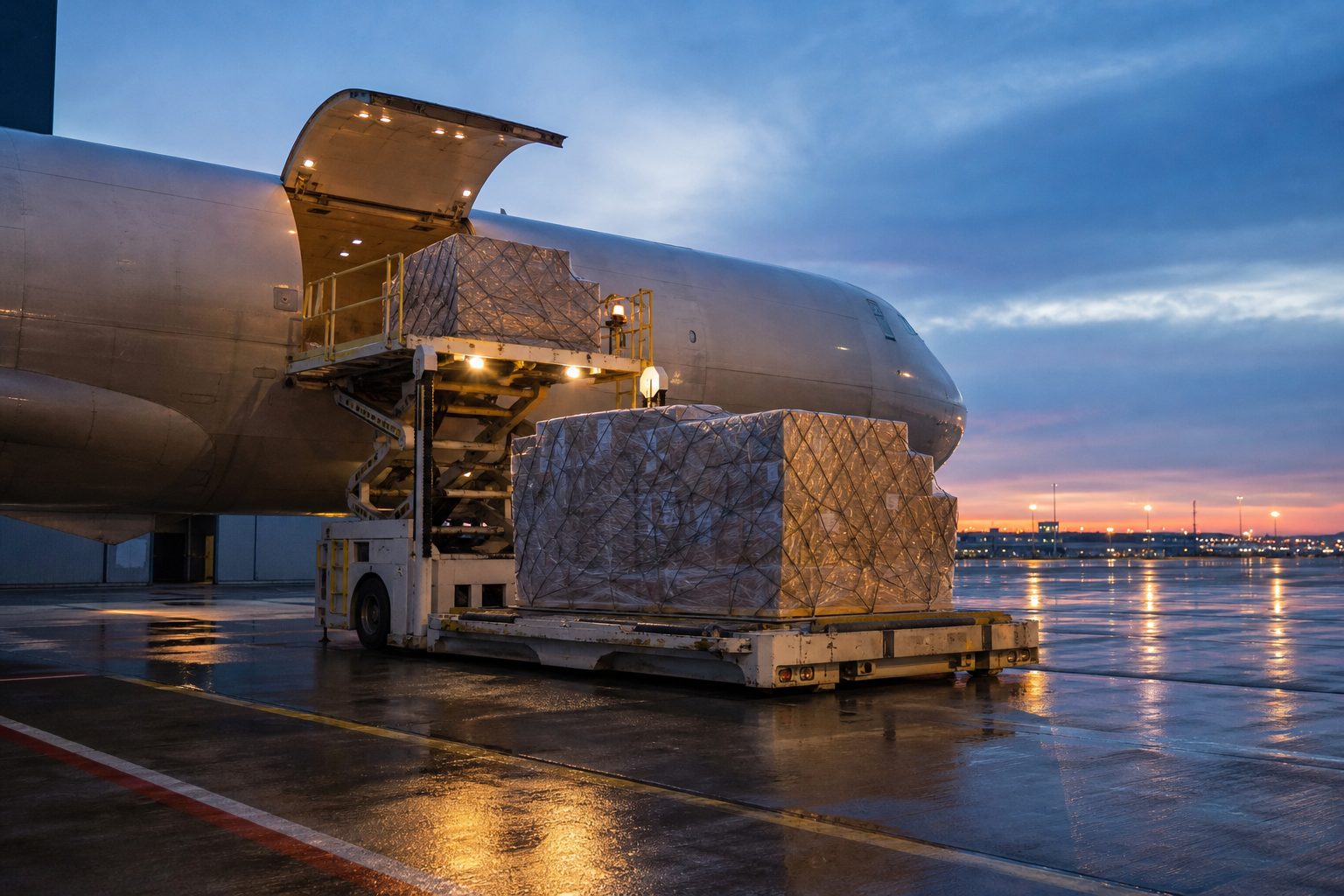
    Air cargo pallets being loaded into the cargo door of a wide-body freighter on an airport apron at dusk
    Air freight clears the distance in days, not weeks – at a price that only makes sense for launch stock and urgent replenishment.

    What to do before you place the order

    1. Get your IEC first. Everything downstream depends on it.
    2. Classify the product properly. A wrong ITC(HS) code distorts your duty, your licensing position and your compliance obligations at the same time.
    3. Check QCO coverage in writing. Ask the question of a compliance consultant, not of the supplier. Factories routinely do not know which Indian QCOs cover what they make.
    4. Price the duty stack, not the duty rate. Model BCD, SWS, IGST and the handling fee together, as in the worked example above.
    5. Verify the supplier before payment. A Chinese factory that cannot produce the test reports your QCO demands is a factory that cannot supply you, however good the sample looks.
    6. Inspect before the goods leave China. Discovering a defect after Indian clearance means you have paid duty and IGST on defective stock, and funded the return yourself.

    Steps 5 and 6 are the ones importers most often skip, and they are the two an agent earns its fee on. Our sourcing and purchasing team vets suppliers for export documentation habits and compliance capability rather than price alone, and a pre-shipment inspection verifies the goods while fixing them is still the factory’s problem.

    How to keep your landed cost down

    1. Consolidate multiple suppliers into one consignment. One Bill of Entry means one set of clearance, inspection and documentation costs instead of five. Our warehouse and consolidation service is built exactly for this.
    2. Claim the 2026 electronics exemptions where they apply. The parts duties removed in July 2026 run to 31 March 2029 — if your supply chain touches lithium-ion cells or the specified display and charging components, confirm your broker is classifying them under the exempt lines.
    3. Use the QCO transition window if you have been caught mid-order. The 180-day exemption is date-driven, so keep Bills of Lading and Bills of Entry properly filed.
    4. Match the mode to the deadline. Sea for volume, air only when the margin justifies it, express never for commercial quantities.
    5. Reduce the number of suppliers you buy from. Every additional factory is another set of documents, another payment, another collection and another compliance question.
    6. Inspect in China, not in India. Duty and IGST are charged on what you import. Finding defects before the container ships is the only version of quality control that saves you money rather than documenting your loss.

    If you sell under your own brand, OEM and ODM customisation handles private-label packaging and market-specific labelling at the factory stage — cheaper to fix there than in a warehouse. For the sourcing side of the same question, our guide to what a China sourcing agent does walks through the process end to end, and the Vietnam import guide is useful if you distribute across multiple Asian markets.

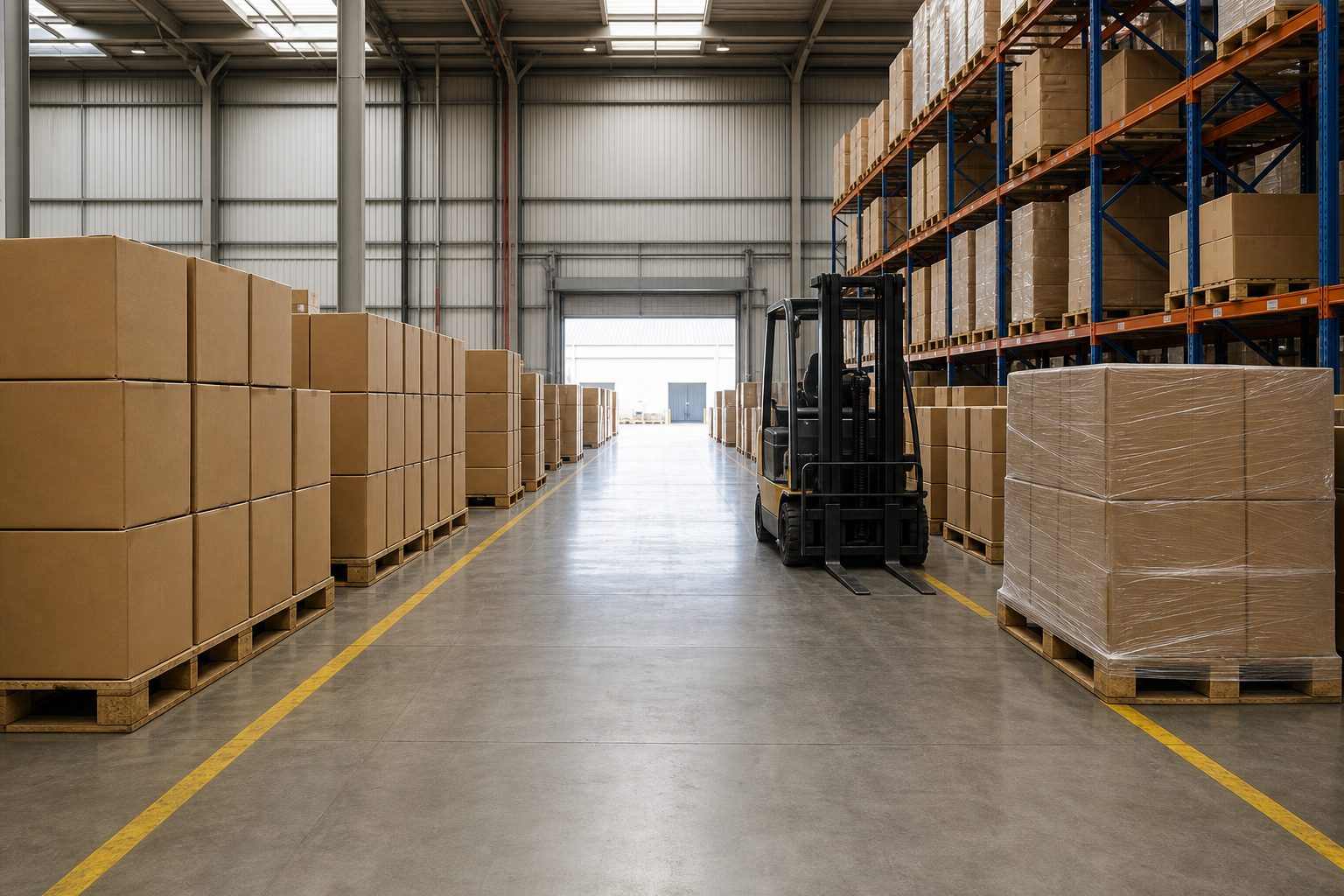
    Palletised cartons stacked in a modern logistics warehouse aisle with a forklift and a stretch-wrapped pallet ready for dispatch
    Consolidating several suppliers into one consignment means one Bill of Entry instead of five.

    FAQ: importing from China to India

    How much is import duty from China to India? There is no single rate. Duty is set per ITC(HS) code and can range from 0% to 70%. On top of Basic Customs Duty you pay a Social Welfare Surcharge of 10% on the duty amount, then IGST (standard 18%) on the goods value plus BCD plus SWS, plus a 1% customs handling fee on CIF value. A 20% BCD rate typically works out to roughly a 44% addition once the full stack is applied.

    Is there a duty-free limit for imports into India? Effectively no. India’s de minimis value is zero, so every commercial consignment is dutiable regardless of value. Express parcels and small orders are assessed on the same structure as a container.

    Do I need an IEC to import from China? Yes. The Importer-Exporter Code issued by DGFT is the prerequisite for commercial importing. Your Bill of Entry is filed in the name of the IEC holder, either directly or through a customs broker.

    What is a Bill of Entry and where is it filed? The Bill of Entry is the legal customs declaration that initiates clearance. It is filed electronically through ICEGATE, with supporting documents uploaded through eSANCHIT. Duty is also paid through the ICEGATE e-payment facility.

    Does India have a free trade agreement with China? No. There is no preferential tariff arrangement between India and China, so Chinese-origin goods are assessed at the applicable MFN rate. What origin documentation does affect is exposure to anti-dumping and safeguard duties, which are applied case by case.

    What is BIS certification and do I need it? BIS certification is required for product lines covered by a Quality Control Order issued by the Indian government. QCOs are product regulations enforced by customs at the border, so goods arriving without certification or a valid exemption do not clear. Coverage has expanded substantially through 2026, so confirm the position for your specific product before ordering.

    How long does customs clearance take in India? Well-documented consignments filed accurately can clear quickly; consignments flagged for document review or physical examination take longer. The dominant variable is the completeness of your filing, not the port. Most avoidable delays trace back to an incorrect ITC(HS) code, a missing QCO document or a value the officer cannot reconcile.

    How long does shipping from China to India take? Sea freight typically runs 14–22 days port to port depending on the route, with Shanghai to Nhava Sheva often in the 12–20 day range. Air freight takes 2–8 days and express couriers 2–5 days. Add clearance and inland transport before quoting a delivery date to a customer.

    Can I import small quantities from China to India? Yes, and low minimum order quantities are one of the reasons buyers use a sourcing agent. The constraint is not volume but compliance: a 50-unit pilot still needs an IEC, a correct classification, and BIS coverage where a QCO applies.

    Should I buy directly from a Chinese supplier or use an agent? Direct works if you already have a trusted factory, a customs broker who knows your category, and a tested inspection process. An agent earns its fee when you are buying from several suppliers, need pre-shipment inspection, want goods consolidated into one Bill of Entry, or need someone to confirm the compliance position before the money moves rather than after the container arrives.

    Importing into India in 2026: the short version

    Get the IEC. Classify the product correctly and re-check the code before shipping. Model BCD, SWS, IGST and the handling fee together instead of budgeting on the headline rate. Confirm QCO and BIS coverage before you place the order, and keep your Bills of Lading in case you need the 180-day transition window. Then choose the gateway that matches where your buyers actually are.

    If you would rather not manage four Chinese suppliers, a QCO question and a port decision at the same time, tell us what you are importing — we will map the sourcing, inspection, documentation and shipping path for India before you commit to an order. Easy Buy China works with retailers, wholesalers and online sellers in more than 50 countries, with no consultation fee and low MOQ flexibility.

  • What Is a China Sourcing Agent? How It Works, What It Costs, and How to Choose One

    What Is a China Sourcing Agent? How It Works, What It Costs, and How to Choose One

    A China sourcing agent is a company that buys products from Chinese suppliers on your behalf and manages the whole order for you — supplier vetting, negotiation, payment, quality control, consolidation and shipping to your door. You brief the agent on the product, target price, quantity and destination; the agent turns that brief into a vetted supplier, a quotation, an inspected shipment and a tracking number. You deal with one contact instead of a dozen factories, trading companies and freight brokers.

    That definition is the short version. The rest of this guide covers what the role actually includes, when you genuinely need one, how the process runs step by step, the fee models you will be quoted, and the checks that separate a reliable agent from an expensive middleman.


    What a China sourcing agent actually does

    A sourcing agent’s job is to absorb the parts of importing that are hardest to do from another country. In practice that means five things:

    • Supplier identification and vetting — finding factories and authorized distribution channels, then checking that they are real, licensed and able to supply the product you specified.
    • Negotiation on your behalf — agreeing unit price, minimum order quantity, packaging, lead time and payment terms in the supplier’s language.
    • Quality control before shipping — inspecting the goods in China while problems are still fixable, and sending you photo or video evidence rather than assurances.
    • Consolidation and warehousing — receiving goods from multiple suppliers, re-checking them, and packing them into one outbound shipment.
    • Export documentation and delivery — handling the paperwork, customs coordination and the final leg to your warehouse, store or fulfillment center.

    A sourcing agent is not the same as a marketplace or a freight forwarder

    This is where most first-time buyers get confused, because the four roles overlap at the edges but solve different problems.

    You are dealing withWhat they doWhat they do not do
    Sourcing agentFinds and vets suppliers, negotiates, places orders, inspects, consolidates, shipsManufacture the product; own your brand
    Marketplace (Alibaba, 1688, etc.)Lists suppliers and provides contact and escrow toolsVet quality for your order, inspect goods, consolidate multiple suppliers
    Trading companyBuys from a factory and resells to you at a markupDisclose its source factory, work on your margin terms
    Freight forwarderMoves goods you have already boughtFind suppliers, negotiate price, run quality control

    A useful way to think about it: a marketplace gives you options, a forwarder gives you movement, and an agent gives you outcomes. If your problem is “I cannot tell which of these 40 suppliers is real, and I do not want to pay for goods I have never seen,” you need an agent. If your problem is only “my container needs to move from Ningbo to Rotterdam,” you need a forwarder.


    When you need a sourcing agent — and when you do not

    Sourcing agents are not automatically worth their fee. The honest test is whether the work they do is work you can do yourself, cheaper and better.

    You will usually benefit from an agent when:

    • You are buying from several suppliers and want one consolidated shipment instead of five freight quotes and five sets of paperwork.
    • You cannot verify that a supplier is real, licensed, and actually able to produce what they advertise.
    • You need inspection before the goods ship, not a dispute process after they arrive.
    • You are importing branded or regulated goods, where authenticity, regional versions and destination compliance carry real risk.
    • Your order size is below the level at which factories will take you seriously on their own.
    • You are testing a new category and want a pilot order rather than a container commitment.

    You probably do not need one when:

    • You buy a single SKU in high volume from a factory you already know and trust.
    • You already run your own quality inspection and freight program.
    • You only need transport — that is a forwarder’s job.
    • You want a supplier list and intend to manage every step yourself.

    There is no shame in the second list. Paying a fee for work you are already doing is not diligence, it is overhead.


    How the process works, step by step

    A well-run sourcing engagement follows a predictable sequence. Problems in first orders almost always trace back to a step being skipped rather than to the wrong product being chosen.

    Step 1 — Brief and consultation

    You describe the product, target price, quantity, quality level and destination country. This is the highest-leverage hour of the whole project: the clearer your brief, the fewer sampling rounds and surprises later. A good agent will push back on unrealistic target prices here rather than quietly accepting them and disappointing you in production.

    Step 2 — Supplier matching and quotation

    The agent identifies which factories or distribution channels can actually supply your specification, and flags anything that cannot be supplied reliably. You should receive a consolidated quotation that includes the product cost and the costs around it — inspection, consolidation, freight and duties — rather than a bare unit price.

    Step 3 — Sampling and order placement

    Before a production run, order samples and test them yourself. This is also where customisation decisions get locked in: materials, packaging, branding, manuals and plug types. Only after samples are approved does the bulk order go to the factory, with quality standards and inspection points agreed in writing.

    Step 4 — Quality control before shipping

    The critical step. Goods are inspected in China while there is still time to fix or reject them. Ask for evidence you can actually evaluate — video or photo inspection of the real units and cartons, not stock images supplied by the factory. If a supplier resists inspection, that is itself information.

    Step 5 — Warehousing and consolidation

    If your order comes from multiple suppliers, everything is received, re-checked and packed into a single outbound shipment. Consolidation is where freight cost stops being proportional to the number of suppliers you bought from.

    Step 6 — Export, customs and final delivery

    The agent coordinates export documentation and customs clearance and delivers to your address, warehouse or fulfillment center, with tracking you can follow.

    Easy Buy China runs this sequence as one managed service: supplier matching within 24 hours of your brief, verified procurement, pre-shipment video inspection, free warehousing while an order is consolidated, and door-to-door delivery. You can see the full flow on the how it works page.


    What it costs: the fee models you will be quoted

    There is no single industry rate, because agents charge for different scopes of work. Almost every quotation you receive will be one of four models, or a combination.

    Fee modelHow it worksWhere you will see itWhat to watch
    Percentage of order valueAgent takes a commission on the value of goods purchasedMost common model for general sourcingDoes the percentage apply to product cost only, or also to freight and inspection?
    Flat fee per orderFixed amount per purchase order or per shipmentSmaller orders, simple single-supplier buysCheaper on large orders, can be expensive on repeated small ones
    Retainer or monthly feeFixed monthly amount covering ongoing sourcing activityBuyers with continuous, multi-category purchasingAsk what happens in a month with no orders
    HybridMinimum fee plus percentage above a thresholdMid-size importersMake sure the minimum is stated in writing

    What actually drives your fee up or down

    • Order value — small orders carry proportionally higher handling cost, so minimum fees appear.
    • Number of suppliers — five suppliers means five negotiations, five payments and five collections.
    • Number of SKUs and customisation — OEM or private label work adds development and sampling cycles.
    • Inspection depth — a visual carton check is not the same work as one-by-one unit verification.
    • Freight mode and destination — air versus sea, and how demanding the destination market’s compliance rules are.

    The number that matters is landed cost, not unit price

    A low factory price tells you almost nothing until you add everything around it:

    Landed cost = product cost + agent fee + inspection + consolidation + freight + duties and taxes + payment costs

    Two quotations can differ by 40% at the unit-price line and land within 5% of each other once freight, consolidation and duties are added. Always ask for a landed-cost breakdown before comparing suppliers — our shipping from China guide walks through the freight and customs side of that calculation.

    One structural note worth understanding: some agents build their margin into the wholesale price they quote instead of billing a separate consultation fee. Easy Buy China works this way — consultation carries no fee, and pricing is quoted as a complete package. Whatever model you choose, get the fee structure in writing before the first order, and treat any quote that cannot be explained line by line as a warning sign.


    How to choose a sourcing agent: 7 checks

    Run these before you send money, not after.

    1. Can they name where the goods will come from? A credible agent can tell you which factories or authorized channels will supply your order, and will tell you plainly when something cannot be sourced. Vague answers here predict vague outcomes.
    2. Do they show inspection evidence as standard? Ask what an inspection report looks like before you order. If the answer is “we check the goods,” rather than a sample video or photo report, keep looking.
    3. Is the pricing transparent and complete? You want product cost, agent fee, inspection, consolidation, freight and duties in one document. Hidden markups usually appear later as “unexpected” charges.
    4. Do they handle regional versions and compliance? Plug types, voltage, app language, manual language and packaging language differ by market — and are the single most common source of unsellable stock. For branded goods, authenticity documentation matters just as much; our guide to brand sourcing covers that process in detail.
    5. Can they consolidate several suppliers? If you buy five brands from five suppliers, consolidation is where your cost advantage is protected or lost.
    6. Who owns after-sales and warranty claims? Establish in writing who replaces defective units and how, before you need it.
    7. How fast and how clearly do they communicate? Responsiveness during the sales process is the best available predictor of responsiveness after your money has moved.

    Common mistakes first-time importers make

    • Skipping samples to save time. The cost of one bad production run usually exceeds the cost of the first two seasons.
    • Comparing unit prices instead of landed costs. See above — this is the single most expensive arithmetic error in importing.
    • Ordering too much at once. A pilot order of a modest quantity tells you what actually sells in your market at a fraction of the risk.
    • Assuming a familiar brand name means safety. Recognised products attract counterfeits; verification is not optional simply because you recognise the logo.
    • Treating quality control as optional. Inspection costs a small fraction of what unsellable inventory costs.
    • Ignoring lead times. Production plus shipping typically runs weeks, not days, so plan reorders before you run out, not after.

    If you are buying your first order from China, our guide for small retailers covers the low-MOQ and risk-management side in more depth, and the quality inspection guide explains what a pre-shipment inspection should include.


    FAQ

    What is the difference between a China sourcing agent and a trading company? A trading company buys from a factory and resells to you at a markup, keeping its source confidential. A sourcing agent works for you: it discloses the supply channel, negotiates on your terms, and charges a stated fee for the service rather than earning an undisclosed spread.

    How much do sourcing agents charge? It depends on the engagement model rather than a single industry rate. Agents typically quote a percentage of order value, a flat fee per order, a monthly retainer, or a hybrid with a minimum fee. The number moves with order value, how many suppliers are involved, how much customisation is required and how deep the inspection goes. Ask for the fee structure in writing and compare quotations on landed cost, not on unit price.

    Do I need a company in China to work with a sourcing agent? No. You buy as a foreign buyer and the agent handles the Chinese side — supplier negotiation, domestic collection and export documentation. What you do need is a clear brief and a destination address.

    Can a sourcing agent help with small orders? That is precisely where a good agent changes the equation. Factories enforce minimum order quantities because dealing with small buyers is not worth their time; an agent that consolidates demand from multiple buyers, or sources from distribution channels rather than production lines, can support genuine pilot orders. If low-volume testing matters to you, make it the first question you ask.

    Is it cheaper to just buy directly on Alibaba? Sometimes — if you already know the supplier, the product and the freight route. On a first order, the marketplace solves discovery and nothing else: it does not verify that the supplier can produce your specification, does not inspect your goods, and does not consolidate across suppliers. Buyers frequently discover that the savings on the commission are smaller than the cost of one rejected shipment.

    Who handles customs clearance? In a managed sourcing arrangement the agent coordinates export clearance from China and the documentation your goods need to travel. Import duties and destination-market taxes are normally your responsibility as the importer of record, and a good agent will tell you what those are likely to be before you order rather than after.

    How long does a first order take? Sampling and supplier selection usually dominate the early timeline, and production plus shipping sits on top of that. Buyers who need goods for a specific season should start the conversation well ahead of it rather than optimising for the fastest possible shipment.

    What does a sourcing agent need from me to start? Four things: the product and its specification, a target price, a quantity, and a destination country. Add your quality expectations and any branding requirements. That is enough for a serious agent to come back with a sourcing plan and a quotation.


    Send one brief, get a managed sourcing plan

    The value of a sourcing agent is not that they can find suppliers — search engines can do that. It is that they own the parts you cannot control from abroad: whether the supplier is real, whether the goods match the specification, and whether your shipment leaves China correctly documented and economically consolidated.

    Easy Buy China works as a single point of contact across that process, serving retailers, wholesalers and online sellers in more than 50 countries with $0 consultation fee and low MOQ flexibility. Send your product, target price, quantity and destination, and you will get a sourcing plan with a consolidated quotation — including a warehousing and delivery route and, where relevant, OEM or ODM customisation options.

    If you sell to consumers rather than businesses, the retailer sourcing page is the faster starting point.


  • Import from China to Vietnam: Duties, Customs and Shipping (2026 Guide)

    Import from China to Vietnam: Duties, Customs and Shipping (2026 Guide)

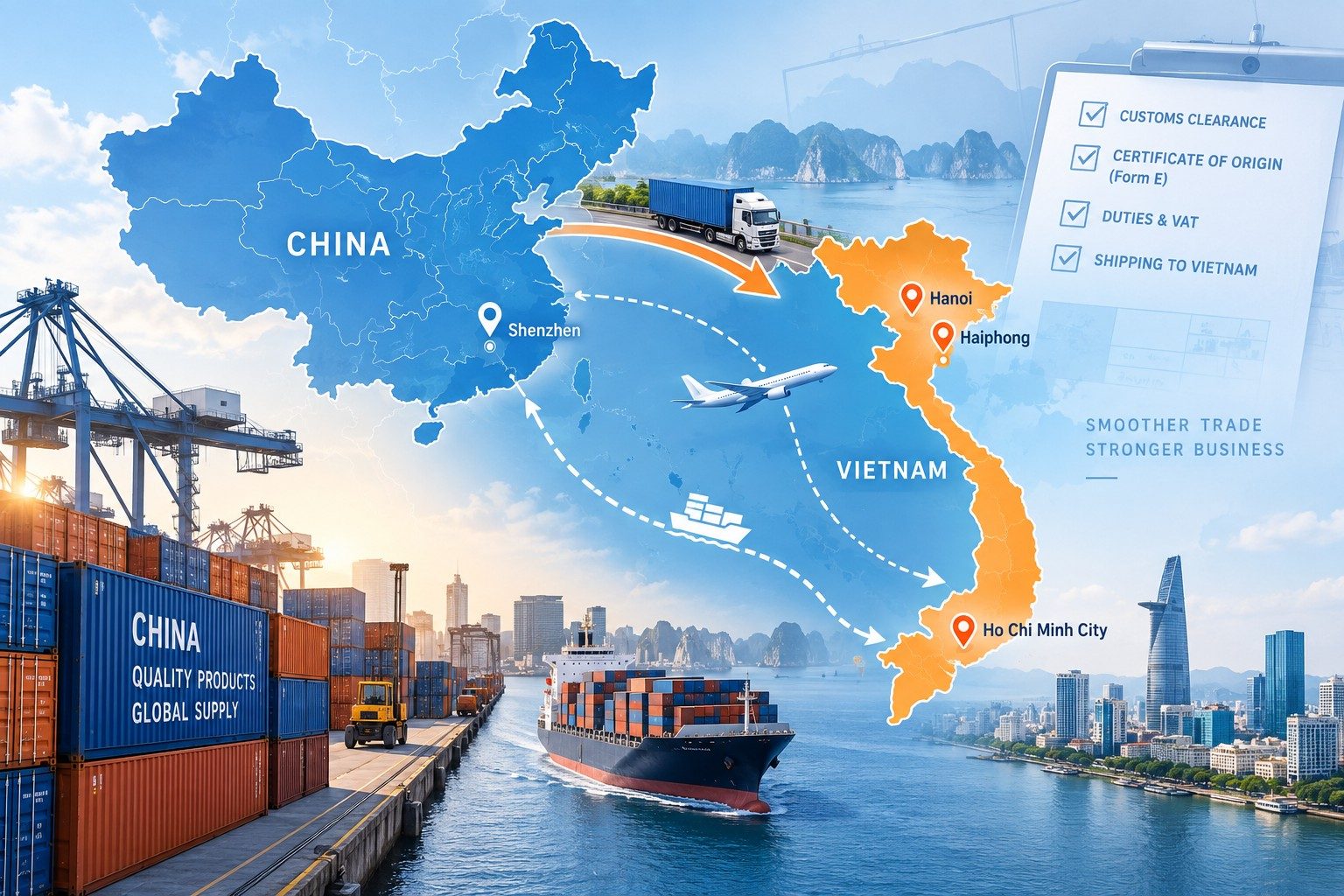
    Importing from China to Vietnam means paying import duty on the CIF value of your goods, then VAT on the CIF value plus duty — and in 2026 it also means clearing a completely rewritten rulebook. Vietnam put more than 200 laws, decrees and circulars into force on 1 July 2026, added another foreign-trade decree on 5 September 2026, and abolished the low-value exemption that used to cover small shipments. This guide is written for businesses buying Chinese goods for the Vietnamese market: what you pay in duty and VAT, which documents get a shipment released, which border gates move fastest, and how to keep your landed cost down.

    What importing from China to Vietnam involves

    Buying straight from a Chinese supplier is simple right up to the point where something goes wrong: a factory that cannot produce a valid Certificate of Origin, packaging that does not meet Vietnamese labelling rules, or a consignment sitting at the border while storage charges accumulate. Those are the six steps where Vietnamese importers most often lose time or money.

    StepWhat it involves
    1. Sourcing the supplierFactories identified and checked for pricing, capability and export documentation habits
    2. Negotiating the orderTarget price, MOQ and payment terms agreed with the factory
    3. Quality control before shippingInspection at the factory, before you pay duty and VAT on defective goods
    4. ConsolidationGoods from several suppliers collected and shipped as one consignment
    5. Export documentationOrigin certificates and export papers prepared so the shipment is not held at the border
    6. Freight and deliverySea, road or air arranged to Hanoi, Ho Chi Minh City or your own warehouse

    Why 2026 is a different year for Vietnam imports

    Vietnam did not tweak its import rules in 2026 — it replaced them. On 1 July 2026 alone, roughly 29 laws, 49 decrees and 72 circulars took effect, according to logistics law roundups published by Vietnamese freight and legal teams. Four of those changes affect almost every commercial importer:

    ChangeEffectiveWhat it means for you
    Decree 169/2026/ND-CP — customs administrative penalties1 Jul 2026Replaces Decree 128/2020. Penalties for incorrect declaration of HS code, customs value or origin are explicit, and penalties applied on electronic platforms are codified for the first time
    Tax Administration Law 2025 (Law No. 108/2025/QH15)1 Jul 2026Risk-based taxpayer classification; the window for supplementary tax declarations shrinks from 10 years to 5 years
    New customs authority codes (Notice 17920/TB-CHQ)1 Jul 2026Declarations must use the new codes — old codes are rejected at intake, which can stall a shipment before inspection even starts
    Decree 292/2026/ND-CP — foreign trade management5 Sep 2026Replaces Decree 69/2018. Stricter temporary import/re-export limits, an expanded prohibited-goods list, and Certificate of Free Sale documents must be in English (or translated and certified)

    Two more changes sit behind these and matter just as much to anyone importing consumer goods:

    • Decree 37/2026/ND-CP replaced the old Group 1 / Group 2 quality system with risk-based classification (low / medium / high) from 1 July 2026, and formally allows electronic labels alongside physical ones.
    • Circular 31/2026/TT-BCT kicked off mandatory traceability for higher-risk goods under the Ministry of Industry and Trade, registered through the national VeriGoods system — registration from 1 July 2026, full traceability before goods enter circulation from 1 January 2027.

    The practical takeaway: a supplier invoice and a packing list are no longer enough to guarantee a clean clearance. Your HS code, origin documentation and product labels are now the things customs audits.

    What you actually pay: duty, VAT and the CIF rule

    Vietnam calculates import duty on the CIF value — cost, insurance and freight combined, not the ex-works price your supplier quotes. VAT is then charged on CIF + duty, which means you pay VAT on the duty itself.

    ChargeBaseTypical rateNotes
    Import dutyCIF value0% with a valid ACFTA Form E for most product lines; around 7.9% average at ordinary MFN ratesRates are set per HS code and can run far higher on consumer goods
    VATCIF + dutyStandard 10%, reduced rates of 5% and 0% for certain goodsA 2-percentage-point reduction applies to certain goods and services from 1 July 2025 to 31 December 2026
    Special Consumption TaxCIF + dutyVariesApplies to alcohol, tobacco, automobiles and similar categories
    Other fees—VariesCustoms fees, inspection charges, port and storage, customs broker fees

    The single biggest lever is the ACFTA Certificate of Origin. China and Vietnam are both parties to the ASEAN–China Free Trade Area, so most Chinese-origin goods that arrive with a valid Form E certificate clear at 0% or a heavily reduced rate instead of the MFN rate. Goods shipped without a valid Form E are assessed at MFN rates — the difference between 0% and 20–30% on some lines is often larger than any supplier discount you negotiated.

    The low-value exemption is gone. Vietnam ended the import tax exemption for goods valued under 1 million VND sent by express delivery, and customs now applies automated VAT collection to those consignments. If your business model depends on a steady trickle of small parcels, assume tax applies from the first dong — and price it in.

    HS code accuracy is now a penalty exposure, not a formality. Under Decree 169/2026, incorrect declaration of HS code, value or origin is an explicit penalty category. The same data also feeds the risk-based classification used to decide how closely your goods get inspected, so a wrong code can cost you twice: once at the border, once in a post-clearance audit that can reach back five years.

    The documents that get your shipment released

    Vietnamese clearance is a document game. Missing or sloppy paperwork is the number one reason shipments sit at the border while storage charges accumulate.

    DocumentIssued byWhy customs wants it
    Commercial invoiceSupplierEstablishes the declared value customs duty is calculated on
    Packing listSupplierUsed to match declared quantities against the physical consignment
    Bill of lading, road waybill or air waybillCarrierProves the transport contract and which border gate the goods arrive through
    Certificate of Origin Form ESupplier / issuing authority in ChinaThe document that unlocks ACFTA preferential duty. A defective or late Form E means MFN rates
    Certificate of Free Sale (CFS)Country of origin authorityRequired for certain regulated products. Under Decree 292 it must be issued in English, or translated into Vietnamese and certified
    Conformity declaration / test reportsManufacturer, accredited labFeeds the new risk-based quality assessment under Decree 37/2026
    Product labelsManufacturerVietnamese-language labelling rules; electronic labels are now permitted alongside physical ones
    Import licenceVietnamese authorityRequired for restricted or conditional goods
    Traceability data (VeriGoods)ImporterRegistering product identification codes from 1 July 2026 for categories under MOIT management

    Two details that catch importers out in practice: the Form E must be valid at the time of declaration — a certificate issued days late cannot always be applied retroactively — and product labels are inspected, not just the goods. If the retail packaging carries a different brand or origin than the declaration, the shipment can be treated as misdeclared goods.

    What e-commerce and brand sellers need to plan for

    Vietnam passed its first standalone E-commerce Law (2025), effective 1 July 2026, and it reaches across the border:

    • Seller identity verification through VNeID is mandatory, and transactions must run through the seller’s own payment account.
    • Foreign e-commerce platforms must have an authorised representative or a legal entity in Vietnam — selling into Vietnam from abroad without a local foothold is no longer a grey area, it is a compliance breach.
    • Sellers must disclose product quality and labelling information in full; conditional business lines need supporting documentation before a storefront can open.
    • Trading in counterfeit, smuggled or IP-infringing goods, or goods of unknown origin, is explicitly prohibited.

    Alongside that, Decree 252/2026/ND-CP (effective 1 July 2026) tightened VAT rules for foreign suppliers and digital platforms, and the Tax Administration Law extended e-commerce withholding obligations. If you sell on Vietnamese marketplaces, assume the platform will withhold tax on your behalf and report your volumes.

    For importers of consumer electronics, appliances and similar goods, the practical workstream is boring but unavoidable: get the HS codes right, keep a conformity file with test reports, prepare Vietnamese labels before production finishes, and register traceability data if your category is on the MOIT higher-risk list.

    Routes into Vietnam: sea, land and air

    How you ship decides both your transit time and how much customs attention the consignment attracts.

    ModeMain gatewaysTypical transitBest for
    Sea freight (FCL / LCL)Haiphong in the north; Ho Chi Minh City and Cai Mep in the southRoughly 3–10 days port to port from South China, depending on route and sailing scheduleBulk orders, heavy goods, full-container electronics
    Land / road freightLang Son (Huu Nghi), Quang Ninh (Mong Cai – Bac Luan II) and Lao Cai corridors3–7 days door to door including clearanceNorthern buyers, mixed cartons, fast replenishment
    RailConnections via the Lang Son / Dong Dang corridorSeveral days, scheduledMedium volumes where land is congested
    Air freightNoi Bai (Hanoi), Tan Son Nhat (Ho Chi Minh City)2–5 daysHigh-value, time-critical goods
    Express courierDoor to door1–4 daysSamples and small parcels — remember tax now applies below 1 million VND

    The northern land corridors are getting genuinely faster. China and Vietnam have been rolling out a smart border programme that has cut truck clearance to as little as three minutes at nine land crossings, and the Mong Cai–Dong Hung smart border pilot is designed to roughly triple clearance capacity by 2030. At Bac Luan II in Mong Cai, the first 2026 import and export consignments cleared on 1 January 2026 — a signal of how central that corridor is becoming.

    Choosing between them is straightforward: if you import into northern Vietnam (Hanoi, Bac Ninh, Hai Phong), road or sea via Haiphong usually wins; if your buyers are in the south, sea into Ho Chi Minh City is cheaper per kilo, with air only justified for launches and urgent replenishment.

    How to keep your landed cost down

    1. Never ship without a Form E. For Chinese-origin goods, the ACFTA certificate is the difference between 0% and MFN duty. Confirm with your supplier who issues it and when — and check it before the container leaves.
    2. Lock the HS code before production, not before arrival. A wrong code is now a penalty category under Decree 169/2026 and it also distorts your duty and VAT.
    3. Consolidate multiple suppliers into one shipment. One clearance means one set of customs, inspection and documentation costs instead of five. Our warehouse and consolidation service is built for exactly this — goods from several factories collected, checked and shipped as a single consignment.
    4. Inspect before you pay duty and VAT on the goods. Duties and taxes are charged on what you import; discovering defects after clearance means paying tax on defective stock and then funding the return. A pre-shipment inspection costs a fraction of that.
    5. Prepare labels and conformity files while production is running. Vietnamese labelling, test reports and conformity declarations are preparation tasks, not border tasks. Getting them late is the most common cause of avoidable storage fees.
    6. Match the mode to the deadline, not to habit. Road for northern replenishment, sea for volume, air only when the margin justifies it.

    Behind all of this sits sourcing work: finding suppliers whose documentation is clean in the first place. That is what our sourcing and purchasing team vets for — supplier credibility, export documentation habits and label compliance — before an order is placed. If you also sell under your own brand, OEM/ODM and customisation takes care of private-label packaging and Vietnamese labelling at the factory stage. See how the process works end to end, or read our shipping from China guide for freight and customs fundamentals.

    FAQ: importing from China to Vietnam

    How much is import duty from China to Vietnam? It depends on the HS code and the origin documentation. With a valid ACFTA Form E, most Chinese-origin product lines clear at 0% or a heavily reduced rate. Without it, goods fall back to MFN rates, which average around 7.9% across Vietnam’s tariff schedule and run much higher on some consumer goods.

    Do I need a Form E certificate? You do not need one to import — but without it you pay MFN duty instead of the ACFTA preferential rate. For most categories the Form E is the single largest cost-saving document in the entire shipment.

    What is Vietnam’s de minimis threshold? Vietnam abolished the import tax exemption for goods under 1 million VND sent by express delivery, and customs now applies automated VAT collection on those low-value consignments. Treat every commercial parcel as taxable regardless of value.

    How long does customs clearance take? Green-channel consignments can clear in hours. Consignments flagged for document review or physical inspection take longer, which is why the current advice is to file complete, accurate documentation up front — especially since the new risk-based classification under Decree 37/2026 decides how closely your goods are examined.

    Can I import small quantities from China to Vietnam? Yes. Low minimum order quantities and consolidated mixed cartons are normal on the China–Vietnam corridor. The constraint is documentation, not volume: labels, conformity files and traceability data apply just as much to a 50-unit pilot as to a full container.

    Do I need a Vietnamese company to import from China? Commercial imports are declared by an entity registered in Vietnam. If you are not registered there, you either work with a local importer of record or use an agent that handles the commercial terms end to end. Foreign platforms selling into Vietnam must also have an authorised representative or legal entity in country under the E-commerce Law 2025.

    What changed for importers on 1 July 2026? Four things matter most: new customs penalty rules (Decree 169/2026), the new Tax Administration Law with a five-year audit window, mandatory new customs authority codes on declarations, and risk-based product quality assessment with electronic labelling. Decree 292/2026 followed on 5 September 2026 with stricter temporary import rules and an expanded prohibited-goods list.

    How much does a sourcing agent charge? Fee models differ: a percentage of order value, a flat fee per order, a monthly retainer, or a hybrid of the three. What drives the number is order size, how many suppliers are involved, and how much inspection and documentation work the shipment needs. Ask for the fee structure in writing alongside the freight and duty estimates, so you can compare landed cost rather than headline price.

    Do I need a sourcing agent to import from China to Vietnam? Not legally — you need an entity registered in Vietnam to declare the import. But if you are buying from several Chinese suppliers, need pre-shipment inspection, or want goods consolidated into one consignment, an agent usually pays for itself through freight savings and avoided border delays. It also matters more in 2026 than it used to: the documentation requirements are stricter and the penalty framework for misdeclaration is explicit.

    Should I buy directly from a Chinese supplier or use an agent? Direct works when you already have a trusted factory, clean documentation and your own freight and inspection. An agent earns its fee when you are buying from several suppliers, need pre-shipment inspection, want goods consolidated into one consignment, or need someone who knows which documentation Vietnamese customs will accept — which, in 2026, is a moving target.

    Importing into Vietnam in 2026: the short version

    Pay duty on CIF, VAT on CIF plus duty, and get a Form E to take that duty toward zero. Lock your HS code before production. Prepare Vietnamese labels, conformity files and traceability data as part of the order, not after it. Then choose the gate that matches your buyers: Haiphong or the northern land borders for the north, sea into Ho Chi Minh City for the south.

    If you would rather not manage four suppliers, two border gates and a rewritten rulebook at the same time, tell us what you are trying to import — we will map the sourcing, inspection, labelling and shipping path for Vietnam before you commit to an order.