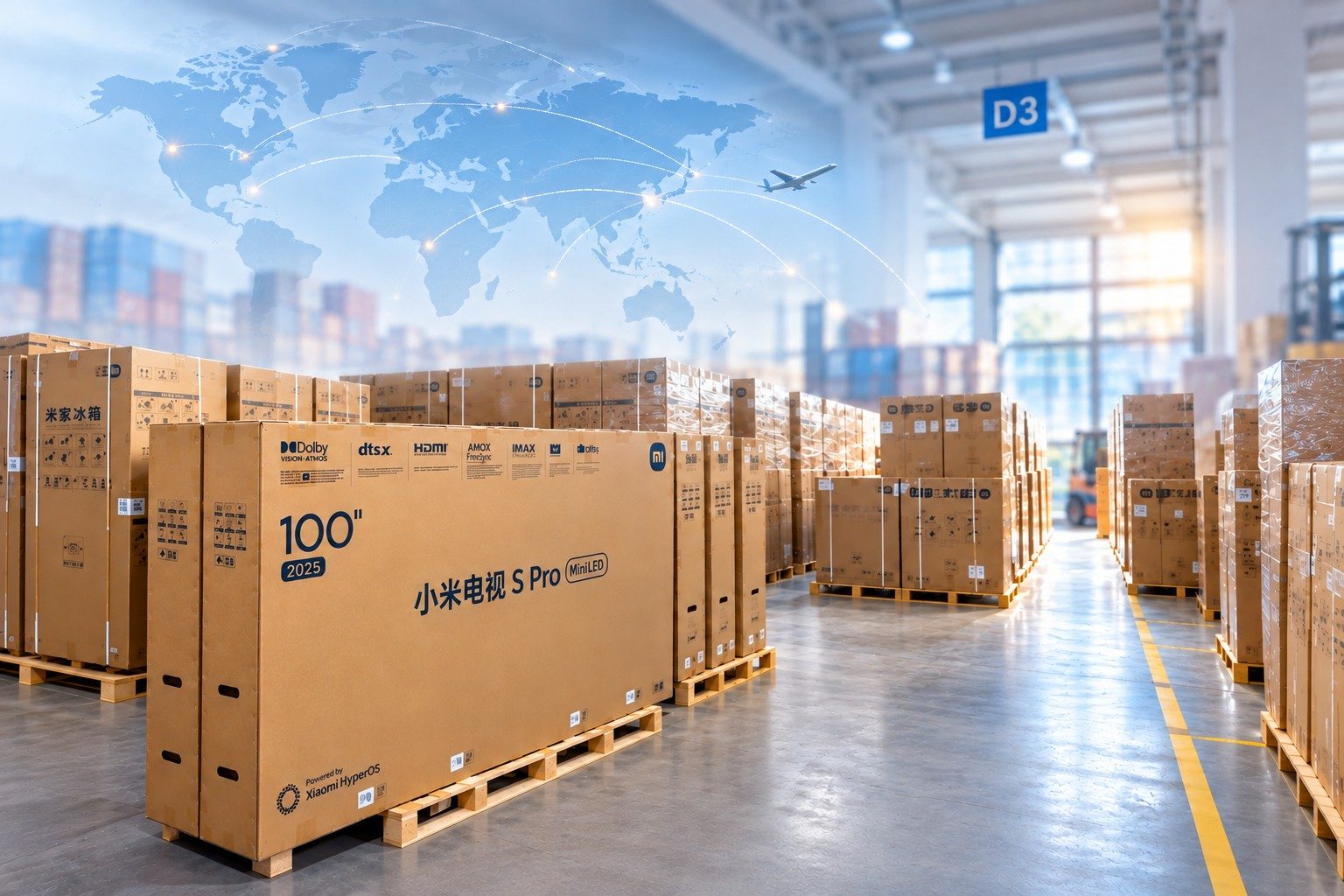
A China sourcing agent is a company that buys products from Chinese suppliers on your behalf and manages the whole order for you — supplier vetting, negotiation, payment, quality control, consolidation and shipping to your door. You brief the agent on the product, target price, quantity and destination; the agent turns that brief into a vetted supplier, a quotation, an inspected shipment and a tracking number. You deal with one contact instead of a dozen factories, trading companies and freight brokers.
That definition is the short version. The rest of this guide covers what the role actually includes, when you genuinely need one, how the process runs step by step, the fee models you will be quoted, and the checks that separate a reliable agent from an expensive middleman.
What a China sourcing agent actually does
A sourcing agent’s job is to absorb the parts of importing that are hardest to do from another country. In practice that means five things:
- Supplier identification and vetting — finding factories and authorized distribution channels, then checking that they are real, licensed and able to supply the product you specified.
- Negotiation on your behalf — agreeing unit price, minimum order quantity, packaging, lead time and payment terms in the supplier’s language.
- Quality control before shipping — inspecting the goods in China while problems are still fixable, and sending you photo or video evidence rather than assurances.
- Consolidation and warehousing — receiving goods from multiple suppliers, re-checking them, and packing them into one outbound shipment.
- Export documentation and delivery — handling the paperwork, customs coordination and the final leg to your warehouse, store or fulfillment center.
A sourcing agent is not the same as a marketplace or a freight forwarder
This is where most first-time buyers get confused, because the four roles overlap at the edges but solve different problems.
| You are dealing with | What they do | What they do not do |
|---|---|---|
| Sourcing agent | Finds and vets suppliers, negotiates, places orders, inspects, consolidates, ships | Manufacture the product; own your brand |
| Marketplace (Alibaba, 1688, etc.) | Lists suppliers and provides contact and escrow tools | Vet quality for your order, inspect goods, consolidate multiple suppliers |
| Trading company | Buys from a factory and resells to you at a markup | Disclose its source factory, work on your margin terms |
| Freight forwarder | Moves goods you have already bought | Find suppliers, negotiate price, run quality control |
A useful way to think about it: a marketplace gives you options, a forwarder gives you movement, and an agent gives you outcomes. If your problem is “I cannot tell which of these 40 suppliers is real, and I do not want to pay for goods I have never seen,” you need an agent. If your problem is only “my container needs to move from Ningbo to Rotterdam,” you need a forwarder.
When you need a sourcing agent — and when you do not
Sourcing agents are not automatically worth their fee. The honest test is whether the work they do is work you can do yourself, cheaper and better.
You will usually benefit from an agent when:
- You are buying from several suppliers and want one consolidated shipment instead of five freight quotes and five sets of paperwork.
- You cannot verify that a supplier is real, licensed, and actually able to produce what they advertise.
- You need inspection before the goods ship, not a dispute process after they arrive.
- You are importing branded or regulated goods, where authenticity, regional versions and destination compliance carry real risk.
- Your order size is below the level at which factories will take you seriously on their own.
- You are testing a new category and want a pilot order rather than a container commitment.
You probably do not need one when:
- You buy a single SKU in high volume from a factory you already know and trust.
- You already run your own quality inspection and freight program.
- You only need transport — that is a forwarder’s job.
- You want a supplier list and intend to manage every step yourself.
There is no shame in the second list. Paying a fee for work you are already doing is not diligence, it is overhead.
How the process works, step by step
A well-run sourcing engagement follows a predictable sequence. Problems in first orders almost always trace back to a step being skipped rather than to the wrong product being chosen.
Step 1 — Brief and consultation
You describe the product, target price, quantity, quality level and destination country. This is the highest-leverage hour of the whole project: the clearer your brief, the fewer sampling rounds and surprises later. A good agent will push back on unrealistic target prices here rather than quietly accepting them and disappointing you in production.
Step 2 — Supplier matching and quotation
The agent identifies which factories or distribution channels can actually supply your specification, and flags anything that cannot be supplied reliably. You should receive a consolidated quotation that includes the product cost and the costs around it — inspection, consolidation, freight and duties — rather than a bare unit price.
Step 3 — Sampling and order placement
Before a production run, order samples and test them yourself. This is also where customisation decisions get locked in: materials, packaging, branding, manuals and plug types. Only after samples are approved does the bulk order go to the factory, with quality standards and inspection points agreed in writing.
Step 4 — Quality control before shipping
The critical step. Goods are inspected in China while there is still time to fix or reject them. Ask for evidence you can actually evaluate — video or photo inspection of the real units and cartons, not stock images supplied by the factory. If a supplier resists inspection, that is itself information.
Step 5 — Warehousing and consolidation
If your order comes from multiple suppliers, everything is received, re-checked and packed into a single outbound shipment. Consolidation is where freight cost stops being proportional to the number of suppliers you bought from.
Step 6 — Export, customs and final delivery
The agent coordinates export documentation and customs clearance and delivers to your address, warehouse or fulfillment center, with tracking you can follow.
Easy Buy China runs this sequence as one managed service: supplier matching within 24 hours of your brief, verified procurement, pre-shipment video inspection, free warehousing while an order is consolidated, and door-to-door delivery. You can see the full flow on the how it works page.
What it costs: the fee models you will be quoted
There is no single industry rate, because agents charge for different scopes of work. Almost every quotation you receive will be one of four models, or a combination.
| Fee model | How it works | Where you will see it | What to watch |
|---|---|---|---|
| Percentage of order value | Agent takes a commission on the value of goods purchased | Most common model for general sourcing | Does the percentage apply to product cost only, or also to freight and inspection? |
| Flat fee per order | Fixed amount per purchase order or per shipment | Smaller orders, simple single-supplier buys | Cheaper on large orders, can be expensive on repeated small ones |
| Retainer or monthly fee | Fixed monthly amount covering ongoing sourcing activity | Buyers with continuous, multi-category purchasing | Ask what happens in a month with no orders |
| Hybrid | Minimum fee plus percentage above a threshold | Mid-size importers | Make sure the minimum is stated in writing |
What actually drives your fee up or down
- Order value — small orders carry proportionally higher handling cost, so minimum fees appear.
- Number of suppliers — five suppliers means five negotiations, five payments and five collections.
- Number of SKUs and customisation — OEM or private label work adds development and sampling cycles.
- Inspection depth — a visual carton check is not the same work as one-by-one unit verification.
- Freight mode and destination — air versus sea, and how demanding the destination market’s compliance rules are.
The number that matters is landed cost, not unit price
A low factory price tells you almost nothing until you add everything around it:
Landed cost = product cost + agent fee + inspection + consolidation + freight + duties and taxes + payment costs
Two quotations can differ by 40% at the unit-price line and land within 5% of each other once freight, consolidation and duties are added. Always ask for a landed-cost breakdown before comparing suppliers — our shipping from China guide walks through the freight and customs side of that calculation.
One structural note worth understanding: some agents build their margin into the wholesale price they quote instead of billing a separate consultation fee. Easy Buy China works this way — consultation carries no fee, and pricing is quoted as a complete package. Whatever model you choose, get the fee structure in writing before the first order, and treat any quote that cannot be explained line by line as a warning sign.
How to choose a sourcing agent: 7 checks
Run these before you send money, not after.
- Can they name where the goods will come from? A credible agent can tell you which factories or authorized channels will supply your order, and will tell you plainly when something cannot be sourced. Vague answers here predict vague outcomes.
- Do they show inspection evidence as standard? Ask what an inspection report looks like before you order. If the answer is “we check the goods,” rather than a sample video or photo report, keep looking.
- Is the pricing transparent and complete? You want product cost, agent fee, inspection, consolidation, freight and duties in one document. Hidden markups usually appear later as “unexpected” charges.
- Do they handle regional versions and compliance? Plug types, voltage, app language, manual language and packaging language differ by market — and are the single most common source of unsellable stock. For branded goods, authenticity documentation matters just as much; our guide to brand sourcing covers that process in detail.
- Can they consolidate several suppliers? If you buy five brands from five suppliers, consolidation is where your cost advantage is protected or lost.
- Who owns after-sales and warranty claims? Establish in writing who replaces defective units and how, before you need it.
- How fast and how clearly do they communicate? Responsiveness during the sales process is the best available predictor of responsiveness after your money has moved.
Common mistakes first-time importers make
- Skipping samples to save time. The cost of one bad production run usually exceeds the cost of the first two seasons.
- Comparing unit prices instead of landed costs. See above — this is the single most expensive arithmetic error in importing.
- Ordering too much at once. A pilot order of a modest quantity tells you what actually sells in your market at a fraction of the risk.
- Assuming a familiar brand name means safety. Recognised products attract counterfeits; verification is not optional simply because you recognise the logo.
- Treating quality control as optional. Inspection costs a small fraction of what unsellable inventory costs.
- Ignoring lead times. Production plus shipping typically runs weeks, not days, so plan reorders before you run out, not after.
If you are buying your first order from China, our guide for small retailers covers the low-MOQ and risk-management side in more depth, and the quality inspection guide explains what a pre-shipment inspection should include.
FAQ
What is the difference between a China sourcing agent and a trading company? A trading company buys from a factory and resells to you at a markup, keeping its source confidential. A sourcing agent works for you: it discloses the supply channel, negotiates on your terms, and charges a stated fee for the service rather than earning an undisclosed spread.
How much do sourcing agents charge? It depends on the engagement model rather than a single industry rate. Agents typically quote a percentage of order value, a flat fee per order, a monthly retainer, or a hybrid with a minimum fee. The number moves with order value, how many suppliers are involved, how much customisation is required and how deep the inspection goes. Ask for the fee structure in writing and compare quotations on landed cost, not on unit price.
Do I need a company in China to work with a sourcing agent? No. You buy as a foreign buyer and the agent handles the Chinese side — supplier negotiation, domestic collection and export documentation. What you do need is a clear brief and a destination address.
Can a sourcing agent help with small orders? That is precisely where a good agent changes the equation. Factories enforce minimum order quantities because dealing with small buyers is not worth their time; an agent that consolidates demand from multiple buyers, or sources from distribution channels rather than production lines, can support genuine pilot orders. If low-volume testing matters to you, make it the first question you ask.
Is it cheaper to just buy directly on Alibaba? Sometimes — if you already know the supplier, the product and the freight route. On a first order, the marketplace solves discovery and nothing else: it does not verify that the supplier can produce your specification, does not inspect your goods, and does not consolidate across suppliers. Buyers frequently discover that the savings on the commission are smaller than the cost of one rejected shipment.
Who handles customs clearance? In a managed sourcing arrangement the agent coordinates export clearance from China and the documentation your goods need to travel. Import duties and destination-market taxes are normally your responsibility as the importer of record, and a good agent will tell you what those are likely to be before you order rather than after.
How long does a first order take? Sampling and supplier selection usually dominate the early timeline, and production plus shipping sits on top of that. Buyers who need goods for a specific season should start the conversation well ahead of it rather than optimising for the fastest possible shipment.
What does a sourcing agent need from me to start? Four things: the product and its specification, a target price, a quantity, and a destination country. Add your quality expectations and any branding requirements. That is enough for a serious agent to come back with a sourcing plan and a quotation.
Send one brief, get a managed sourcing plan
The value of a sourcing agent is not that they can find suppliers — search engines can do that. It is that they own the parts you cannot control from abroad: whether the supplier is real, whether the goods match the specification, and whether your shipment leaves China correctly documented and economically consolidated.
Easy Buy China works as a single point of contact across that process, serving retailers, wholesalers and online sellers in more than 50 countries with $0 consultation fee and low MOQ flexibility. Send your product, target price, quantity and destination, and you will get a sourcing plan with a consolidated quotation — including a warehousing and delivery route and, where relevant, OEM or ODM customisation options.
If you sell to consumers rather than businesses, the retailer sourcing page is the faster starting point.
发表回复